
Beyond Dieting: Why Peptides Can Make Weight Loss Easier
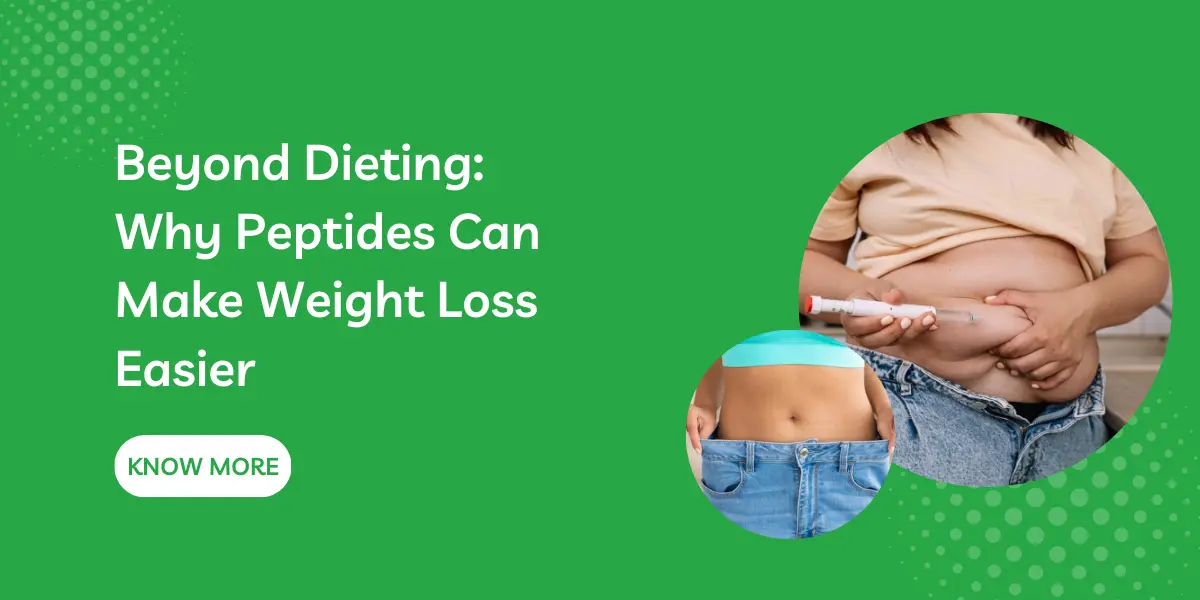
For decades, the conversation around weight loss has been dominated by a single, exhausting narrative: "Eat less, move more." We've been told that if we just had more willpower, resisted that late-night snack, or spent an extra hour on the treadmill, the scale would finally budge. But for millions of people, this formula feels like a broken promise. You lose ten pounds, only for your body to scream in hunger until you gain fifteen back.
The missing piece of the puzzle isn't a lack of discipline; it's biology.
Traditional dieting treats weight loss as a math problem (calories in vs. calories out). However, your body treats it as a survival mission. When you cut calories, your brain triggers a cascade of hormones that slow your metabolism and ramp up your appetite to prevent "starvation." This is where peptides change the game. By acting as biological messengers, peptides address weight loss at the cellular level, targeting the very hormones and metabolic pathways that diets often ignore.
What Are Peptides and How Do They Differ from "Dieting"?
Peptides are short chains of amino acids essentially the "building blocks" of proteins. While they occur naturally in the body, using specific Research Peptide sequences allows scientists and healthcare providers to signal the body to perform certain functions, such as releasing growth hormones, repairing tissue, or, most notably, regulating hunger.
Unlike a restrictive diet that forces you to fight your biology, peptide therapy works with your biology. It's the difference between trying to hold back a flood with a wooden board (willpower) and simply turning off the faucet (peptides).
The Biology of "Food Noise"
One of the greatest hurdles in weight loss is what many call "food noise" that constant, intrusive thought about when and what you will eat next. This is driven by hormones like ghrelin (the hunger hormone) and leptin (the fullness hormone). When you buy Peptides for Sale that are designed for metabolic health, you are often looking at compounds that mimic GLP-1 (Glucagon-like peptide-1). These peptides tell your brain you are full, effectively silencing the food noise and making healthy choices feel effortless rather than a chore.
Enhancing the Metabolic Engine
While appetite suppression is a massive win, it's only half the battle. To lose weight effectively, your body needs to be efficient at burning energy. Many people struggle with a "sluggish" metabolism, often caused by age, hormonal imbalances, or years of "yo-yo" dieting.
Revitalizing Cellular Energy
As we age, our levels of NAD+ (Nicotinamide Adenine Dinucleotide) naturally decline. This molecule is crucial for mitochondrial health the power plants of your cells. When cellular energy is low, fat oxidation slows down. This is why many are turning to Nad+ Peptide Online options to replenish these levels. By boosting cellular energy, the body becomes more efficient at converting stored fat into usable fuel, providing a "spark" to a stalled metabolism.
Targeted Fat Loss and Muscle Preservation
A common pitfall of rapid weight loss through dieting is "catabolism," where the body breaks down muscle tissue for energy instead of fat. This is devastating for long-term success because muscle is metabolically active; the less muscle you have, the fewer calories you burn at rest.
Certain combinations, such as CJC 1295 No Dac Ipamorelin, are studied for their ability to stimulate the natural release of growth hormones. Unlike harsh stimulants, this duo works synergistically to promote fat loss while simultaneously supporting lean muscle mass. This ensures that the weight leaving your body is actual fat, leaving behind a toned, metabolically "hot" physique.
Deep Dive: Specialized Peptides for Weight Loss
If you are looking beyond the standard options, several specific peptides have shown incredible promise in clinical research for their unique approaches to weight management.
Mots C: The "Exercise Mimetic"
One of the most exciting developments in metabolic research is Mots C Peptide for Weight Loss. Originating from the mitochondria, Mots C is often referred to as an "exercise mimetic" because it triggers similar metabolic pathways to those activated during a workout. It helps regulate insulin sensitivity and promotes the breakdown of fatty acids. For individuals who hit a plateau despite regular exercise, Mots C can help "reprogram" the metabolism to favor fat burning over fat storage.
Synergy in Action
The real power of peptides often comes from "stacking" or combining different messengers to cover all bases:
- Appetite Control: Silencing hunger through GLP-1 pathways.
- Metabolic Speed: Increasing the basal metabolic rate.
- Fat Mobilization: Encouraging the body to release "stubborn" fat stores.
Sustainable Results vs. The Yo-Yo Effect
The tragedy of the "Standard American Diet" approach is its lack of sustainability. When you stop a restrictive diet, your hormones are still in "starvation mode," leading to rapid weight regain.
Peptides offer a bridge to long-term success. Because they help regulate blood sugar and insulin sensitivity, they can help "reset" your body's set point the weight your body naturally tries to maintain. By improving cardiometabolic health, users often find it easier to maintain their results because their body is no longer fighting against them.
|
Feature |
Traditional Dieting |
Peptide Therapy |
|---|---|---|
|
Primary Driver |
Willpower / Restriction |
Hormonal Signaling |
|
Metabolic Impact |
Can slow down metabolism |
Often enhances metabolic rate |
|
Hunger Levels |
Increased (Ghrelin spikes) |
Decreased (Satiety signals) |
|
Body Composition |
Risk of muscle loss |
Focus on fat loss/muscle retention |
Safety, Quality, and Medical Oversight
While the benefits are compelling, it is crucial to approach peptide therapy with respect for the science. The market is flooded with products, and quality varies significantly. When searching for a Research Peptide, purity is the most important factor. Using unverified sources can lead to ineffective results or, worse, adverse reactions.
Potential Side Effects
It is important to be realistic: peptides are powerful biological tools. Some users may experience:
- Nausea: Common with GLP-1 mimics as the digestive system slows down.
- Water Retention: Sometimes seen with growth hormone secretagogues.
- Injection Site Redness: Most peptides are administered via small subcutaneous injections.
Because of these factors, consulting with a healthcare professional is non-negotiable. A doctor can monitor your bloodwork, check your thyroid and kidney function, and ensure that the peptide protocol you choose aligns with your specific health history.
The Path Forward: A Holistic Approach
It would be a mistake to view peptides as a "magic pill" that allows you to ignore lifestyle choices. Instead, think of them as the ultimate force multiplier. When you aren't fighting constant hunger, choosing a salad over a burger becomes easy. When your cellular energy is high thanks to NAD+ support, going to the gym feels rewarding rather than exhausting. Peptides provide the biological foundation upon which healthy habits can finally take root.
By addressing the hormonal and metabolic barriers that make weight loss so difficult, peptide therapy offers a more compassionate and scientifically grounded path to health. It moves the goalposts from "suffering for results" to "optimizing for wellness."
Conclusion
The journey "Beyond Dieting" is about understanding that your weight is controlled by a complex symphony of signals. If that symphony is out of tune, no amount of willpower will create a masterpiece. Peptides act as the conductor, bringing your metabolism, appetite, and energy levels back into harmony. Whether it's through the metabolic boost of Mots C or the growth-hormone support of CJC 1295, these tools are redefining what is possible in the world of weight management.