
GHK-Cu Peptide: Molecular Pathways in Hair Loss Research
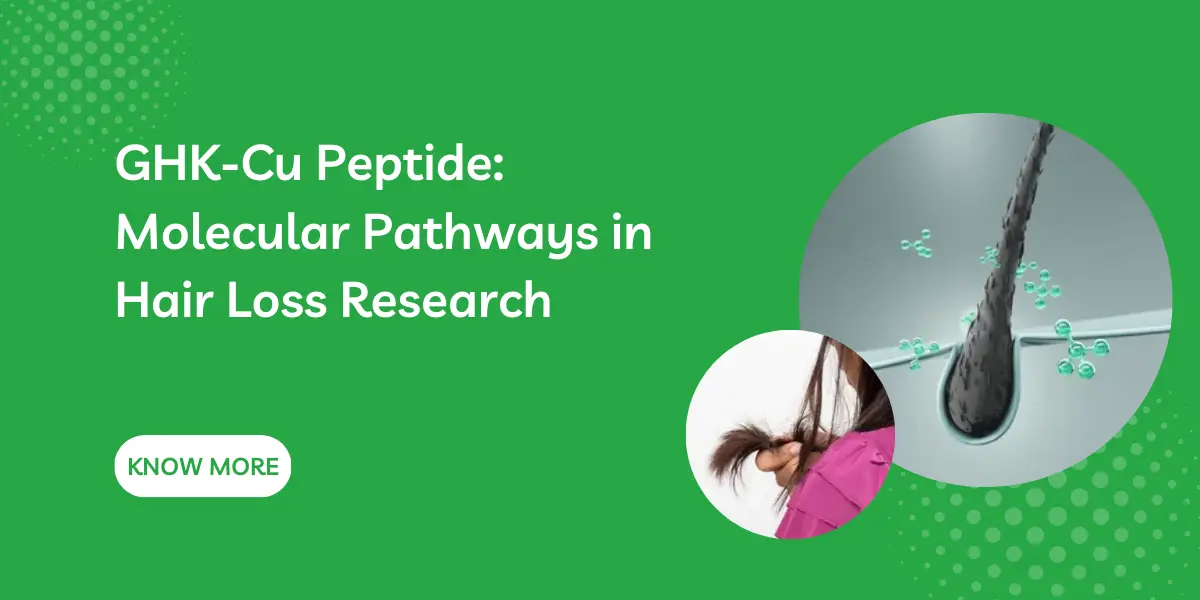
Hair loss—scientifically known as alopecia is more than just a cosmetic concern; for many, it is a significant source of psychological distress. In the United States alone, millions of men and women seek solutions to thinning hair and receding hairlines. While the market is flooded with "miracle cures," the scientific community has pivoted its focus toward cellular signaling and molecular biology to find a more sustainable answer.
Among the most promising compounds emerging from this research is GHK-Cu, a naturally occurring copper peptide. Unlike invasive hair transplants or systemic medications that carry heavy side-effect profiles, GHK-Cu offers a regenerative approach. This blog explores the molecular pathways through which this peptide operates and why it has become a cornerstone of modern hair restoration studies.
The Fundamentals: What is GHK-Cu?
GHK-Cu (Glycyl-L-histidyl-L-lysine copper) is a small tripeptide found naturally in human plasma, saliva, and urine. It was first discovered in 1973 by Dr. Loren Pickart, who noticed that liver tissue from older patients began to function like younger tissue when exposed to "young" plasma. The active factor was identified as GHK-Cu.
The molecule consists of three amino acids glycine, histidine, and lysine tightly bound to a copper ion. Copper is a vital micronutrient for human health, serving as a cofactor for enzymes involved in energy production, iron metabolism, and cross-linking of collagen and elastin. As we age, the concentration of GHK-Cu in our body drops significantly; by age 60, levels are roughly 60% lower than at age 20. This decline is directly correlated with the body's reduced ability to repair skin and maintain healthy hair follicles.
Researchers looking to study these regenerative effects often seek a high-quality Research Peptide to observe how these amino acid chains interact with cellular receptors.
The Molecular Pathways of Hair Growth
To understand how GHK-Cu works, we must look at the hair follicle not just as a strand of protein, but as a complex mini-organ. Hair growth occurs in cycles: Anagen (growth), Catagen (transition), and Telogen (resting). Most hair loss occurs when the Anagen phase shortens and follicles undergo "miniaturization."
GHK-Cu intervenes in this process through several distinct molecular pathways:
-
Inhibition of DHT (Dihydrotestosterone)
The primary driver of androgenetic alopecia is DHT, a hormone that shrinks hair follicles. Studies suggest that copper peptides may act as 5-alpha reductase inhibitors. This is the enzyme responsible for converting testosterone into DHT. By blocking this conversion at the scalp level, GHK-Cu helps prevent the follicle from shrinking.
-
Stimulation of Angiogenesis
Hair follicles require a robust blood supply to receive nutrients and oxygen. GHK-Cu is a potent angiogenic factor, meaning it stimulates the growth of new blood vessels. By increasing the vascular endothelial growth factor (VEGF) expression, it ensures that the dermal papilla the "command center" of the hair follicle is well-nourished.
-
Extracellular Matrix (ECM) Remodeling
The area surrounding the hair follicle is made of collagen and elastin. If this area becomes scarred or rigid (perifollicular fibrosis), the hair cannot grow. GHK-Cu stimulates the production of collagen and decorin while inhibiting proteins that cause scarring. This keeps the scalp tissue "pliable" and healthy for hair production.
-
Activation of Follicular Stem Cells
Recent research suggests that GHK-Cu may influence the Wnt/beta-catenin pathway, which is essential for the development of hair follicles and the initiation of the Anagen phase. By "waking up" these stem cells, the peptide can encourage dormant follicles to begin producing hair again.
Comparative Research: GHK-Cu and Other Peptides
While GHK-Cu is a powerhouse for skin and hair, the world of peptide research is vast. Scientists often look at how different sequences affect the endocrine and regenerative systems. For instance, those studying growth hormone pathways might investigate GHRP-2 5mg for its ability to stimulate the pituitary gland, which indirectly supports systemic tissue repair.
In metabolic and body composition research, combinations like Tesamorelin with Ipamorelin are frequently studied for their synergistic effects on fat loss and muscle maintenance. While these are distinct from the topical application of copper peptides for hair, they highlight the growing importance of peptide therapy in holistic anti-aging protocols.
For those conducting independent laboratory studies, the ability to Buy GHK-Cu Peptide of high purity is essential to ensure that the molecular interactions observed are due to the peptide itself and not contaminants.
Benefits Beyond Growth: Scalp Health and Integrity
GHK-Cu isn't just about quantity; it's about quality. Using GHK-Cu often results in:
- Increased Hair Diameter: It enlarges the follicle size, making the hair shaft thicker and less prone to breakage.
- Anti-Inflammatory Action: Chronic scalp inflammation is a silent killer of hair follicles. GHK-Cu reduces the production of pro-inflammatory cytokines like IL-1 and TNF-alpha.
- Antioxidant Protection: It reduces oxidative stress by neutralizing free radicals that damage follicular DNA.
Because of these multifaceted benefits, many researchers and enthusiasts search for reputable sources of Peptides for Sale to incorporate these findings into their specialized formulations.
Practical Application: How to Use GHK-Cu
If you are looking to integrate GHK-Cu into a hair care routine, the delivery method matters. The most common forms include:
Topical Serums
This is the gold standard for hair loss. High-concentration serums are applied directly to the scalp, usually once a day. Because GHK-Cu is a small molecule, it can penetrate the stratum corneum to reach the follicle.
Shampoos and Conditioners
While helpful, these are "wash-off" products. They are excellent for maintaining scalp health but may not provide the prolonged exposure needed for significant regrowth compared to a leave-on serum.
Microneedling Integration
Many users combine topical GHK-Cu with microneedling (derma rolling). The micro-channels created by the needles allow the peptide to bypass the outer layer of skin, reaching the dermal papilla more effectively.
Note on Consistency: Hair growth is a slow biological process. Regardless of the treatment, it typically takes 3 to 6 months to see visible changes in hair density and thickness.
Safety, Side Effects, and Precautions
GHK-Cu is generally considered very safe because it is a biomimetic substance meaning your body already recognizes and produces it. However, a few precautions are necessary:
- The Patch Test: Before applying a copper peptide serum to your entire scalp, apply a small amount to your inner forearm. Wait 24 hours to check for redness, itching, or hives.
- Ingredient Conflicts: Copper peptides can be "deactivated" by certain ingredients. Avoid using GHK-Cu at the same time as strong Vitamin C (L-ascorbic acid) or Chelating agents, as they can break the bond between the GHK and the copper ion.
- Copper Toxicity: While extremely rare with topical use, using excessive amounts of high-concentration copper products over years could theoretically lead to mineral imbalances. Stick to recommended dosages.
Conclusion
The shift toward GHK-Cu in hair loss research represents a move away from "masking" the problem and toward "repairing" the biological machinery of the scalp. By inhibiting DHT, boosting blood flow, and remodeling the extracellular matrix, GHK-Cu provides a comprehensive environment for hair to thrive.
As we continue to unlock the potential of the human proteome, peptides remain at the forefront of regenerative medicine. Whether you are a researcher looking for a specific Research Peptide or an individual seeking a science-backed hair solution, GHK-Cu stands out as a remarkably versatile and effective compound.
The future of hair restoration is not just about growing hair; it's about restoring the youthful signaling pathways that make growth possible.