
KLOW Peptide Blend and Full-Body Healing: Scientific Research Insights
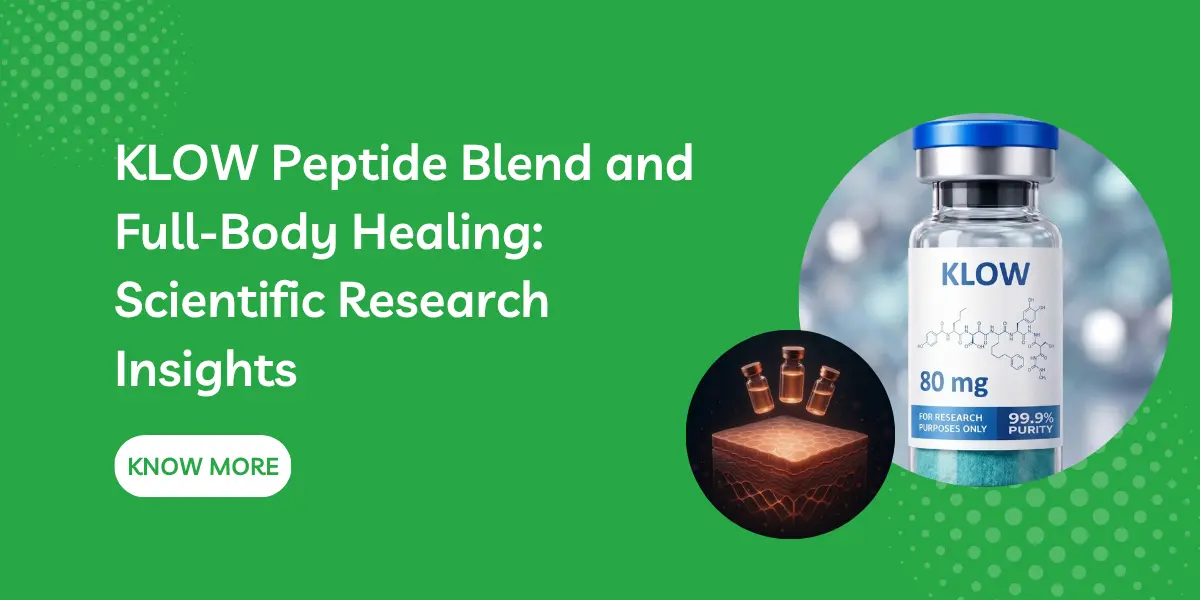
In the expanding field of biological science and cellular wellness, multi-peptide formulations represent a key evolutionary step. Rather than relying on a single compound to address isolated repair signals, researchers and wellness practitioners are increasingly turning to synergistic blends that engage multiple physiological pathways simultaneously.
Cellular repair, tissue remodeling, and systemic homeostasis are non-linear processes that require coordinated signals across different cell types. When evaluating advanced research protocols, finding reliable places to Buy Peptides ensures that scientific investigations are backed by verified purity, predictable sequence activity, and high manufacturing standards.
Understanding how individual compounds interact within a unified framework provides critical clarity for anyone navigating modern peptide research.
What Is the Klow Peptide Blend?
The Klow Peptide Blend is a specialized multi-compound formulation designed to provide multi-pathway regenerative support. By combining four distinct peptide sequences into a single protocol, it addresses inflammation, angiogenesis, cellular migration, and extracellular matrix synthesis simultaneously.
The standard formulation features a precise ratio of active ingredients; most notably found in the Klow Blend 80mg configuration:
- GHK-Cu (50mg): A naturally occurring copper tripeptide focused on extracellular matrix remodeling and tissue integrity.
- BPC-157 (10mg): A synthetic pentadecapeptide known for promoting blood vessel formation and gut mucosal health.
- TB-500 (10mg): A synthetic segment of Thymosin Beta-4 that drives cell mobility and tissue flexibility.
- KPV (10mg): A tripeptide derived from alpha-MSH studied for its immune-modulating and anti-inflammatory properties.
By combining these four components, the blend creates a layered biological response where each compound reinforces the actions of the others.
Component Breakdown: Angiogenesis and Microvascular Repair with BPC-157
The foundation of tissue recovery depends heavily on restoring adequate blood flow to injured or stressed sites. This is where BPC-157 plays a central biological role within the blend.
BPC-157 Signaling Cascade
│
▼
VEGFR2 Receptor Activation
│
▼
Endothelial Cell Proliferation
│
▼
Neovascularization & Repair
BPC-157 acts primarily by modulating vascular endothelial growth factor (VEGF) expression and up-regulating VEGFR2 receptors. This process, known as angiogenesis, stimulates the formation of new micro-blood vessels, allowing oxygen, amino acids, and vital nutrients to enter dense or poorly vascularized tissues like tendons and ligaments.
Beyond connective tissue support, BPC-157 exerts protective effects on the gastrointestinal tract. It helps stabilize gut mucosal barriers and protects tight junction proteins. For researchers seeking to evaluate localized tissue healing and mucosal stability, choosing to Buy BPC 157 as a core component provides a reliable mechanism for study.
Cell Migration and Structural Remodeling: The Function of TB-500
While angiogenesis provides the structural supply lines for healing, cell migration is required to rebuild damaged tissue matrices. TB-500, a synthetic peptide derivative of naturally occurring Thymosin Beta-4, governs this critical phase.
TB-500 functions primarily by binding to actin—a key structural protein responsible for cell shape, division, and movement. By up-regulating dynamics, TB-500 enables repair cells (such as fibroblasts and myoblasts) to migrate efficiently across damaged areas to lay down new tissue.
TB-500 Cellular Integration
│
▼
Actin Monomer Binding
│
▼
Enhanced Cell Mobility & Migration
│
▼
Accelerated Matrix Remodeling
Researchers looking to Buy TB 500 Peptide often focus on its ability to support muscle repair, reduce scar tissue formation, and improve overall functional flexibility following physical stress. When combined with BPC-157, TB-500 ensures that newly formed blood vessels are immediately matched by rapid cellular rebuilding.
Matrix Rebuilding and Immune Balance: GHK-Cu and KPV
The final components of the Klow blend focus on structural quality, collagen organization, and cellular homeostasis.
GHK-Cu: The Matrikine Signal
Copper tripeptide-1 (GHK-Cu) acts as a signal peptide that regulates the breakdown and synthesis of the extracellular matrix. It stimulates the production of collagen, elastin, and glycosaminoglycans, while simultaneously regulating metalloproteinases to prevent excessive or erratic scar formation.
Because of its well-documented impact on skin remodeling, tissue density, and cellular repair, many scientists look to Buy GHK-Cu Peptide to study its broad regenerative capacity across dermal and musculoskeletal tissues.
KPV: Modulating the Inflammatory Cascade
KPV (Lysine-Proline-Valine) targets the nuclear factor kappa B (NF-κB) pathway. By down-regulating pro-inflammatory cytokine signaling, KPV helps contain excessive inflammatory responses that could otherwise disrupt the healing process.
|
Component |
Target Receptor / Pathway |
Primary Biological Outcome |
|---|---|---|
|
BPC-157 |
VEGFR2 / Nitric Oxide System |
Angiogenesis, tendon-to-bone repair, mucosal barrier integrity |
|
TB-500 |
Actin Filaments / G-actin |
Accelerated cell migration, muscle recovery, reduced fibrosis |
|
GHK-Cu |
Gene Expression / Matrikine Signaling |
Collagen & elastin synthesis, tissue restructuring, anti-aging |
|
KPV |
NF-κB Pathway / Alpha-MSH Axis |
Cytokine suppression, immune balancing, localized anti-inflammation |
Actionable Guidelines for Multi-Peptide Protocols
When working with multi-peptide blends or designing research protocols, adhering to established laboratory and clinical handling standards is paramount.
-
Maintain Strict Storage Temperature
Lyophilized (freeze-dried) multi-peptide vials must be kept away from heat and light. Prior to reconstitution, store vials at cold temperatures (-20°C for long-term storage or 2°C to 8°C for short-term handling).
-
Follow Gentle Reconstitution Procedures
When adding sterile bacteriostatic water:
- Direct the fluid slowly against the glass wall of the vial to prevent foam formation.
- Swirl the vial gently until the powder dissolves completely. Never shake peptide solutions vigorously, as fragile tertiary structures can degrade.
-
Monitor Bioavailability and Timing
Multi-peptide blends are typically administered via subcutaneous injection to maximize systemic availability and bypass digestive breakdown. Align administration times with baseline physiological rhythms such as post-workout windows or prior to sleep to support natural repair cycles.
Conclusion
The evolution of regenerative biology highlights the clear advantages of multi-pathway strategies over single-agent approaches. By integrating the angiogenic support of BPC-157, the cell-migratory actions of TB-500, the collagen-rebuilding signals of GHK-Cu, and the immune-modulating influence of KPV, multi-peptide formulations address every stage of the healing process.
Whether the objective is optimizing physical recovery, maintaining structural tissue integrity, or exploring cellular repair dynamics, multi-peptide protocols provide a comprehensive foundation for modern scientific exploration.
Sourcing fully analytical, lab-verified compounds from transparent platforms offering Peptides for Sale ensures that your research protocols remain safe, consistent, and scientifically sound.