
Menopause-Related Hair Thinning: Exploring Hormones and Hair Follicle Biology
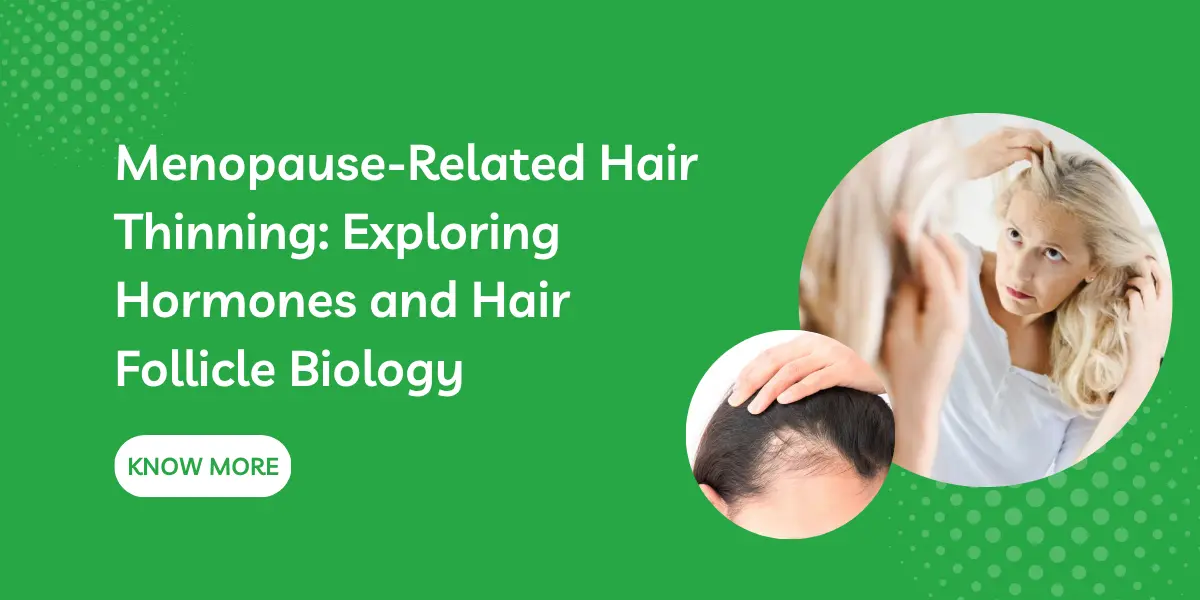
Hair transforms noticeably during perimenopause and menopause. Many women observe that their ponytail feels lighter, individual strands seem finer, or more hair remains on their brush after styling. While these shifts can feel sudden, they stem from predictable hormonal transitions that influence the natural hair-growth cycle.
During menopause, shifts in estrogen and progesterone alter the internal environment that supports hair follicles. Recognizing how hair responds to hormonal signals enables women to adopt a comprehensive, whole-body approach to hair density, scalp health, and general vitality.
For women exploring science-backed wellness options, choosing to Buy Peptides from reputable sources provides access to targeted cellular research aimed at supporting tissue regeneration and hair follicle performance.
1. Why Hair Changes During the Menopausal Transition
Hair follicles react continuously to internal biological signals, including circulating hormones, local vascular delivery, stress pathways, and nutritional status.
The Hair-Growth Cycle Explained
Every follicle passes through three primary phases that dictate hair density and length:
-
Anagen (Growth Phase): The active phase where follicle cells divide rapidly to build the hair shaft. Estrogen helps sustain this phase. As estrogen drops, the anagen duration shortens, causing hair to grow back finer or reach shorter maximum lengths.
-
Catagen (Transition Phase): A brief period where active strand production ceases and the follicle shrinks in preparation for rest.
-
Telogen (Resting & Shedding Phase): The final stage where old hair releases before the follicle restarts anagen. When estrogen support declines, a higher percentage of follicles shift prematurely into telogen, leading to diffuse thinning across the scalp.
When sourcing specialized biochemical compounds for skin and scalp research, evaluating verified suppliers offering Peptides for Sale ensures that baseline purity and identity standards are met before initiating experimental protocols.
2. Scalp Microcirculation and Biological Signaling
Maintaining hair density requires more than surface-level treatments. The scalp relies on a rich network of capillaries to supply amino acids, oxygen, and growth factors to the dermal papilla—the command center of the hair follicle.
During menopause, microcirculation to the scalp can diminish alongside broader vascular changes. Applying targeted biological compounds helps sustain extracellular matrix integrity and encourages blood flow around resting follicles.
Research into bio-identical copper complexes demonstrates clear dermatological utility. Investigators looking to evaluate localized microvascular support often choose to Buy Copper Peptide GHK-Cu, as this specific tripeptide-copper complex is widely documented for its role in collagen remodeling, angiogenesis, and tissue renewal.
3. Synergistic Peptide Systems in Tissue and Scalp Regeneration
As peptide research expands, scientists frequently examine how systemic signaling molecules interact alongside topical hair-support compounds.
For instance, growth hormone secretagogues work centrally to encourage tissue repair, cellular turnover, and metabolic balance throughout the body. Facilities studying systemic hormone-axis signaling often seek CJC 1295 Ipamorelin Buy Online to evaluate how secretagogue combinations influence systemic protein synthesis, skin elasticity, and follicle recovery.
Combining systemic signaling research with localized scalp protocols provides a comprehensive model for investigating how central endocrine balance affects peripheral tissue health.
4. Systemic Repair Protocols: Cellular Regeneration and Tissue Recovery
Menopausal hair changes rarely occur in isolation; they are often accompanied by shifts in skin hydration, joint mobility, muscle tone, and systemic inflammation. Multi-peptide recovery protocols allow researchers to explore how systemic healing pathways intersect with cellular maintenance.
When evaluating comprehensive healing mechanisms, research teams frequently Buy BPC 157 & TB 500 Blend formulations. BPC-157 accelerates tissue repair and angiogenesis, while TB-500 (Thymosin Beta-4) supports cellular migration and structural remodeling. Together, they create a versatile framework for studying systemic recovery and cellular repair across multiple tissue types.
5. Practical Guidelines for Supporting Hair and Whole-Body Wellness
Addressing menopausal hair changes requires a multi-layered approach that combines optimal nutrition, gentle physical care, and physician-guided hormone assessment:
1. Optimize Dietary Protein and Micronutrients
-
Protein Intake: Hair is composed of keratin. Ensure consistent intake of complete proteins (eggs, fish, poultry, legumes) to provide essential amino acids like L-cysteine and L-methionine.
-
Ferritin & Iron Monitoring: Iron stores directly affect the hair-growth cycle. Maintain healthy ferritin levels under a doctor's guidance.
-
Essential Minerals: Incorporate zinc, vitamin D3, and omega-3 fatty acids to support follicle health and reduce scalp inflammation.
2. Practice Protective Hair and Scalp Care
-
Reduce Thermal & Mechanical Stress: Limit high-heat styling tools and avoid tight hairstyles that place tension on fragile roots.
-
Promote Circulation: Regular, gentle scalp massages stimulate local blood flow and support follicle nutrient delivery.
-
Use Gentle Formulations: Select shampoos and conditioners designed to preserve natural scalp oils without leaving heavy residues.
3. Consult a Specialist
Working with a qualified clinician allows for personalized assessment of thyroid function, hormone levels, and metabolic markers, ensuring any underlying imbalances are properly addressed.
Summary of Clinical Protocols & Research Applications
Conclusion
Hair thinning during menopause reflects broader underlying hormonal shifts rather than simple structural failure. By understanding how estrogen reduction influences the anagen growth phase and microvascular delivery, women can take proactive, informed steps to support hair density and scalp health.
Integrating balanced nutrition, gentle scalp maintenance, systemic recovery protocols, and professional medical guidance create a strong foundation for long-term hair vitality.
For research applications focused on skin elasticity, matrix repair, and hair follicle support, incorporating a specialized Glow Blend Peptide provides an effective, multi-pathway approach to studying tissue regeneration and cell recovery during natural hormonal transitions.