
Orforglipron: Transforming Metabolic Disease Treatment with Oral GLP-1 Agonists
The prevalence of obesity and metabolic disorders has reached unprecedented levels globally. In 2023, a major study projected that by 2035, over half of the world's population could be overweight or obese, highlighting an urgent need for innovative therapeutic strategies. Obesity and type 2 diabetes are not only associated with diminished quality of life but also increase the risk of cardiovascular disease, fatty liver disease, kidney complications, and several other chronic conditions. This public health crisis has accelerated the search for effective, patient-friendly medications that can deliver robust metabolic benefits without compromising adherence or accessibility.
One of the major hurdles in treating obesity and diabetes has been drug delivery. Many of the most effective treatments particularly GLP-1 receptor agonists (GLP-1RAs) and insulin require injections. Up to 30–50% of patients experience anxiety or resistance to subcutaneous administration, which can severely limit therapy adherence. This is especially problematic for chronic conditions that require long-term management. Recent innovations in pharmacology have aimed to overcome these barriers, and orforglipron, a first-in-class oral GLP-1 receptor agonist, represents a groundbreaking development. It combines the potent therapeutic effects of injectable GLP-1 therapies with the convenience of oral administration, potentially transforming the treatment landscape for metabolic diseases.
Understanding Orforglipron
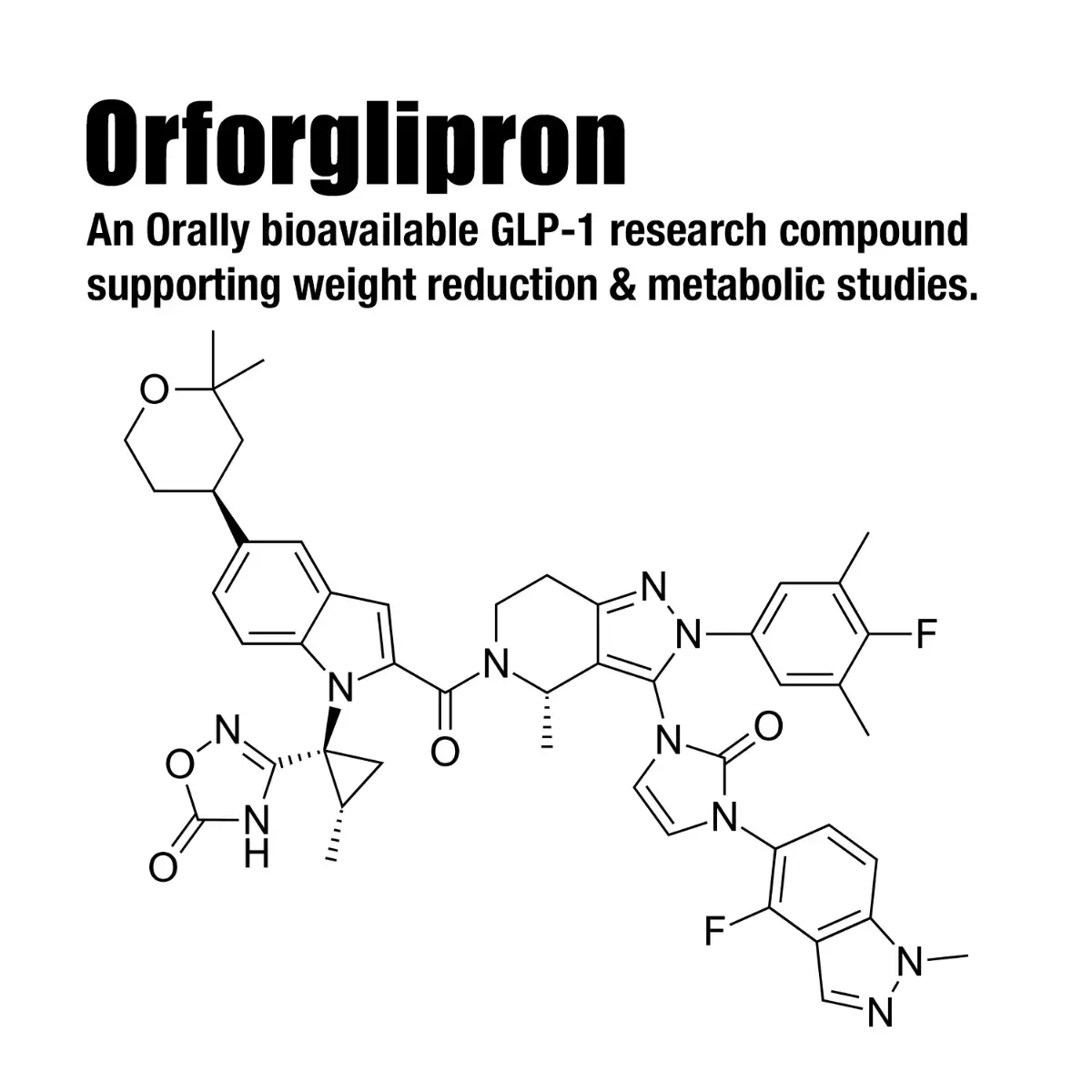
Orforglipron, also known by its code LY3502970, is the first oral, small-molecule GLP-1 receptor agonist to progress into advanced clinical trials. Unlike peptide-based GLP-1 drugs such as semaglutide or liraglutide, orforglipron is a non-peptide compound. This distinction is crucial: peptide drugs are large molecules prone to enzymatic degradation in the gastrointestinal tract, necessitating injection. Orforglipron, as a chemically stable small molecule, is fully absorbable in the gut and can be administered once daily without fasting or water intake restrictions, dramatically simplifying therapy.
Achieving oral bioavailability for a GLP-1 receptor activator was no small feat. The GLP-1 receptor is a complex transmembrane protein typically engaged by a 30-amino-acid peptide hormone. Designing a smaller molecule that could replicate the receptor's activation required years of sophisticated medicinal chemistry, structural biology, and molecular modeling. In 2020, scientists elucidated the crystal structure of orforglipron bound to the human GLP-1 receptor, confirming its precise engagement within the receptor's transmembrane pocket. This landmark finding validated the concept that a non-peptide, orally administered drug could effectively stimulate GLP-1 receptor signaling a milestone in metabolic medicine.
As a small molecule, orforglipron also offers practical advantages over peptides. Peptide-based therapies, often sold as peptides for sale in research and clinical settings, require more complex manufacturing, storage, and distribution conditions. In contrast, small molecules like orforglipron can be mass-produced with relative ease and stability, potentially reducing costs and improving global access. Moreover, the convenience of oral administration could increase patient adherence, a critical factor in the long-term management of diabetes and obesity.
Mechanism of Action
Orforglipron acts as a GLP-1 receptor agonist (GLP-1RA), mimicking the effects of endogenous GLP-1 hormone. GLP-1 is an incretin hormone secreted by the gut in response to food intake. Its primary actions include enhancing glucose-dependent insulin secretion, suppressing glucagon release, slowing gastric emptying, and modulating appetite via central neural circuits.
When orforglipron binds to the GLP-1 receptor, it activates intracellular signaling pathways most notably the cyclic AMP (cAMP)–protein kinase A (PKA) cascade. This signaling leads to enhanced insulin release from pancreatic β-cells during periods of elevated blood glucose, helping prevent hypoglycemia. Simultaneously, activation of α-cell GLP-1 receptors reduces glucagon secretion, lowering hepatic glucose output. In the gut, delayed gastric emptying contributes to reduced postprandial glucose spikes and promotes satiety. Central nervous system pathways in the hypothalamus and brainstem are also activated, further suppressing appetite and caloric intake.
Uniquely, orforglipron functions as a partial agonist with G-protein-biased signaling. While it does not maximally activate the GLP-1 receptor like the full peptide hormone, it sufficiently engages the receptor to produce therapeutic effects. Importantly, biased signaling favors the G-protein cAMP/PKA pathway while minimally recruiting β-arrestin, a protein associated with receptor desensitization. This may help maintain efficacy over long-term use, a potential advantage over some peptide GLP-1RAs.
Preclinical Evidence
Before entering human trials, orforglipron was rigorously evaluated in vitro and in animal models. In laboratory studies, it demonstrated selective binding to the GLP-1 receptor and effectively activated cAMP signaling. Notably, it did not significantly interact with other receptors like GLP-2 or glucagon, reducing the risk of off-target effects.
Animal studies provided compelling proof-of-concept for metabolic efficacy. Humanized rodent models expressing the human GLP-1 receptor showed improved glucose tolerance and enhanced insulin secretion after orforglipron administration. Non-human primate studies further confirmed its potential: diet-induced obese monkeys treated with orforglipron displayed reduced food intake, improved glycemic control, and trends toward weight reduction comparable to those achieved with injectable peptide GLP-1 therapies. These findings demonstrated that a small oral molecule could replicate the effects of biologic GLP-1 drugs.
Additional preclinical evidence suggested broader metabolic benefits. Rodent studies indicated potential improvements in plasma lipids, liver function, and markers of inflammation. These outcomes align with the known pleiotropic effects of GLP-1 signaling, including reductions in hepatic steatosis and atherogenic lipoproteins. Together, these results provided a strong foundation for first-in-human clinical trials, validating orforglipron's mechanism and efficacy.
Clinical Trial Evidence
Orforglipron has demonstrated impressive results in human studies. Phase 1 trials in healthy adults not only established safety and pharmacokinetics but also revealed early weight reduction and glycemic effects. Participants receiving the highest doses experienced an average weight loss of 5.4 kg (~12 lbs) in just four weeks, a substantial reduction for a short-duration study. Gastric emptying was delayed, confirming engagement of GLP-1-mediated satiety pathways, while fasting glucose levels declined modestly.
Phase 2 trials evaluated orforglipron in patients with type 2 diabetes and obesity. In the diabetes study, patients receiving orforglipron experienced up to a 2.1% reduction in HbA1c over 26 weeks, outperforming placebo (0.4%) and rivaling injectable comparators such as dulaglutide. Weight loss in the same cohort ranged from 3.7% to 9.6%, depending on dose. In the obesity trial, non-diabetic participants lost 9–15% of body weight over 36 weeks, with nearly half achieving at least 10% reduction. These results are comparable to or in some cases exceed those of injectable GLP-1RAs, demonstrating that oral delivery does not compromise efficacy.
Orforglipron also improved cardiometabolic risk factors. Blood pressure decreased by 3–5 mmHg more than placebo, LDL cholesterol and triglycerides was reduced, and inflammatory markers such as hs-CRP and IL-6 declined. These effects mirror the cardiovascular benefits seen with established GLP-1 peptide therapies, though dedicated cardiovascular outcome trials are needed to confirm long-term cardio protection.
Advantages Over Peptide-Based GLP-1 Therapies
While injectable GLP-1RAs remain highly effective, orforglipron offers distinct advantages:
- Oral Administration: Eliminates needle-related barriers, potentially improving adherence and patient satisfaction.
- Convenience: No fasting or special dosing considerations are required.
- Manufacturing Efficiency: Small-molecule synthesis is simpler, faster, and less expensive than peptide production, enabling scalable access.
- Potential for Combination Therapy: As an oral agent, orforglipron could be combined with other emerging metabolic therapies, including oral peptides or small molecules, to enhance weight loss and glycemic control.
This development parallels advances in research where highest quality peptides are produced and studied for metabolic and regenerative purposes. Orforglipron represents a small-molecule counterpart, offering similar efficacy without the complexities of peptide administration.
Future Directions and Open Questions
Despite its promise, several questions remain:
- Long-Term Durability: Will orforglipron maintain weight loss and glycemic control beyond one year, or will a plateau occur as seen with other GLP-1RAs?
- Cardiovascular Outcomes: Can orforglipron replicate the cardiovascular protection seen with injectable GLP-1 therapies? Dedicated outcome trials will clarify this.
- Optimal Use in Therapy: How will clinicians integrate orforglipron with existing therapies? It may serve as a first-line oral option, a maintenance therapy post-injection, or part of combination regimens.
- Precision Medicine Applications: Genetic and metabolic differences among patients may influence response, suggesting opportunities for personalized treatment strategies.
Conclusion
Orforglipron represents a milestone in the treatment of obesity and type 2 diabetes. By providing the proven metabolic benefits of GLP-1 receptor agonism in an oral form, it addresses critical barriers to treatment adherence and accessibility. Clinical trials demonstrate compelling efficacy in glycemic control, weight reduction, and improvement of cardiometabolic risk factors. Its convenience, scalability, and potential for combination therapy position orforglipron as a paradigm-shifting innovation in metabolic medicine.
The emergence of oral GLP-1RAs like orforglipron underscores the potential for future therapies that are not only potent but also patient-centric. Combined with ongoing advances in peptides ranging from research-grade peptides to clinically applied highest quality peptides the field of metabolic medicine is entering a new era where therapeutic innovation, accessibility, and efficacy converge. Orforglipron may well be the first of many oral agents reshaping the landscape of diabetes and obesity management worldwide.