
SS-31 (Elamipretide): Advancing Research in Mitochondrial Function and Longevity
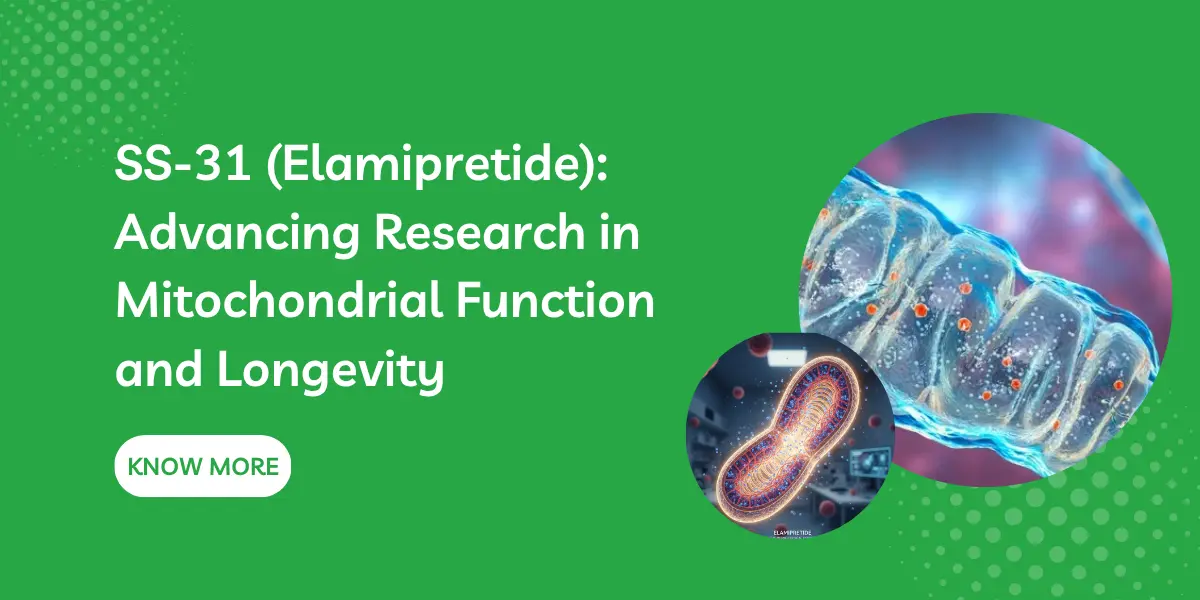
The quest for longevity has shifted from the macro to the micro. While previous generations focused on organ health and systemic vitality, modern regenerative medicine has set its sights on the cellular "power plants" that dictate the pace of biological aging: the mitochondria. At the center of this microscopic revolution is SS-31, a tetrapeptide also known as Elamipretide.
Mitochondrial decay is now recognized as a primary hallmark of aging. When these organelles fail, energy production plummets, and oxidative stress skyrockets, leading to a cascade of cellular dysfunction. SS-31 represents a new class of "mitochondrial-targeted" compounds that don't just mask the symptoms of aging but aim to repair the very machinery of life. For scientists and longevity enthusiasts scouring the market for high-quality Peptides for Sale, SS-31 has become a top-tier subject of investigation.
What is SS-31 (Elamipretide)?
SS-31 is a small, cell-permeable peptide that possesses a unique ability: it can cross the cellular membrane and the outer mitochondrial membrane to reach the inner sanctum of the cell. Its primary target is cardiolipin, a "signature" phospholipid found exclusively in the inner mitochondrial membrane (IMM).
Cardiolipin is the structural glue that holds the Electron Transport Chain (ETC) together. Think of the ETC as a complex assembly line that produces ATP (energy). As we age, cardiolipin undergoes peroxidation and structural changes, causing the assembly line to fall apart. SS-31 binds to cardiolipin, stabilizing it and preventing the "leakage" of electrons that leads to oxidative damage.
Fast Facts on SS-31:
- Scientific Names: Elamipretide, MTP-131, Bendavia.
- Mechanism: High-affinity binding to cardiolipin.
- Research Goal: Restoration of mitochondrial bioenergetics and reduction of ROS.
The Science of Bioenergetics: How SS-31 Functions
To truly appreciate why researchers are rushing to find SS 31 Peptide for Sale, one must understand the three-fold impact this molecule has on cellular health.
- Stabilizing the "Power Plant" Infrastructure
Mitochondria generate energy through a series of protein complexes. For these complexes to work, the inner membrane must be curved into specific folds called cristae. SS-31 helps maintain this curvature by protecting cardiolipin. By keeping the "machinery" physically aligned, SS-31 ensures that the flow of electrons is efficient, maximizing the production of Adenosine Triphosphate (ATP).
- The "Clean Energy" Initiative
When mitochondria are damaged, they become "leaky." Instead of producing ATP, they produce Reactive Oxygen Species (ROS) harmful free radicals that damage DNA and proteins. SS-31 acts like a filter for a smokestack; it helps the mitochondria run "cleaner," significantly reducing the production of ROS at the source. This is a radical departure from traditional antioxidants (like Vitamin C), which try to "mop up" free radicals after they've already been released. SS-31 stops them from being created in the first place.
- Boosting ATP Availability
Higher ATP levels equate to higher cellular "currency." When a cell has an abundance of energy, it can perform repair functions, maintain protein folding, and resist stress more effectively. This increase in ATP is why SS-31 is often studied alongside other performance-oriented compounds, such as Human Growth Hormone Peptide analogs, which also focus on systemic recovery and tissue repair.
Longevity and the "Hallmarks of Aging"
Mitochondrial dysfunction is a driver of several other aging hallmarks, including chronic inflammation (often called "inflammaging") and cellular senescence. By addressing the root cause, SS-31 offers a multi-faceted approach to longevity.
Heart and Kidney Protection
The heart and kidneys are the most mitochondria-dense organs in the body. Research in cardiac models has shown that SS-31 can improve left ventricular function and reduce the fibrosis associated with heart failure. Similarly, in renal studies, peptide has demonstrated a protective effect against ischemic injury, making it a critical Research Peptide for those studying organ preservation.
Muscle Integrity and Sarcopenia
As we age, muscle mass naturally declines a process known as sarcopenia. Much of this is due to the mitochondria in muscle cells becoming inefficient. Early data suggest that SS-31 can improve muscle strength and exercise tolerance by restoring the energetic capacity of skeletal muscle fibers. This makes it a potential partner for those also investigating AOD 9604 5mg, a peptide fragment often researched for its localized fat-burning and metabolic-boosting properties.
Complementary Research: Stacking the Longevity Protocol
In the broader context of regenerative medicine, SS-31 is rarely studied in a vacuum. Researchers often look at how mitochondrial health interacts with other physiological systems, such as sleep, cognition, and weight management.
- Circadian Rhythms: Recovery is as important as energy production. Some researchers look at the synergy between SS-31 and the Delta Sleep Peptide (DSIP), theorizing that better mitochondrial repair during the day leads to more restorative deep-sleep cycles at night.
- Neuroprotection: The brain is an energy glutton, consuming 20% of the body's total ATP. Mitochondrial failure in the brain is a precursor to neurodegeneration. This is why some researchers may Buy Semax 10mg a potent neuropeptide to study alongside SS-31, aiming for a "top-down" approach to cognitive longevity.
Clinical Status and Ongoing Trials
While the theoretical potential of SS-31 is vast, it is currently in various stages of clinical investigation. Some of the most promising areas include:
- Primary Mitochondrial Myopathy (PMM): A rare genetic disorder where mitochondria are fundamentally broken.
- Barth Syndrome: A condition characterized by Cardiolipin deficiency.
- Age-Related Macular Degeneration (AMD): Since the retina is highly metabolic, SS-31 is being explored to prevent the oxidative death of retinal cells.
|
Area of Research |
Proposed Benefit of SS-31 |
|---|---|
|
Neurology |
Reduction of neuroinflammation and improved synaptic plasticity. |
|
Cardiology |
Improved ejection fraction and reduced oxidative stress in heart tissue. |
|
Metabolism |
Potential reversal of insulin resistance in muscle tissue. |
|
Ophthalmology |
Protection of retinal pigment epithelium from oxidative damage. |
Why Quality and Sourcing Matter
Because SS-31 is a complex tetrapeptide, the precision of its sequence is paramount. For research purposes, the purity of the peptide determines the validity of the data. When sourcing a Research Peptide, scientists must look for manufacturers that provide detailed analysis, such as High-Performance Liquid Chromatograpshy (HPLC) and Mass Spectrometry (MS).
In the emerging "bio-optimized" community, the shift away from low-quality, unverified sources is becoming standard. Quality sourcing ensures that the molecule can reach the cardiolipin as intended, rather than being degraded by impurities.
The Future of Mitochondrial Medicine
The era of "mitochondrial medicine" is just beginning. As we move away from treating individual diseases and toward treating the underlying biological processes of aging, SS-31 stands out as a foundational tool. By restoring the powerhouses of our cells, we aren't just adding years to life, we are adding life to years.
Whether you are looking into the cellular repair of SS-31 or exploring the metabolic benefits of AOD 9604 5mg, the goal is the same: cellular resilience. Mitochondrial health is the bedrock upon which all other health interventions are built. Without energy, the body cannot heal, grow, or protect itself.
Final Thoughts for Researchers
The exploration of SS-31 (Elamipretide) is a testament to how far we've come in understanding the molecular basis of vitality. As human trials continue to unfold, we may soon see a paradigm shift in how we approach age-related decline, moving from passive acceptance to active mitochondrial restoration.