
Thymosin Alpha-1 Peptide: Advancing Research in Immune and Cellular Biology
The exploration of the human endocrine and immune systems has led scientists to the discovery of remarkable compounds that the body produces naturally to maintain its internal balance. Among these, Thymosin Alpha-1 (Tα1) stands out as a primary subject of modern biochemical inquiry. Composed of 28 amino acids and originally isolated from the thymus gland, this endogenous peptide is far more than a simple signaling molecule. It is a sophisticated regulator that appears to bridge the gap between innate and adaptive immunity, offering a wealth of potential for researchers studying cellular resilience and systemic defense.
In the world of laboratory science, the demand for high-purity compounds has never been higher. As investigators seek to unravel the complexities of Tα1, they often look for reliable sources of Peptides for Sale to ensure that their experimental data is both accurate and reproducible. This guide explores the structural characteristics, hypothesized mechanisms, and diverse research applications of Thymosin Alpha-1.
Structural Characteristics and Molecular Mechanisms
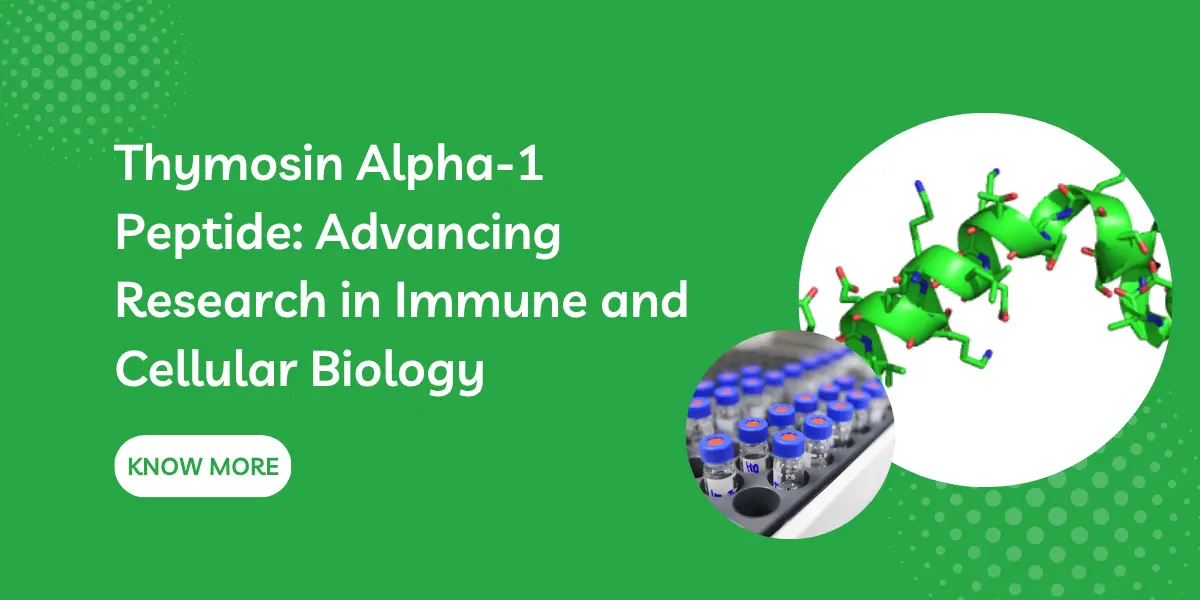
Thymosin Alpha-1 is a small, highly acidic peptide that lacks a complex secondary structure in water, though it adopts a helical shape when interacting with specific membranes or molecular targets. Its high solubility and small molecular weight are features that likely facilitate its ability to move through various biological compartments and interact with a diverse array of receptors.
Activation of Toll-Like Receptors (TLRs)
Central to the research of Tα1 is its hypothesized interaction with Toll-like receptors (TLRs), specifically TLR9 and TLR2. These receptors are the sentinels of the innate immune system, responsible for detecting pathogens and initiating a defense response. Scientists believe that by binding to these receptors, Tα1 triggers a cascade of intracellular signaling pathways, such as the myeloid differentiation primary response 88 (MyD88) pathway.
This interaction is thought to influence the production of cytokines and chemokines, the "messengers" of the immune system. For researchers investigating these pathways, having access to a high-quality Research Peptide like Tα1 allows for a deeper look into how cells transition from a resting state to an active defense mode.
Modulation of NF-κB Signaling
Another area of focus is the peptide's impact on Nuclear Factor kappa B (NF-κB). This protein complex is a master regulator of the immune response to infection and stress. Interestingly, Tα1 appears to have a balancing effect: it may promote pro-inflammatory responses when a threat is present but potentially encourage anti-inflammatory pathways to prevent tissue damage once the threat is neutralized.
Potential in Immunity and T-Cell Research
The thymus gland is the "schoolhouse" where T-cells learn to distinguish between the body's own cells and foreign invaders. Because Tα1 is derived from this gland, its role in T-cell maturation is a primary area of investigation.
- T-Cell Differentiation: Researchers theorize that Tα1 supports the activation and differentiation of CD4+ and CD8+ T-cells. This is critical for adaptive immunity, as these cells are responsible for remembering specific pathogens.
- Dendritic Cell Maturation: Tα1 is also speculated to influence dendritic cells the "antigen-presenting" cells that bridge innate and adaptive responses. By supporting the maturation of these cells, the peptide may enhance the body's ability to recognize and target malignant or infected cells.
In complex immunological studies, researchers sometimes compare the regulatory effects of Tα1 with other specialized compounds. For instance, while Tα1 manages immune signaling, a researcher might also be looking at metabolic regulators like the Adipotide Peptide to see how fat tissue signaling interacts with systemic inflammation.
Tα1 in Cellular Stress and Mitochondrial Function
Beyond the traditional immune response, Thymosin Alpha-1 is being studied for its role in maintaining cellular homeostasis. When cells are under stress whether from oxidative damage, nutrient deprivation, or infection they must activate survival mechanisms.
Autophagy and Integrity
One such mechanism is autophagy, a cellular "recycling" process that breaks down damaged organelles and proteins. Investigations suggest that Tα1 may modulate autophagy, helping the cell maintain its structural integrity under duress. This cytoprotective quality makes it an intriguing tool for studying neurodegenerative diseases or aging.
Mitochondrial Resilience
Mitochondria are the powerhouses of the cell, and their dysfunction is linked to a host of chronic conditions. Research indicates that Tα1 may interact with mitochondrial pathways to support energy production, especially during the high-energy demands of an active immune response. This intersection of metabolism and immunity is a growing field of study, often requiring scientists to seek out specialized compounds like Thymosin Alpha-1 10mg for precise, high-concentration assays.
Strategic Applications in Oncology and Chronic Disease
The multifaceted nature of Tα1 has led to its inclusion in various research models, particularly in oncology and infectious disease.
Oncology Research
Tumors are notorious for creating a "microenvironment" that suppresses the immune system, allowing cancer cells to hide in plain sight. Scientists are using Tα1 to examine if it can "re-awaken" the immune response within the tumor microenvironment. By potentially increasing the visibility of tumor antigens, Tα1 serves as a vital tool for studying how to overcome immune evasion.
Infectious Disease and Inflammation
In models of chronic viral infections, Tα1 is used to study how the host can clear a pathogen without causing excessive "bystander" damage to healthy tissue. Similarly, in chronic inflammatory conditions like metabolic disorders, researchers use the peptide to understand the transition from a pro-inflammatory state to a regulatory, healing state. During such research, scientists might also utilize other specialized agents, such as having BPC 157 For Sale in the lab to study the synergistic effects of immune modulation and tissue repair.
Tissue Repair and Regeneration
One of the more recent "perspectives" on Thymosin Alpha-1 is its potential role in angiogenesis (the formation of new blood vessels) and tissue remodeling.
- Endothelial Interaction: Tα1 is theorized to influence endothelial cells and fibroblasts, which are the primary builders of new tissue during wound healing.
- Wound Healing Models: By modulating the extracellular matrix, the peptide may help prevent the formation of excessive scar tissue (fibrosis), leading to cleaner, more functional tissue recovery.
Researchers looking at the systemic effects of peptides on skin and tissue might also find themselves needing to Buy Melanotan Peptide to study pigment-related cellular responses or UV-protection mechanisms, showing just how interconnected peptide research has become.
Synthetic Production and Laboratory Standards
The shift from isolating Tα1 from animal thymus glands to modern solid-phase peptide synthesis has revolutionized this field of research. Synthetic production allows for:
- Purity: Elimination of biological contaminants.
- Precision: Exact dosing for in-vitro and animal models.
- Availability: Ensuring that global research institutions have the materials they need.
When setting up a laboratory study, the quality of the starting material is the single most important factor. Using a verified Research Peptide ensures that the results seen in the petri dish or the model organism are actually caused by the peptide itself and not impurity.
Conclusion
Thymosin Alpha-1 remains one of the most promising frontiers in cellular biology. Its ability to act as a "biological rheostat" dialing the immune response up or down as needed offers a profound look into the body's natural defense mechanisms. From its hypothesized role in T-cell education and mitochondrial protection to its implications in oncology and tissue repair, Tα1 is a versatile and essential tool in the modern laboratory.
As experimental methodologies continue to evolve, the demand for high-quality peptides will only grow. Whether an investigator is focusing on immune-oncology, chronic inflammation, or the basic mechanics of cellular stress, the insights provided by Thymosin Alpha-1 are likely to remain central to our understanding of life-preserving systems.