
A Scientific Look at GHK Peptide: Inflammation and Oxidative Stress Mechanisms
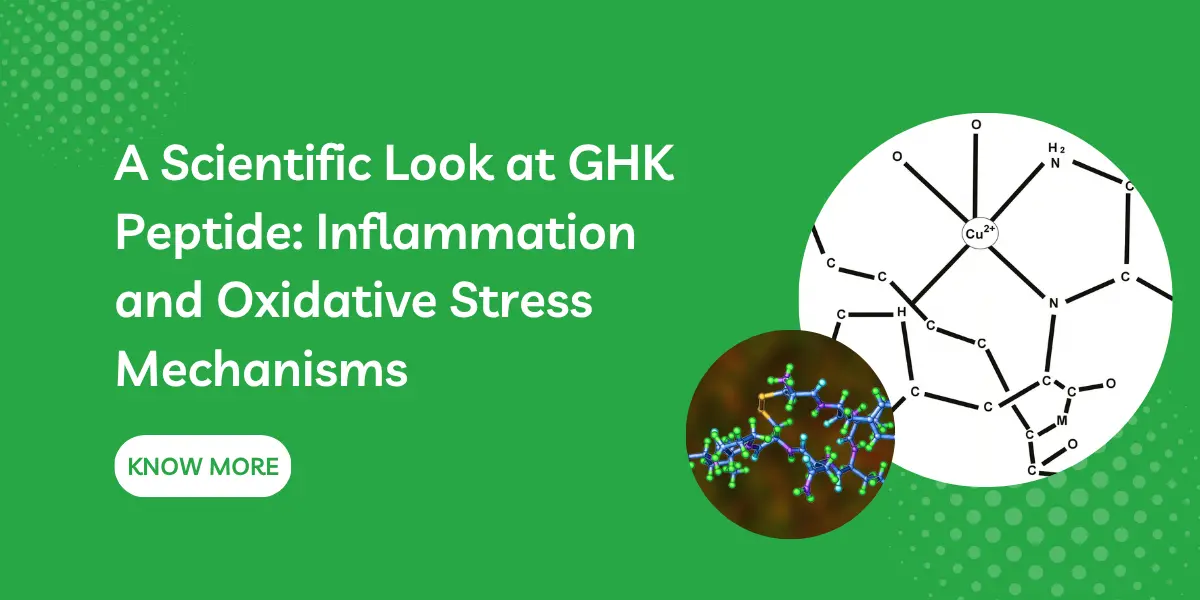
In the vast and intricate world of molecular biology, few compounds have captured the imagination of the scientific community quite like GHK (Glycyl-L-histidyl-L-lysine). Often referred to as a "signal peptide," GHK is a naturally occurring tripeptide found in human plasma, though its levels notably decline as an organism ages. This decline has led researchers to investigate GHK as a pivotal factor in the aging process, particularly concerning how the body manages inflammation and oxidative damage.
When we look at the chemical architecture of GHK, its most striking feature is its high affinity for copper. When it binds with this essential trace element, it forms GHK-Cu, a complex that serves as a cornerstone in regenerative medicine research. Today, we are taking a deep dive into the mechanisms that make this peptide a primary subject for those looking at Peptides for Sale for laboratory investigation.
The Molecular Foundations of GHK
GHK was first isolated in 1973 by Dr. Loren Pickart. His initial observations revealed that albumin from "young" blood could make "old" liver cells function with the vigor of younger tissue. This breakthrough identified GHK as the specific tripeptide responsible for this rejuvenation.
The peptide functions primarily by modulating gene expression. It is estimated that GHK can influence over 4,000 human genes, essentially "resetting" the transcriptome to a healthier, more youthful state. This isn't just about surface-level aesthetics; it's about the fundamental way cells respond to stress and injury. For scientists currently browsing for a Research Peptide to study cellular longevity, GHK remains a top-tier candidate due to this systemic influence.
Understanding the Anti-Inflammatory Cascade
Inflammation is a double-edged sword. While it is a necessary immediate response to injury, chronic inflammation is the "silent killer" behind many age-related diseases. GHK has demonstrated a remarkable ability to suppress the overproduction of pro-inflammatory cytokines.
Suppression of NF-κB
The Nuclear Factor-kappa B (NF-κB) pathway is a major "switch" for inflammation. When activated, it triggers a cascade of cytokines like TNF-alpha and IL-6. Research indicates that GHK can inhibit this pathway, effectively turning down the volume on the body's inflammatory response. This makes it an interesting point of comparison for researchers who also study the anti-anxiety and immunomodulatory effects of compounds like Selank 10mg, which operates on a different but complementary neurological axis.
Modulation of Macrophages
GHK also plays a role in shifting the polarization of macrophages to the body's "clean-up" cells. It encourages the transition from M1 macrophages (which promote inflammation) to M2 macrophages (which promote tissue repair and anti-inflammatory action). This shift is crucial for healing wounded tissue without the formation of excessive scar tissue or chronic pain.
GHK and the Battle Against Oxidative Stress
Oxidative stress occurs when there is an imbalance between free radicals and antioxidants in the body. This imbalance leads to cell and tissue damage, contributing to everything from neurodegeneration to skin aging. GHK acts as a potent protector in several ways.
Copper Chelation and Redistribution
Because GHK binds so effectively with copper, it prevents "free" copper from participating in the Fenton reaction—a process that generates highly reactive hydroxyl radicals. By sequestering copper and delivering it safely to where it is needed (like the enzyme superoxide dismutase), GHK-Cu neutralizes potential damage before it starts. This unique mechanism is why many researchers seek high-purity GHK-Cu for Sale to conduct specific antioxidant assays.
Stimulation of Antioxidant Enzymes
Beyond its role with copper, GHK increases the expression of several key antioxidant genes. It boosts levels of superoxide dismutase (SOD) and glutathione peroxidase. These are the body's primary defense systems against oxidative insults, and GHK essentially provides the blueprints for the cell to build more of these defensive shields.
Synergies in Endocrine and Regenerative Research
While GHK is a powerhouse on its own, it is often studied alongside other signaling molecules to understand the full scope of metabolic and regenerative potential. In the laboratory, researchers often compare the systemic effects of signal peptides like GHK with growth-promoting peptides.
For instance, the study of muscle wasting and tissue repair often involves growth hormone secretagogues. Research into the CJC 1295 Ipamorelin Blend provides insights into how the body can be signaled to release its own growth hormone, which works in tandem with GHK's cellular repair mechanisms. While GHK focuses on the "clean up" and "gene resetting," secretagogues provide the "building signals."
Furthermore, for studies focused on immediate growth signaling without the prolonged spikes of traditional hormones, the use of CJC 1295 No DAC Ipamorelin allows for a more pulsatile, natural GH release pattern. Combining these insights with GHK's ability to lower oxidative stress creates a comprehensive picture of how an organism can maintain homeostasis under environmental pressure.
Additionally, researchers interested in the insulin-like growth factor pathway often look toward IGF-1 LR3. This peptide is studied for its potent effects on muscle hypertrophy and hyperplasia. Understanding how GHK mitigates the oxidative stress often associated with rapid cellular proliferation (like that triggered by IGF-1) is a burgeoning area of cross-disciplinary research.
GHK and Skin Tissue Regeneration
One of the most well-documented areas of GHK research is dermatology. It isn't just about wrinkles; it's about the "quality" of the skin as an organ. GHK-Cu stimulates the synthesis of collagen, elastin, and glycosaminoglycans (GAGs).
What makes GHK superior to many other growth factors in research is its ability to regulate the remodeling process. It doesn't just stimulate collagen; it stimulates the enzymes that break down "bad" collagen (collagenase) and build "good" collagen. This ensures that the skin remains supple and functional rather than becoming fibrotic.
Neurological and Cognitive Implications
Emerging research suggests that GHK may have neuroprotective properties. By reducing oxidative stress in the brain and promoting the expression of nerve growth factors, it has shown potential in animal models for protecting against neurodegenerative conditions.
The peptide's ability to cross the blood-brain barrier or at least influence the signaling molecules that do position it as a fascinating subject for central nervous system research. When researchers examine the calming effects of Selank, they often look at GHK as a foundational support peptide that ensures the underlying neural tissue is healthy enough to respond to such regulatory signals.
The Future of GHK Research
As we move toward a more personalized approach to biology, GHK stands out because of its multifaceted nature. It is a "multi-target" peptide. In an era where many treatments focus on a single receptor or a single pathway, GHK's ability to influence thousands of genes simultaneously offers a more holistic view of cellular health.
For laboratories and independent researchers, the priority is always the purity of the compound. Whether you are looking for a specific CJC 1295 Ipamorelin Blend for metabolic studies or GHK-Cu for inflammatory research, the integrity of the peptide sequence is paramount.
Conclusion: A Cornerstone of Molecular Health
The GHK peptide, particularly in its copper-bound form, represents one of the most promising avenues in research today. Its dual-action approach simultaneously suppressing chronic inflammation and bolstering the body's antioxidant defenses makes it an essential tool for understanding how we might one day mitigate the effects of aging and chronic stress.
By resetting the genetic expression of our cells to a more youthful state, GHK doesn't just mask the symptoms of cellular decay; it addresses the root causes. As the scientific community continues to explore its synergies with other agents from the growth signals of the GH axis to the neuro-modulatory effects of Selank the full potential of GHK is only beginning to be realized. For those in the field, GHK is more than just a peptide; it is a master regulator of biological resilience.