
BPC-157 + TB-500: A Powerful Combination for Enhanced Recovery
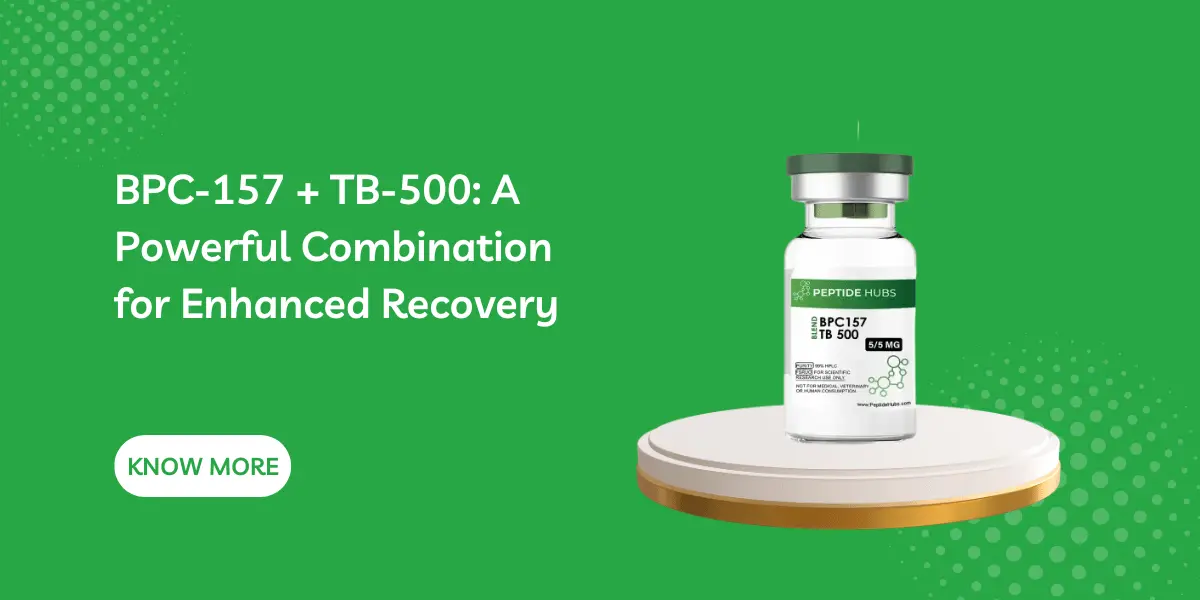
In the expanding world of peptide research, certain compounds stand out for their intriguing potential in tissue regeneration and repair. Among these, BPC-157 and TB-500 have captured significant attention in scientific discussions. Each peptide, when studied individually, shows promise in influencing healing, reducing inflammation, and supporting recovery processes. Yet, when examined together, researchers speculate that they may complement one another in a way that enhances their effectiveness.
This article provides an in-depth look into the possible benefits of combining BPC-157 and TB-500, their hypothesized mechanisms of action, and why their synergy is drawing so much interest in regenerative studies. Consider this your Peptides 101 guide to understanding what makes this duo particularly fascinating.
Understanding Peptides in Research
Before exploring this specific combination, it's worth taking a step back to understand peptides themselves. Peptides are short chains of amino acids the building blocks of proteins that play crucial roles in signalling and regulating biological processes. Because of their ability to influence cellular communication, peptides are increasingly studied for their potential in healing, performance optimization, and overall health.
When discussing the highest quality peptides, the focus is always on purity and reliable synthesis, as these factors ensure accuracy and reproducibility in scientific studies. With peptides like BPC-157 and TB-500, researchers rely on pure compounds to observe their effects on cellular repair and regeneration without unwanted interference.
What Are BPC-157 and TB-500?
BPC-157
BPC-157, short for Body Protection Compound-157, is a synthetic peptide fragment derived from a protein found in gastric juice. It consists of 15 amino acids and is hypothesized to support angiogenesis the formation of new blood vessels and enhance the body's natural repair mechanisms. Researchers speculate that BPC-157 may also help regulate nitric oxide production and influence growth factor activity, making it a strong candidate for tissue healing studies.
Laboratory studies indicate that BPC-157 might assist with tendon, muscle, and even bone repair by stimulating fibroblasts cells critical in wound healing. Its reported anti-inflammatory actions further suggest potential benefits in reducing prolonged or chronic tissue irritation.
TB-500
TB-500 is the synthetic version of Thymosin Beta-4, a naturally occurring peptide present in nearly all human and animal cells. Its 43-amino acid sequence is linked to actin regulation, an essential protein for cell movement and structural organization. Research suggests TB-500 could play an important role in cell migration, differentiation, and wound healing.
In addition, TB-500 is believed to have anti-inflammatory and anti-fibrotic properties, meaning it may help reduce scar tissue while fostering a favourable environment for tissue recovery. Its potential in modulating immune responses also positions it as an interesting target for regenerative research.
How Might They Work Together?
The reason BPC-157 and TB-500 attract so much attention when combined lies in their complementary mechanisms of action. Where one peptide promotes new blood vessel formation, the other aids in cellular movement and structural repair. Together, they may create a multi-layered approach to tissue regeneration.
-
Angiogenesis and Blood Supply
BPC-157 is hypothesized to stimulate vascular endothelial growth factor (VEGF), a key driver of angiogenesis. More blood vessels mean improved nutrient and oxygen delivery to damaged tissues. TB-500, on the other hand, may help regulate inflammation and fibrosis around those new vessels, ensuring they remain functional. This combined effect could accelerate healing by ensuring tissues receive proper circulation.
-
Cell Migration and Differentiation
Cell migration is one of the cornerstones of wound healing. TB-500's potential to regulate actin suggests that it may enhance the ability of cells to travel to injury sites. BPC-157 complements this by supporting fibroblast proliferation, ensuring an adequate supply of repair cells. Together, they may enhance both the quantity and quality of cellular repair responses.
-
Anti-Inflammatory Actions
Chronic inflammation often delays or disrupts healing. BPC-157 is believed to help reduce pro-inflammatory cytokines, while TB-500 may prevent fibrosis and scar tissue buildup. If their hypothesized effects are accurate, this duo could create a healing environment that is less inflamed and more conducive to efficient tissue regeneration.
Possible Applications of the BPC-157 and TB-500 Combination
Musculoskeletal Health
In sports medicine and injury recovery research, the combination of TB 500 BPC 157 is especially intriguing. Their combined properties could potentially accelerate tendon and muscle repair, reduce inflammation, and shorten downtime after injuries. Hypothetical applications include recovery from ligament tears, tendon damage, and muscle strain.
Cardiovascular Repair
Heart tissue regeneration remains one of the biggest challenges in modern medicine. Research suggests that improved angiogenesis (via BPC-157) paired with reduced fibrosis (via TB-500) may offer new pathways for cardiac repair. If validated in future studies, this synergy could aid in recovering from cardiac injuries or improving blood flow in compromised tissues.
Neurological Support
The nervous system is notoriously difficult to repair, but preliminary studies speculate that BPC-157's neuroprotective properties, combined with TB-500's influence on cell migration, might support nerve cell regeneration. Though still highly theoretical, this could open doors to new research in brain and spinal cord repair.
Future Directions in Research
The combination of BPC-157 and TB-500 is still in the realm of speculative science. While each peptide shows potential in its own right, their combined benefits are largely based on early findings and hypothesized mechanisms. Much more research is needed to fully understand how they might interact, what the long-term outcomes are, and how their synergy could be applied across medical fields.
For now, they represent an exciting frontier in regenerative peptide research. Scientists continue to explore whether this pairing can provide a more complete and efficient repair system than either peptide alone.
Final Thoughts
Peptides are becoming an increasingly important part of biological and medical research. By looking closely at compounds like BPC-157 and TB-500, researchers gain insight into how targeted amino acid sequences can influence healing and repair.
While BPC-157 may excel at promoting angiogenesis and cellular proliferation, TB-500 seems more adept at enhancing cell migration and reducing fibrosis. When combined, their complementary properties could potentially provide a stronger, more holistic approach to tissue regeneration.
The world of peptides is vast, and learning about combinations such as BPC-157 and TB-500 is a great example of Peptides 101 in action. As research progresses, maintaining access to the highest quality peptides will be essential for uncovering their full potential in advancing regenerative science.