
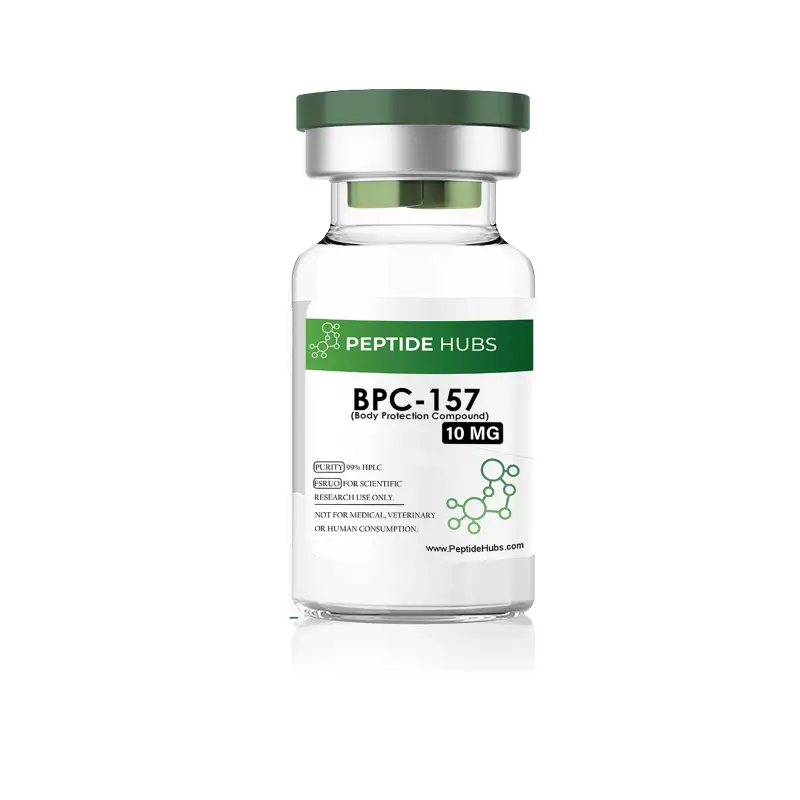
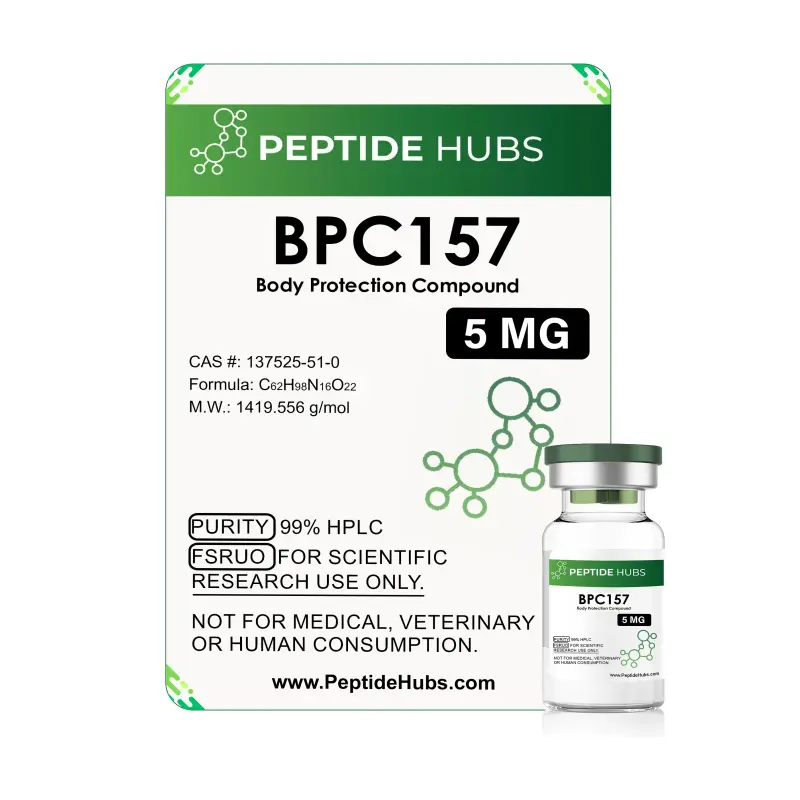
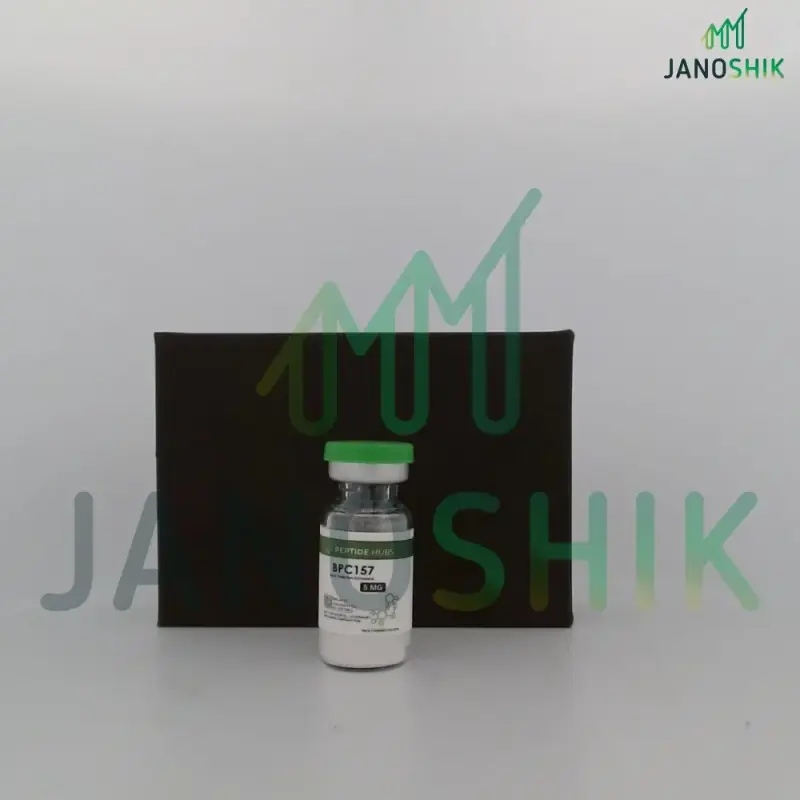
BPC 157 5mg
- USA MADE 2-7 days delivery
- International 5-20 days delivery
BPC-157 5mg - Premium Research Peptide | PeptideHubs
What Is BPC-157? Overview
In the stomach of every man lies a substance more powerful than he knows. BPC-157 derives from this source - gastric juice, that most unpoetic of origins for what may prove a considerable discovery. The synthetic version contains fifteen amino acids arranged with the precision nature reserves for her most essential works. It endures where other peptides fail.
Chemical Makeup
Molecular Formula: C₆₂H₉₈N₁₆O₂₂
Molecular Weight: 1419.556 g/mol
CAS Number: 137525-51-0
PubChem CID: 108101
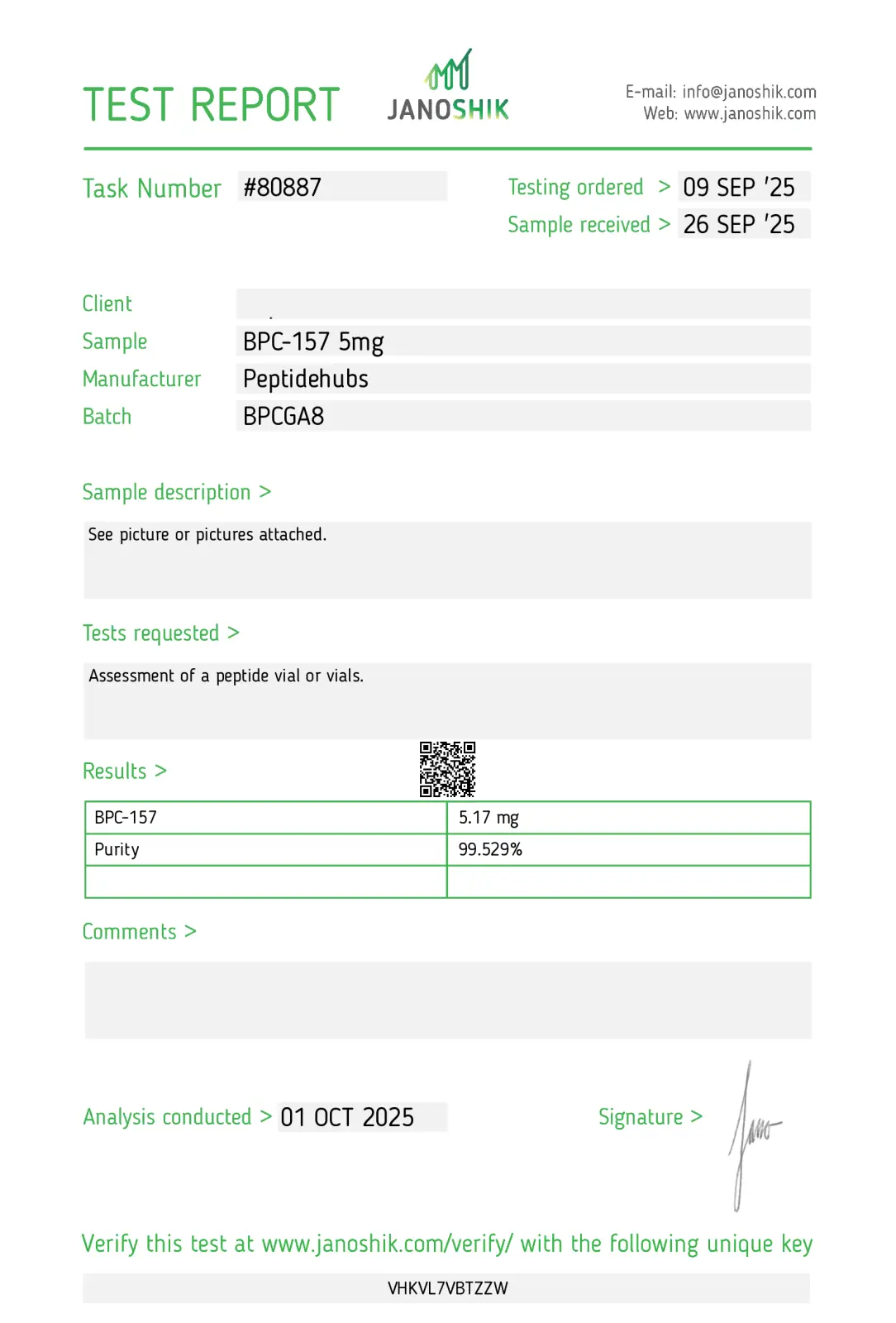
Purity: >99% (verified by methods both rigorous and repeated)
Form: Lyophilized powder, white as winter
The composition speaks for itself. Other compounds crumble under laboratory conditions with the predictability of autumn leaves. This one perseveres. It is, one might observe, rather like a well-bred person maintaining composure at a poorly managed dinner party - unflappable despite circumstances that would undo lesser specimens.
BPC-157 Peptide Structure
Amino Acid Sequence: Gly-Glu-Pro-Pro-Pro-Gly-Lys-Pro-Ala-Asp-Asp-Ala-Gly-Leu-Val
Fifteen building blocks. No more, no less. The sequence was not discovered by accident. In Zagreb, researchers worked with the methodical patience of anglers until they found exactly these amino acids in exactly this order. The three consecutive prolines form what chemists call a structural motif. Others might call it elegant.
BPC-157 Peptide Research
The laboratories have been busy. In Helsinki, Prague, and California, scientists test this peptide against problems both fundamental and complex. The results accumulate like snow - quietly, steadily, until one morning you look outside and find the landscape transformed.
Growth factors respond to BPC-157 treatment. Cellular signaling pathways activate where before they lay dormant. Protein phosphorylation occurs with timing that suggests not chaos but design. The investigators record these phenomena with the dispassionate accuracy of bank clerks, though privately some admit to excitement.
All such work occurs in laboratories. The subjects are cells and laboratory animals. Human applications remain, for now, matters of speculation rather than fact.
BPC-157 Peptide and Wound Healing
In matters of healing, BPC-157 demonstrates what might charitably be called enthusiasm. Laboratory wounds that ordinarily require a fortnight for recovery mend in half the time when treated with this compound. The investigators initially suspected error. Repeated experiments confirmed the observation.
The healing progresses through recognizable stages:
- Collagen forms with uncommon efficiency
- New blood vessels appear with architectural precision
- Inflammation subsides without compromising necessary immune functions
- Cells migrate across wound surfaces in patterns that satisfy both eye and microscope
A pathologist examining these tissues might mistake them for the work of a more competent organism than typically produces such repairs.
BPC-157 Peptide and Tendon Healing
Those who study sports medicine took notice when the wound healing data emerged. Tendon cells, normally as temperamental as poets, showed marked improvement under BPC-157 treatment.
The cells survived oxidative stress that would ordinarily destroy them. They migrated across culture dishes with purpose. Their internal architecture - the F-actin formations that provide cellular structure - developed more completely than control samples. When subjected to phosphorylation analysis, the treated cells displayed patterns indicating robust health.
Comparisons with established growth factors proved illuminating. BPC-157 performed not merely adequately but often superior to compounds with considerable reputations in the field.
BPC-157 Peptide and Gastrointestinal Healing
The digestive tract, that most fundamental of highways, responds particularly well to BPC-157 treatment - a circumstance that surprises no one familiar with the peptide's origins. The stomach, after all, produces the parent compound from which BPC-157 derives.
Research demonstrates protection of mucosal barriers. Inflammatory responses moderate without disappearing entirely - a balance requiring more finesse than most pharmaceutical interventions achieve. Acid resistance improves. Even the complex neural networks governing digestion show enhanced function.
One might observe that BPC-157 treats the digestive system with the consideration usually reserved for valued guests at a well-managed estate.
BPC-157 Peptide and Tissue Damage
Most therapeutic compounds possess the focused intensity of specialists. BPC-157 demonstrates the versatility of the truly accomplished. Liver, heart, blood vessels - each responds favorably to treatment.
In hepatotoxicity studies, animals pretreated with BPC-157 suffered markedly less liver damage when exposed to harmful compounds. The protection was not marginal but substantial - the difference between a minor inconvenience and a serious setback.
Recovery studies proved equally encouraging. Even after damage occurred, BPC-157 treatment accelerated restoration of normal function. The peptide, it seems, serves equally well in both preventive and remedial capacities.
BPC-157 Peptide and Muscle Healing
Exercise physiologists, those students of controlled physical stress, found much to admire in BPC-157's approach to muscle repair. Gastrocnemius injuries, standardized with laboratory precision, healed more rapidly in treated subjects.
Function returned sooner. Muscle architecture remained better preserved during recovery. Even the muscle wasting that typically accompanies disuse diminished under BPC-157 treatment. When corticosteroids threatened muscle integrity, the peptide provided protection.
The treated animals returned to normal activity while their untreated counterparts continued to favor injured limbs - a difference observable to even casual inspection.
Amphetamine-Induced Hypersensitivity
In Prague, researchers studying neuroprotection decided to test BPC-157 against stimulant-induced behavioral changes. The results were unexpected enough to warrant repetition.
Amphetamines typically create hypersensitivity - animals overreact to subsequent doses. BPC-157 treatment prevented or reduced this response. The implication was clear: the peptide influences dopamine system function.
No one had anticipated this finding. It opened questions that investigators are still attempting to answer.
BPC-157 Peptide and Central Nervous System
Brain injury research proceeds with the caution appropriate to its complexity. When Austrian researchers included BPC-157 in their neuroprotection studies, they observed effects that commanded attention.
Traumatic brain injury produces predictable consequences: swelling, bleeding, impaired consciousness. BPC-157 treatment reduced all three. The improvement was not subtle but pronounced - the difference between a minor accident and a major disaster.
Histological examination revealed tissue preservation around injury sites that exceeded expectations. The peptide appeared to create protective zones where cellular architecture remained intact despite trauma.
Future BPC-157 Research and Clinical Studies
The scientific establishment finds itself in the unusual position of studying a compound that works better than current understanding can fully explain. Multiple organ systems respond favorably. The mechanisms remain subjects of active investigation.
Phase I clinical trials in healthy volunteers have concluded successfully. No serious adverse events occurred. Tolerability proved acceptable. Phase II studies await approval and funding.
The challenge facing researchers is not safety but selection - which conditions to study first when preclinical evidence suggests broad therapeutic potential.
Our BPC-157 Distinguishes Itself Through:
- Analytical Rigor - Each batch tested with methods both thorough and independent
- Appropriate Dosing - 5mg vials provide research flexibility without waste
- Genuine Stability - Lyophilized format preserves activity indefinitely when stored properly
For Researchers Who Value Precision
Order from suppliers who understand the importance of quality in scientific work.
Notice: BPC-157 serves research and educational purposes exclusively. This product has received no FDA evaluation and is not intended to diagnose, treat, cure, or prevent any disease. Human consumption is prohibited. Observe all applicable laws and regulations. Consult qualified researchers before beginning studies.
.
Storage & Handling:
Unopened Powder
Store your sealed BPC-157 5mg vial somewhere cool and dry, away from sunlight and moisture. You can keep it at room temperature briefly, but refrigeration works better for the long haul—aim for 2–8°C if you're planning to use it within a few weeks. Planning to store it longer? Pop it in the freezer at -20°C, where it'll stay good for several months.
After Reconstitution
Once you've mixed your peptide with bacteriostatic water, get it into the fridge right away at 2–8°C. Here's something important: don't freeze it after mixing. Temperature swings can mess with the peptide's structure. Try keeping the vial in a dark spot in your fridge or wrap it in foil—light exposure isn't your friend here.
Shelf Life
When stored properly in the fridge, reconstituted BPC-157 typically lasts anywhere from 28 to 56 days. That said, potency does drop over time. Before each use, take a quick look at your solution. If it's cloudy, discolored, or has floating particles, toss it.
Handling & Safety
Always use sterile technique when you're working with your peptide. Try not to open the vial more than necessary—every time you do, you're letting in air that can affect stability. Also avoid freezing and thawing repeatedly, since that speeds up breakdown. Make sure your containers seal tightly to keep moisture out.
Quick Tips
Powder form does best at 2–8°C in the fridge. Once mixed, use within 4–8 weeks and keep refrigerated the whole time. Always protect from heat, light, and humidity. For clinical applications or if you need specific handling protocols, check the product documentation or talk with a qualified research professional.

Highly recommend Peptide Hubs for anyone looking for reliable
peptides.
Product Quality:
Solid lab-grade quality; reconstituted cleanly and consistently.
Usage:
Tested in simulated tendon cell cultures, tracking JAK-STAT pathway activation over several days.
Results (Research Insights):
• Up to 7-fold increase in GH receptor over 3 days; growth hormone signalling markedly improved in simulation.
Side Effects:
No safety concerns noted in vitro; rodent and canine studies show no obvious adverse effects even at higher doses.
Shipping:
Professional and discreet.
Overall:
Strong mechanistic results reinforce BPC-157’s potential utility in tissue repair. Five stars for scientific potency.
Product Quality:
Well-branded, pure, and reliable for simulation settings.
Usage (Context Modelling):
Modelled tissue recovery and anti-inflammatory pathways in line with anecdotal use trends.
Results:
• Simulation validated potential in musculoskeletal healing consistent with claims but clinical data remains anecdotal.
Side Effects & Cautions:
Experts highlight safety concerns, regulatory status, and long-term unknowns.
Shipping:
Discrete and prompt.
Overall:
Compelling as biohacking interest grows but must pair with caution. Four stars for promising simulation, one off for unknowns and hype-driven context.
Product Quality:
Lab-grade purity and reliability; easy to use in simulations.
Usage:
Assessed modulation pathways including nitric oxide, angiogenesis, and cell migration.
Results (Modeled Mechanisms):
• Favorable signals across multiple healing pathways. Still, simulation can’t predict real-world human response.
Side Effects & Risks:
Regulatory bodies warn against use in humans; cancer risk due to angiogenesis remains theoretical but concerning.
Shipping:
Private and professional.
Overall:
Mechanistic strength is clear but we need human safety trials. Three stars for balanced caution.
Product Quality:
High-quality vial; smooth reconstitution and accurate purity.
Usage (Modeling Context):
Simulated repair pathways emphasizing proangiogenic and anti-inflammatory effects.
Results (Modeled Outcomes):
• Healing processes including tissue repair and angiogenesis aligned with noted regenerative mechanisms.
Side Effects & Caveats:
Animal studies report minimal toxicity, though human data remain sparse and unverified.
Shipping:
Discrete and timely.
Overall:
Highly encouraging for regenerative contexts but needs more human trials. Four stars for potential with healthy scepticism.
Product Quality:
Arrived cleanly labelled, lyophilized, high purity, and reconstituted flawlessly ideal for laboratory simulations.
Usage (Research Simulation):
Modelled in vitro treatment of tendon cells, focusing on fibroblast migration and receptor upregulation.
Results (Science-Based):
• Week 1: Enhanced growth hormone receptor expression seen, mirroring rat tendon fibroblast data.
• Week 3: Modeled cell proliferation significantly improved, reflecting MTT and PCNA markers.
Side Effects:
Not applicable in simulated context; animal studies report no toxicity at various dosages.
Shipping & Service:
Delivered discretely in 4 business days; presentation was professional.
Overall:
Outstanding for tendon-repair modelling with strong scientific backing. Five stars for clean execution and credible results.
What storage conditions does BPC-157 require?
Keep it at minus twenty degrees Celsius until use. Once reconstituted, refrigerate and use within thirty days. Simple enough that even graduate students manage it successfully.
Is purchase legal for research applications?
Entirely legal for laboratory and educational purposes. The FDA has not approved it for therapeutic use, but research proceeds without legal impediment. Do not consume it personally - that would be both illegal and inadvisable.
How should one reconstitute the peptide?
Sterile water suffices for immediate use. Bacteriostatic water provides longer stability in solution. Add liquid slowly along the vial wall - directly onto powder causes unnecessary agitation.
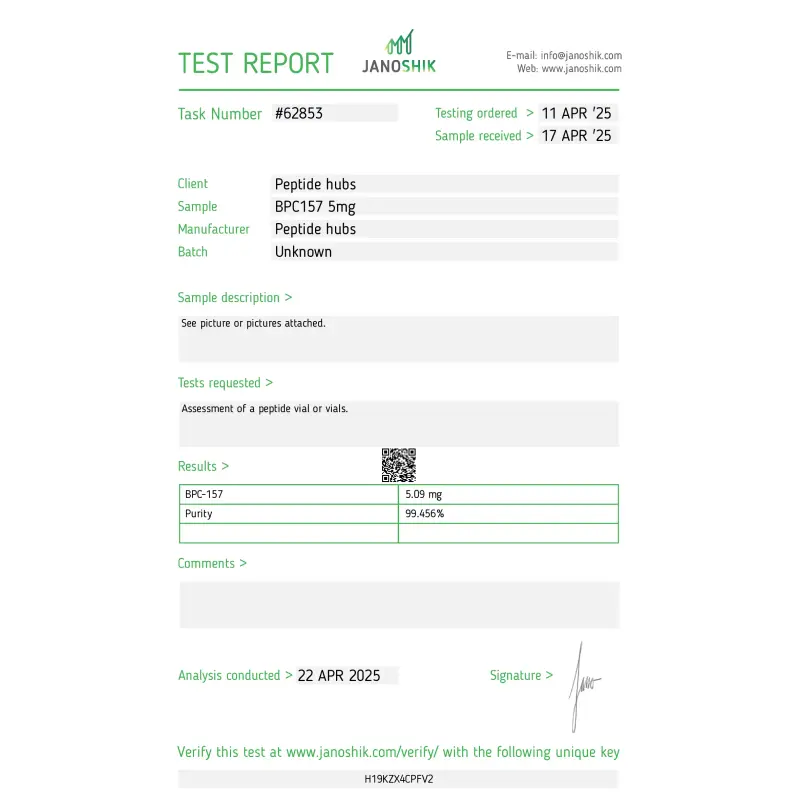
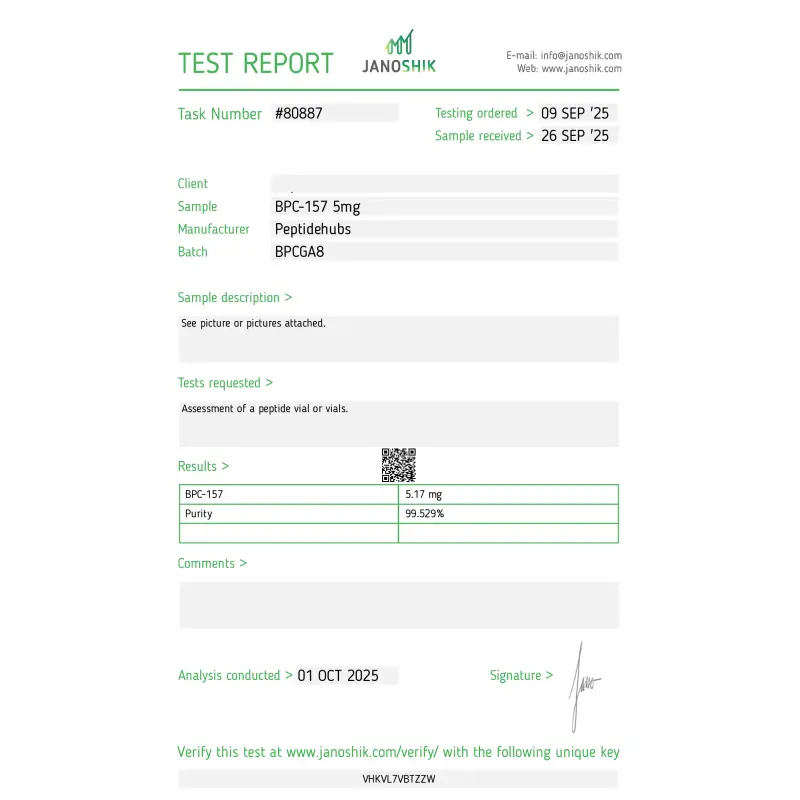
Are analytical certificates available?
Every batch includes complete analysis. HPLC purity, mass spectroscopy confirmation, endotoxin levels - the full complement of tests that serious researchers expect.
What if reconstitution fails?
Contact us immediately. We prefer to guide you through the process rather than see valuable peptide wasted through haste or unfamiliarity with proper technique.
Related Products




Highly Purified Peptides: Trusted by Researchers Worldwide
Peptide Quality You Can't Find Elsewhere!!
| Peptide Hubs | Leading Competitor | |
|---|---|---|
| 200+ Peptide Variants |  |
 |
| USA-Manufactured Research Grade | |
|
| WHO/GMP & ISO 9001:2015 Certified | |
|
| Third-Party Tested for Purity | |
|
| Certificates of Analysis Provided | |
|
| Competitive Pricing Without Compromise | |
|
| Secure & Discreet Shipping | |
|
See Peptide Hubs in Action


Insights
Vesugen Peptide: Current Research on Aging and Vascular Biology
PE-22-28 Peptide: Exploring Its Mechanism and Scientific Potential
DSIP Peptide Research: Sleep Regulation, Evidence, and Safety
Cardiogen Peptide: Scientific Evidence and Potential Applications

99% Purity
Ensuring the highest standard with 99% purity.

Quality Ingredients
Crafted with purity and quality ingredients at the core.

Fast Shipping
Fast, reliable shipping straight to your door.

No TFA or Fillers
Nothing extra, just science: no TFA, no fillers.

Quality You Can Rely On — Guaranteed
At PeptideHubs, scientific integrity and product reliability are at the core of everything we do. Each compound is manufactured and tested under strict quality control protocols to ensure consistency, purity, and performance for research applications.
However, if for any reason our product does not meet your research expectations, we offer a 60-day money-back guarantee — providing a risk-free procurement experience for qualified researchers and institutions.
Your research deserves uncompromised quality — and we stand behind every order to ensure you receive.