
Enhancing Bone Mineral Density with Peptides: BPC157, AOD9604, and MOTS-c Explained
Understanding the Osteoporosis Crisis
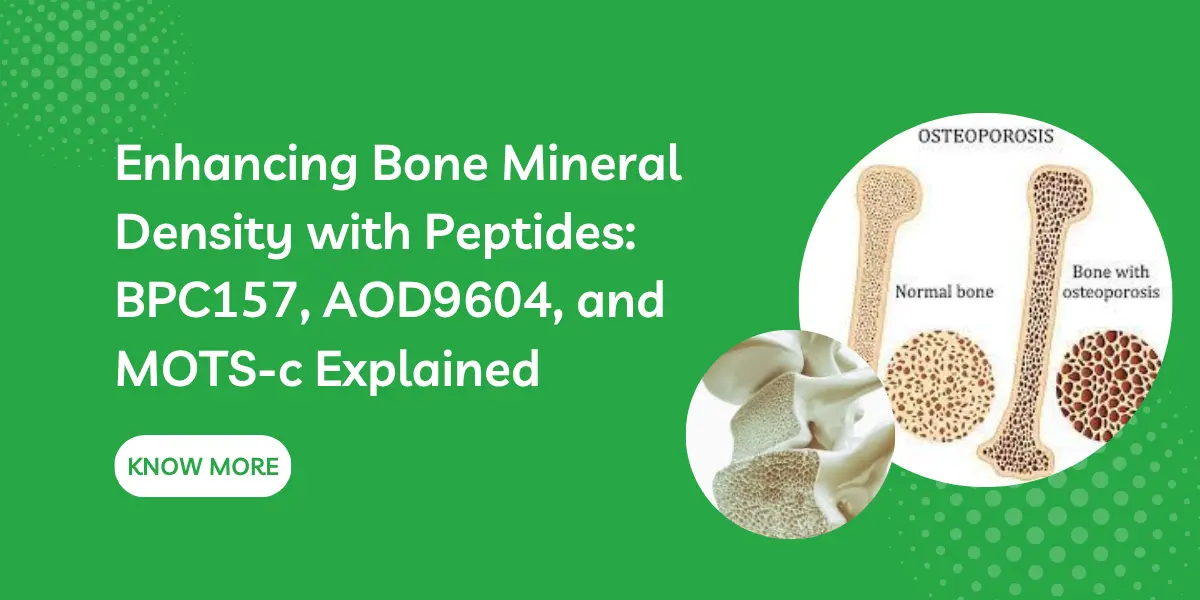
Osteoporosis stands as the most widespread skeletal system disease globally, characterized by deteriorating bone microarchitecture that leads to increased fragility and heightened fracture risk. This silent disease affects millions worldwide, particularly postmenopausal women, aging populations, and individuals with certain metabolic conditions or those undergoing specific drug therapies.
What makes osteoporosis particularly challenging is that fracture healing in affected patients progresses significantly slower and less effectively than in individuals with healthy bone density. The cellular and molecular mechanisms underlying this condition remain partially understood, creating an urgent need for innovative therapeutic approaches that can address bone healing at the fundamental biological level.
Recent scientific breakthroughs have identified four remarkable peptides BPC-157, AOD-9604, MOTS-c, and 11R-VIVIT that demonstrate substantial healing effects for osteoporosis across various experimental models. These discoveries represent a paradigm shift in how we approach bone health and regeneration.
BPC-157: The Gastric Peptide with Remarkable Bone-Healing Properties
BPC-157 emerges from an unexpected source of human gastric juice. This synthetic peptide sequence replicates a portion of the naturally occurring Body Protection Complex, earning its reputation as a multi-system healing agent with applications far beyond digestive health.
The connection between gastric function and bone health might seem counterintuitive, yet it's firmly established in medical literature. Gastrectomy surgical removal of part or all of the stomach significantly increases osteoporosis risk, metabolic abnormalities, and fracture susceptibility. This observation led researchers to investigate whether gastric peptides might possess osteogenic (bone-forming) activity.
Clinical Evidence for Bone Regeneration
Groundbreaking research utilizing a segmental osteoperiosteal bone defect model in rabbits revealed BPC-157's extraordinary capabilities. In this rigorous study, researchers created bone defects that remained incompletely healed in all control animals for six weeks, a challenging baseline that mimics the healing difficulties seen in osteoporotic patients.
The protein BPC 5mg dosing protocols demonstrated remarkable efficacy. Rabbits receiving BPC-157 through various administration routes percutaneous injection directly into the bone defect, intramuscular injection, or continuous delivery showed significant improvement in bone healing. The results were assessed using multiple objective measures: radiographic assessment of callus surface, microphotodensitometry, and quantitative histomorphometry.
Strikingly, intramuscular administration of BPC-157 at 10 mg/kg or even minimal doses of 10 ng/kg for 14 days produced results comparable to percutaneous injection of autologous bone marrow or autologous bone grafting procedures considered gold standards in orthopedic medicine. This peptide achieved similar outcomes through a simple injection protocol, without requiring invasive harvesting procedures.
The implications extend beyond convenience. BPC-157 has demonstrated an excellent safety profile in toxicological studies, showing no adverse effects even at very high doses. Its versatility in addressing wounds, burns, liver damage, digestive dysfunction, and now bone healing positions it as a comprehensive tissue regeneration agent. The peptide's effectiveness across local and systemic administration routes, combined with its apparent lack of unwanted effects, suggests it could become a cornerstone in future osteoporosis management protocols.
AOD-9604: Targeted Cartilage Regeneration Without Growth Hormone Side Effects
AOD 9604 represents a sophisticated refinement of growth hormone (GH) therapy. This peptide consists of a specific 8% fragment of the GH molecule, carefully selected to activate beneficial pathways both IGF-1 and direct cellular signaling while avoiding the proliferative effects and insulin resistance associated with full GH administration.
Breakthrough Research in Osteoarthritis Treatment
Korean researchers conducted a compelling investigation into AOD-9604's therapeutic potential using a collagenase-induced knee osteoarthritis model in rabbits. This study design is particularly relevant because osteoarthritis and osteoporosis often coexist, especially in aging populations, creating compounded challenges for mobility and quality of life.
The research compared four treatment protocols: saline control, hyaluronic acid (HA) alone, AOD-9604 alone, and a combination of AOD-9604 with HA. The combination therapy group demonstrated superior outcomes across all measured parameters. Morphological and histopathological assessments revealed significantly lower degeneration scores in the AOD-9604 plus HA group compared to all other treatments.
Perhaps most clinically relevant, the lameness period, a direct measure of functional recovery was dramatically shorter in rabbits receiving combination therapy. This finding translates to faster return to normal activity, reduced pain duration, and improved quality of life outcomes that matter profoundly to patients struggling with joint degeneration.
The study concluded that intra-articular AOD-9604 injections, particularly when combined with hyaluronic acid, significantly enhanced cartilage regeneration. This synergistic effect suggests that peptide-based strategies for metabolic health can be optimized through thoughtful combination therapies that address multiple aspects of tissue degeneration simultaneously.
MOTS-c: Mitochondrial Power for Bone Formation
MOTS-c represents a fascinating discovery in cellular biology: a functional peptide encoded within mitochondrial DNA, specifically within the 12S rRNA locus. This 16-amino-acid peptide demonstrates the sophisticated communication network between mitochondria and the cell nucleus, particularly during metabolic stress.
Metabolic Regulation and Bone Health
The metabolic effects of MOTS-c are extensive and well-documented. By inhibiting the methionine-folate cycle, this peptide triggers a cascade of beneficial adaptations: increased PGC-1α expression (a master regulator of energy metabolism), AICAR accumulation leading to AMPK activation, and enhanced cellular energy sensing. These mechanisms explain why Mots C peptide for weight loss has gained attention among metabolic health researchers and sports performance athletes.
MOTS-c decreases insulin resistance and increases GLUT4 uptake in muscle tissue, improving glucose metabolism throughout the body. Intriguingly, Japanese populations known for the longest lifespans globally show distinct MOTS-c variants associated with their exceptional longevity, suggesting this peptide plays a role in healthy aging.
Direct Effects on Bone Collagen Synthesis
Recent research has unveiled MOTS-c's direct impact on bone formation through the TGF-β/SMAD signaling pathway. Using human osteoblast cell lines (hFOB1.19), researchers demonstrated that MOTS-c treatment significantly increased cell viability in a time- and concentration-dependent manner.
The peptide enhances expression of COL1A1 and COL1A2 genes encoding type I collagen, the primary structural protein in bone matrix. This effect was mediated through upregulation of TGF-β and SMAD7, key signaling molecules in bone formation. When researchers blocked these pathways, the collagen-promoting effects of MOTS-c were partially reversed, confirming the mechanism of action.
Type I collagen synthesis is fundamental to bone strength and structure. By promoting this process through the TGF-β/SMAD pathway, MOTS-c addresses osteoporosis at its cellular foundation. The pathway regulates bone marrow mesenchymal stem cell differentiation into osteoblasts, promotes osteoblast proliferation, and stimulates extracellular matrix synthesis for all critical components of healthy bone formation and maintenance.
11R-VIVIT: Precision Targeting of Bone Formation Pathways
Peptide 11R-VIVIT represents a highly specific therapeutic approach, functioning as a selective inhibitor of NFAT (Nuclear Factor of Activated T-cells) without affecting upstream calcineurin signaling. This specificity is crucial because it allows targeted intervention in bone metabolism without disrupting other calcium-dependent cellular processes.
The NFAT Pathway in Bone Metabolism
NFAT signaling plays complex roles in bone biology. While essential for certain developmental processes, excessive NFAT activation inhibits osteoprogenitor cell formation, the precursor cells that develop into bone-forming osteoblasts. Conversely, blocking NFAT signaling promotes osteoblastic differentiation of mesenchymal stem cells, making it an attractive therapeutic target for osteoporosis.
Breakthrough Research in Osteoporotic Fracture Healing
Researchers established a rat model of osteoporotic femoral fractures to evaluate 11R-VIVIT's therapeutic potential. Daily local injections of the peptide were compared against saline controls, with healing assessed through micro-CT scans and histological staining.
The results were striking. 11R-VIVIT significantly enhanced fracture healing in osteoporotic rats by modifying the AKT/NFATc1 signaling pathway. The peptide promoted a crucial shift in bone marrow-derived mesenchymal stem cells (BMSCs) toward an osteoblastic phenotype essentially redirecting these stem cells away from fat formation and toward bone formation.
Additionally, 11R-VIVIT promoted autophagy, a cellular "quality control" process that removes damaged components enhancing osteogenic differentiation of osteoporotic BMSCs. This multi-level intervention addressed both the signaling pathways and cellular maintenance processes necessary for effective bone formation.
The protein kinase B (AKT)/NFATc1 pathway regulation by 11R-VIVIT represents a sophisticated approach to bone regeneration, potentially providing new directions for stem cell-based osteoporosis treatments.
The Future of Peptide Therapy in Bone Health
The convergence of these four peptides BPC-157, AOD-9604, MOTS-c, and 11R-VIVIT represents a new frontier in osteoporosis management. Each addresses different aspects of bone health through distinct mechanisms:
- BPC-157 promotes overall tissue healing and bone defect repair
- AOD-9604 enhances cartilage regeneration without unwanted growth hormone effects
- MOTS-c improves metabolic health while directly stimulating collagen synthesis
- 11R-VIVIT redirects stem cells toward bone formation through targeted pathway inhibition
For researchers and clinicians exploring these therapeutic options, the availability of research-grade peptides for sale from reputable suppliers enables continued investigation into optimal dosing protocols, combination therapies, and patient selection criteria.
Conclusion: A Paradigm Shift in Osteoporosis Treatment
The discovery that multiple peptides can effectively address osteoporosis through complementary mechanisms suggests that the future of bone health may lie not in single-drug approaches, but in sophisticated combination strategies that address the multifaceted nature of bone metabolism.
These peptides offer several advantages over traditional osteoporosis treatments: targeted mechanisms of action, favourable safety profiles, and the potential for local or systemic administration depending on clinical needs. As research progresses, peptide-based therapies may transform osteoporosis from a progressive, debilitating condition into a manageable aspect of healthy aging.
The scientific evidence supporting these four peptides provides hope for millions suffering from osteoporosis and related bone disorders. Through continued research and clinical investigation, peptide therapeutics may soon become standard interventions for maintaining bone health throughout the lifespan.