
Epitalon in Focus: Investigating Telomere Biology and Aging Mechanisms
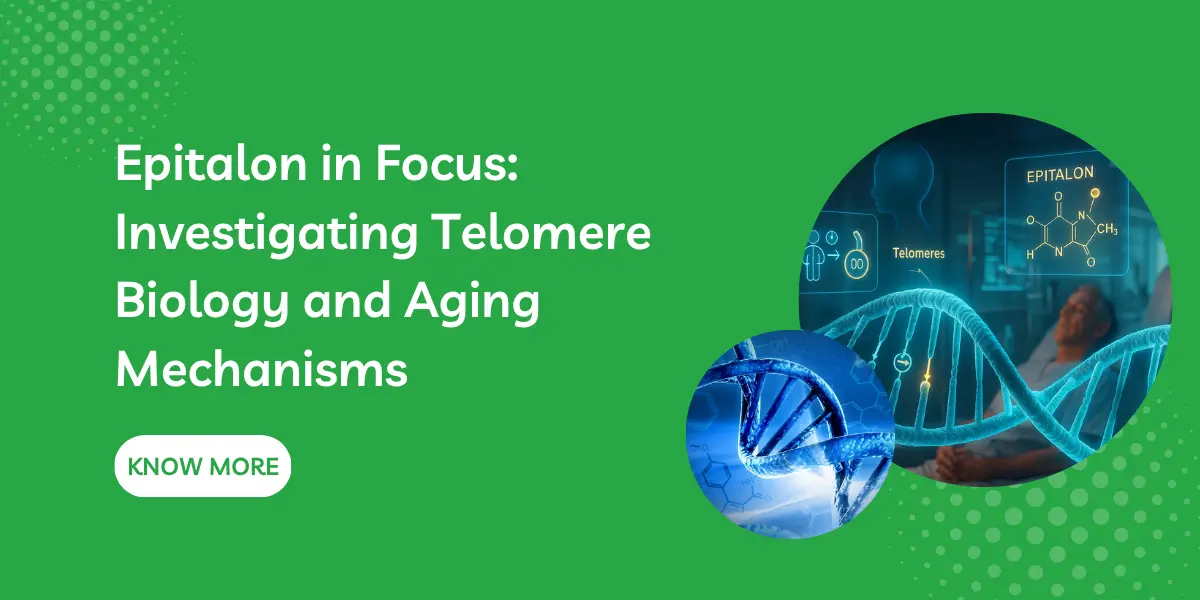
The quest to understand the biological clock has moved from the realm of science fiction into the rigorous world of molecular biology. At the center of this transition is a short, four-amino acid chain known as Epitalon (or Epithalon). Originally synthesized by Professor Vladimir Khavinson at the St. Petersburg Institute of Bioregulation and Gerontology, this tetrapeptide has become a primary Research Peptide for those investigating the fundamental mechanisms of cellular aging.
While many compounds aim to mask the outward signs of aging, Epitalon is studied for its potential to interact with the very "caps" of our DNA the telomeres. This article explores the scientific landscape of Epitalon, its role in the neuroendocrine system, and why it remains a focal point in longevity research.
The Telomere Theory of Aging
To understand Epitalon, one must first understand the telomere. Telomeres are repetitive nucleotide sequences at each end of a chromosome, which protect the end of the chromosome from deterioration or from fusion with neighboring chromosomes.
Think of them like the plastic tips (aglets) on shoelaces; once the tip wears away, the lace begins to unravel. Every time a cell divides, the telomeres become slightly shorter. When they reach a critically short length, the cell can no longer divide and enters a state of programmed cell death or senescence. This process is known as the Hayflick Limit.
The Role of Telomerase
Telomerase is an enzyme that can "rebuild" these chromosomal tips by adding DNA sequence repeats. In most adult somatic cells, telomerase is inactive. Epitalon is hypothesized to act as an epigenetic modulator, potentially "switching on" the telomerase gene (TERT), allowing cells to exceed their normal reproductive lifespan. For researchers looking to Epitalon Buy Online, the primary goal is often to observe this enzymatic activation in controlled laboratory settings.
Epitalon and the Pineal Gland
Beyond DNA protection, Epitalon appears to have a profound relationship with the pineal gland, a small endocrine gland in the brain that regulates the sleep-wake cycle. The pineal gland is responsible for the production of melatonin, a hormone that is not only crucial for sleep but also acts as a powerful systemic antioxidant.
Restoring Circadian Rhythms
As organisms age, the pineal gland often undergoes calcification or reduced sensitivity, leading to a decline in melatonin production. Research conducted on animal models suggests that Epitalon may restore the gland's sensitivity and increase the nocturnal secretion of melatonin. This "neuroendocrine reset" is believed to be a secondary mechanism through which Epitalon exerts its life-extending effects, as proper sleep and antioxidant levels are foundational to biological resilience.
This systemic approach to aging targeting both the cellular level (telomeres) and the hormonal level (pineal gland) is why Epitalon is frequently compared to other multifaceted signaling molecules. Researchers exploring high-end metabolic support often look for specialized combinations like a Glow Blend Peptide or a Klow Blend Peptide, which aim to harmonize systemic functions much like Epitalon targets the pineal axis.
Investigating the Synergy: Epitalon and Growth Signaling
In the broader context of endocrine research, Epitalon is rarely studied in complete isolation. Scientists are increasingly interested in how telomere maintenance interacts with growth signaling.
The GH/IGF-1 Axis
Aging is characterized by a decline in both telomere length and the production of growth hormones. While Epitalon works on the "clock" of the cell, a Human Growth Hormone Peptide (such as a secretagogue like Ipamorelin or CJC-1295) focuses on the "machinery" of the cell promoting protein synthesis, muscle repair, and fat metabolism.
The intersection of these two fields is a burgeoning area of study. The theory suggests that while growth hormones signal a cell to work and repair, telomerase activators like Epitalon ensure the cell has the genomic stability to follow those instructions without reaching premature senescence.
Clinical Observations in Animal Models
Much of the excitement surrounding Epitalon stems from long-term studies conducted on rodents and fruit flies. These studies have reported several key hypothesized outcomes:
- Extension of Lifespan: Some studies have noted a significant increase in the maximum lifespan of experimental groups, sometimes by as much as 30–50%.
- Reduced Spontaneous Tumor Incidence: By maintaining genomic stability through telomere protection, Epitalon may reduce the likelihood of the chromosomal "errors" that lead to oncogenesis.
- Visual Health: Research in retinitis pigmentosa models suggests that Epitalon may preserve the function of retinal cells, highlighting its potential in neuro-degenerative research.
- Immune System Support: By potentially preventing the senescence of T-cells (a process known as immunosenescence), Epitalon may help maintain a "younger" immune response in aged subjects.
Laboratory Best Practices and Purity
For any researcher, the validity of a study depends on the quality of the compounds used. When sourcing Peptides for Sale, it is vital to ensure that the chemical is free from fillers and contaminants. Because Epitalon is a delicate peptide, its stability is a primary concern.
Reconstitution and Storage
In a laboratory setting, Epitalon is typically provided in a lyophilized (freeze-dried) powder format. To prepare the peptide for an assay, researchers must use a sterile solvent. Finding a reliable source for Bacteriostatic Water for Sale is as important as the peptide itself, as contaminated water can degrade the peptide or introduce variables that ruin a study. Proper storage usually at sub-zero temperatures prior to reconstitution is essential to maintain the structural integrity of the tetrapeptide.
Epitalon vs. Other Longevity Peptides
While the market for research compounds is vast, Epitalon occupies a unique niche. Unlike some peptides that provide immediate, visible changes (such as those focused on fat loss or muscle gain), the effects of Epitalon are cumulative and focused on the long-term biological "ledger."
|
Research Target |
Epitalon |
GHRH/GHRP Blends |
|---|---|---|
|
Primary Mechanism |
Telomerase Activation |
Pituitary GH Stimulation |
|
Target Organ |
DNA / Pineal Gland |
Pituitary Gland |
|
Main Goal |
Genomic Stability |
Metabolic Efficiency |
|
Visible Result |
Longevity / DNA Repair |
Muscle Mass / Fat Loss |
Researchers often find that while secretagogues provide the "fuel" for youthful function, Epitalon provides the "firewalls" that prevent the genetic code from degrading under the stress of increased metabolic activity.
Summary: The Future of Bioregulation
Epitalon represents a paradigm shift in how we view the aging process. It suggests that aging is not an inevitable, linear decay, but rather a regulated biological program that can be influenced by specific signaling molecules. By targeting telomerase activity and the pineal gland, Epitalon addresses the two most critical drivers of biological decline: genomic instability and hormonal exhaustion.
As we move forward, the focus will likely shift to how we can best integrate these findings. Whether it is through the study of localized repair blends or systemic regulators, the goal remains the same: extending the "healthspan" of the organism.
For the scientific community, the availability of high-purity compounds is the engine of this progress. Whether a lab is looking to Epitalon Buy Online for a new study or exploring the restorative properties of a Glow Blend Peptide, the focus must remain on the precision of the sequence and the accuracy of the data. Epitalon is not just a peptide; it is a key to unlocking the mysteries of the human biological clock, providing a window into a future where the mechanisms of aging are understood, managed, and perhaps even mastered.