
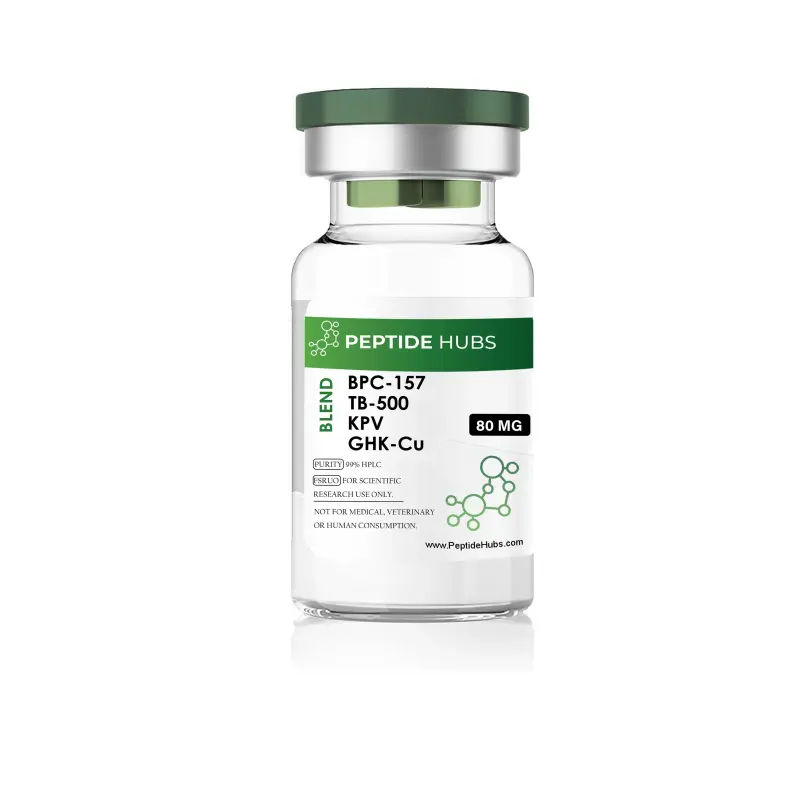
Klow Blend 80mg
- USA MADE 2-7 days delivery
- International 5-20 days delivery
THIS PRODUCT IS INTEDED AS A RESEARCH CHEMICAL ONLY.
This designation allows the use of research chemicals strictly in vitro for testing and laboratory experimentation only. All products information available on this website is for educational purposes only. Bodily introduction of any kind into humans or animals is strictly forbidden by law. This product should only be handled by licensed, qualified professional. This product is not a drug, food or cosmetic and may not be misbranded, misused or mislabled as a drug food or cosmetic.
BPC-157 + TB-500 + KPV + GHK-Cu 80mg (Klow Blend)
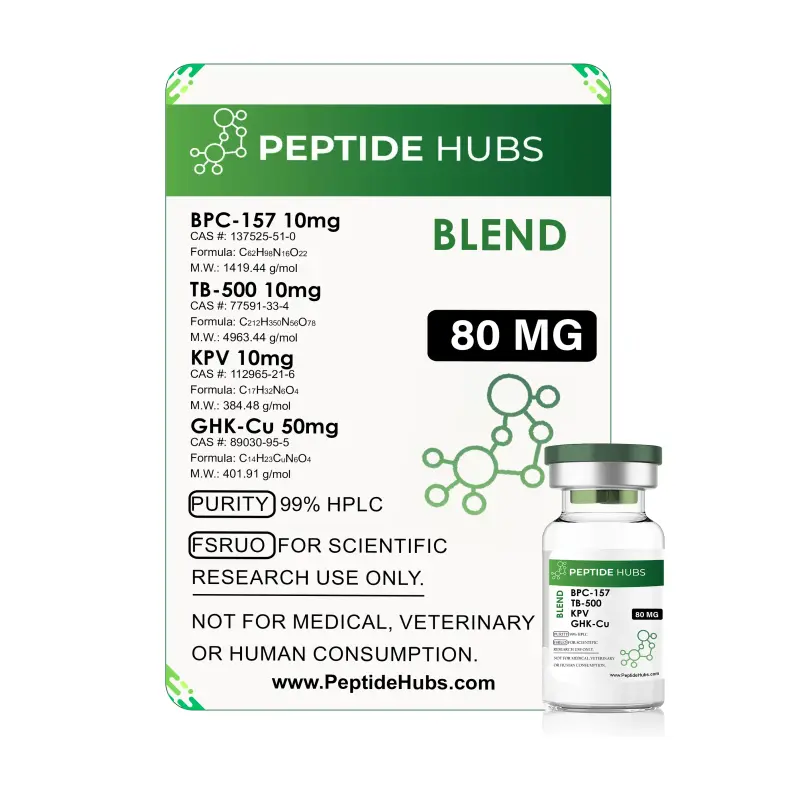
The Klow Blend, we are pleased to inform the discerning researcher, represents a formulation of considerable deliberation and scientific foresight—the convergence of four peptides whose independent character and evident biochemical compatibility have been determined with appropriate scientific rigour and methodical precision. This preparation, delivering BPC-157 (10mg), TB-500 (10mg), KPV (10mg), and GHK-Cu (50mg) within a single 80mg lyophilised dose, constitutes an instrument of multifaceted utility for the laboratory investigator possessed of inquiry into the intricate mechanisms of tissue regeneration, inflammatory signalling, and cellular protection.
The composite formulation operates upon three principles of considerable substance and established scientific authority: (1) pathway distinction, wherein each peptide engages molecular mechanisms sufficiently differentiated yet knowingly complementary, permitting the systematic investigation of distinct regenerative modalities; (2) mechanistic concurrence, enabling the simultaneous investigation of multiple repair-associated cascades with a precision that reflects the formulation's architectural sophistication; and (3) proportional equivalence, whereby the 10mg allocations of BPC-157, TB-500, and KPV establish ratios of acknowledged pharmacological relevance from extant literature, whilst the 50mg portion of GHK-Cu reflects its particular dual role as both a copper-delivery mechanism and an agent of extracellular matrix modulation of manifest consequence.
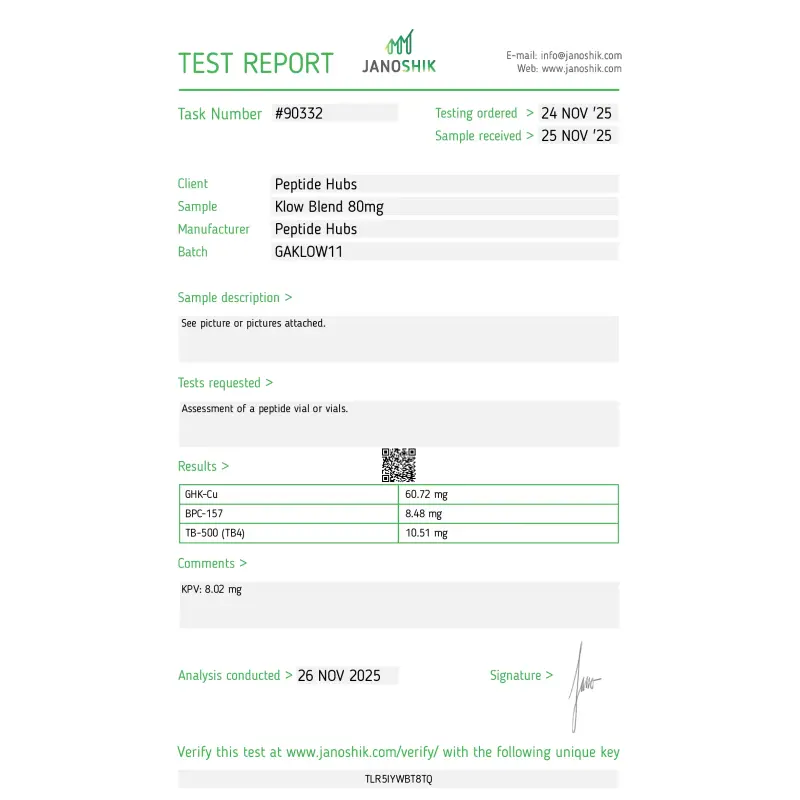
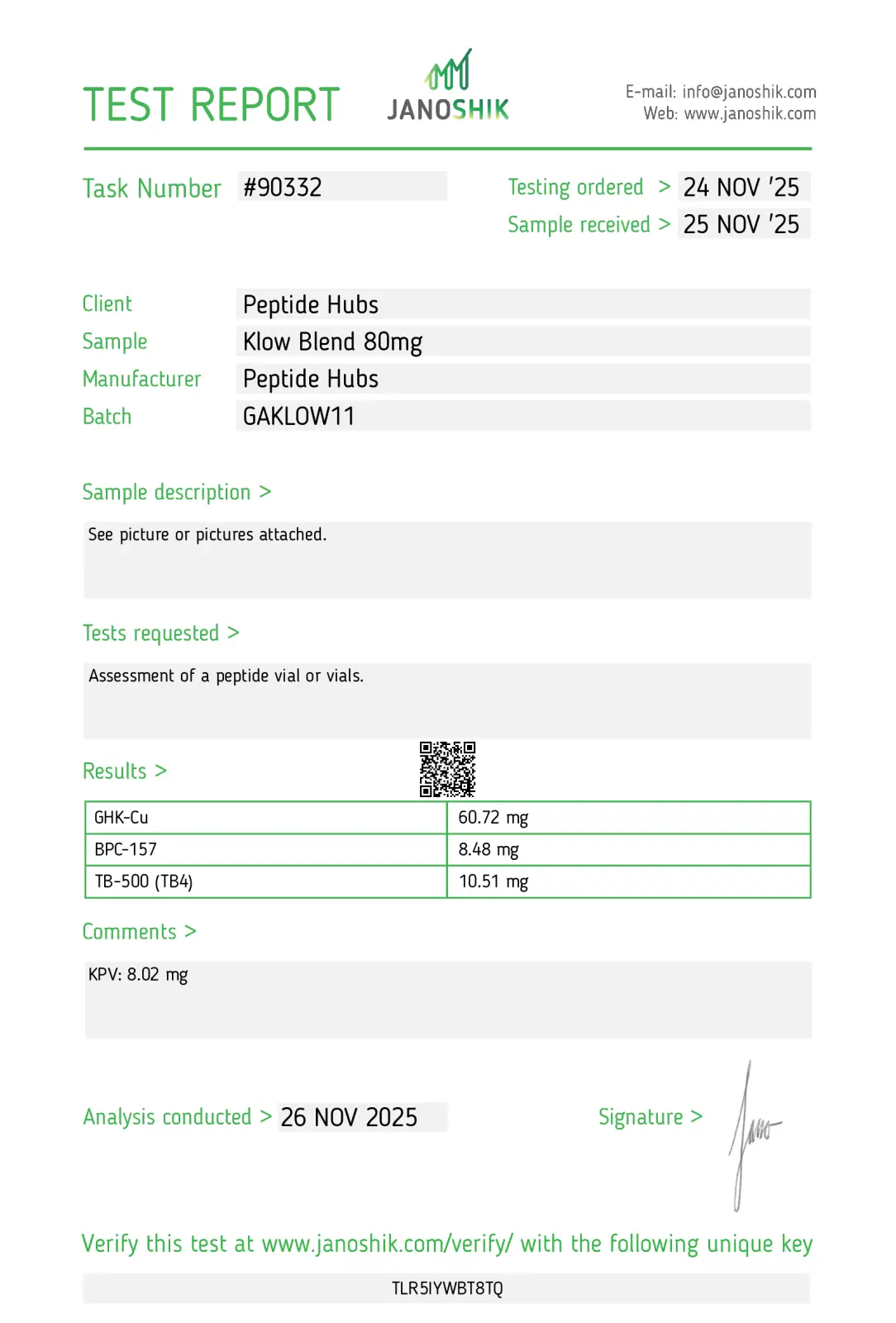
The formulation arrives in lyophilised condition—a state that one might characterise with some confidence as preserving, with admirable constancy, both biochemical integrity and extended utility across the range of standard laboratory circumstances and storage protocols. Each vial comes accompanied by certification of the most exacting nature, confirming with methodical precision molecular identity, purity no less than 99% as determined by high-performance liquid chromatography (HPLC), and compositional precision consistent with Good Manufacturing Practice protocols of acknowledged authority and institutional standing.
2. BPC-157: Biochemistry
Body Protection Compound-157, which the scientific community designates as Pentadecapeptide 157, constitutes a 15-amino acid oligopeptide of somewhat remarkable provenance and established biological significance—derived, as it is, from a sequence present within human gastric secretions. The amino acid arrangement presents itself as follows: Gly-Glu-Pro-Pro-Pro-Gly-Lys-Pro-Ala-Asp-Asp-Ala-Gly-Leu-Val—a sequence possessed of considerable structural coherence and biochemical elegance.
BPC-157 exhibits a stability of character most uncommon and noteworthy in peptide preparations—remaining intact across physiological temperatures, maintaining equilibrium across a notably broad pH range of considerable practical utility, and demonstrating a resistance to enzymatic degradation pathways that prove, regrettably, the undoing of lesser peptide structures. This resilience of constitution permits extended residence within tissue environments and systemic circulation of a duration that speaks to the peptide's considerable practical and theoretical utility.
The molecular operations of BPC-157 engage multiple intersecting cellular pathways of acknowledged complexity and demonstrated significance. The primary mechanism centres upon angiogenic signalling—a process wherein the peptide elevates expression of vascular endothelial growth factor receptor-2 (VEGFR2) and activates the Akt-endothelial nitric oxide synthase (eNOS) axis with evident purposefulness, culminating in production of nitric oxide of considerable potency and biological consequence. This molecule operates as both a vasodilatory agent and pro-angiogenic mediator of note, promoting the proliferation, migration, and tubular formation of endothelial cells with a consistency that renders it indispensable to vascular regeneration. In parallel fashion, BPC-157 activates extracellular signal-regulated kinase (ERK1/2) phosphorylation—a pathway regulating cellular proliferation and survival through mechanisms of demonstrated reliability and established mechanism. At the transcriptional level, the peptide modulates expression of early growth response factor-1 (EGR-1), a transcriptional regulator governing angiogenic gene programs and wound-healing progression with precision worthy of careful observation and scientific documentation. Concurrent with these regenerative effects, BPC-157 exerts anti-inflammatory activity through suppression of excessive pro-inflammatory cytokine production, thereby constraining inflammatory signalling with commendable restraint and molecular precision.
3. TB-500: Biochemistry
TB-500, known formally as the seven-amino acid peptide derivative Ac-LKKTETQ (acetyl-Leu-Lys-Lys-Thr-Glu-Thr-Gln), represents a synthetic distillation of considerable ingenuity and scientific design—an extraction of the functionally critical domain from the naturally occurring protein Thymosin Beta-4 (Tβ4), which itself comprises 43 amino acids of considerable molecular complexity. This abbreviated form isolates, with notable precision and deliberate purpose, those seven amino acids responsible for actin sequestration and the cellular motility upon which tissue repair fundamentally depends.
The operational principle of TB-500 centres upon actin dynamics and cytoskeletal governance of manifest importance to cellular function. The peptide binds to globular (G-) actin—the monomeric reservoir form of the structural protein actin—thereby preventing its polymerisation into filamentous (F-) actin networks. This binding interaction, executed with evident purpose and molecular fidelity, preserves the cellular capacity for migration by maintaining sufficient actin monomer availability. Such preservation proves essential during tissue repair, permitting the rapid and directional infiltration of fibroblasts, myofibroblasts, and endothelial cells into regenerating tissues—a process of undeniable consequence to healing progression. TB-500 concurrently stimulates expression of vascular endothelial growth factor (VEGF), promoting endothelial cell proliferation and angiogenic tube formation through mechanisms both elegant and proven in peer-reviewed literature. Through these actin-dependent and VEGF-mediated operations, coordinated with evident design, TB-500 contributes materially to both structural cell movement and vascular restoration during the considerable undertaking of wound closure and tissue remodelling.
4. GHK-Cu: Biochemistry
GHK-Cu presents itself as a copper(II) chelate complex of considerable chemical refinement and biological utility—comprising the tripeptide glycyl-L-histidyl-L-lysine (GHK) coordinated to divalent copper in a 1:1 stoichiometry of precise balance and acknowledged stability. The tripeptide structure—three amino acids connected through peptide bonds—exhibits copper-binding affinity (log₁₀ = 16.44) of such exceptional magnitude as to form a complex of remarkable stability whilst preserving copper's biological signalling capacity and preventing the pro-oxidant reactions that would render it problematic.
GHK-Cu exerts its regenerative effects through dual mechanisms of acknowledged sophistication and established scientific validity: the direct provision of copper to copper-dependent enzymes, and peptide-mediated signalling through cellular receptors. Copper constitutes an essential cofactor for lysyl oxidase (responsible for the cross-linking of collagen molecules), cytochrome c oxidase (governing cellular energy production), and superoxide dismutase (defending against oxidative insult and cellular damage). By delivering bioavailable copper to fibroblasts and endothelial cells with evident purposefulness and molecular precision, GHK-Cu enhances enzymatic function and cellular energy production through pathways both direct and demonstrable in laboratory studies. At the level of cellular signalling, GHK-Cu engages with cellular copper receptors with notable specificity, thereby triggering downstream activation of growth factor pathways of acknowledged importance—including bone morphogenetic protein-2 (BMP-2) and fibroblast growth factor (FGF) signalling of manifest consequence. These pathways upregulate gene expression for collagen I and III synthesis, glycosaminoglycan deposition, and extracellular matrix remodelling enzymes through operations of considerable intricacy and documented efficacy. GHK-Cu simultaneously stimulates expression of tissue inhibitors of metalloproteinases (TIMPs)—agents which constrain excessive matrix degradation and preserve the newly synthesised tissue architecture with admirable vigilance and molecular precision.
5. KPV: Biochemistry
KPV constitutes a synthetic tripeptide composed of three amino acids—Lysine (K), Proline (P), and Valine (V)—isolated with considerable discernment from the C-terminal region of alpha-melanocyte-stimulating hormone (α-MSH), a naturally occurring neuropeptide comprising thirteen amino acids of established biological significance. This abbreviated tripeptide represents the minimal molecular entity required to retain those anti-inflammatory properties inherent to the parent molecule, whilst simultaneously offering superior structural stability and cellular bioavailability of considerable practical advantage to the research laboratory.
KPV operates through a mechanism of cellular autonomy and elegance—distinct from the conventional peptide hormone receptor signalling upon which many such compounds depend. The peptide undergoes transport across intestinal and cellular membranes via the PepT1 transporter (a proton-coupled oligopeptide transporter of acknowledged specificity and established mechanism), ultimately localising to the cell nucleus where it executes its regulatory function with evident purposefulness and molecular precision. Once established within this compartment, KPV functions as a competitive antagonist of the nuclear factor kappa-light-chain-enhancer of activated B cells (NF-κB)—a transcription factor widely recognised as the primary orchestrator of pro-inflammatory gene expression. Specifically, KPV impedes the interaction between the nuclear import adaptor protein importin-α3 (Imp-α3) and the p65RelA subunit of the NF-κB heterodimer with notable specificity, thereby preventing the nuclear translocation of this pro-inflammatory entity. By suppressing NF-κB nuclear accumulation with such methodical precision, KPV reduces expression of pro-inflammatory cytokines (TNF-α, IL-6, IL-8) and pro-degradative enzymes (matrix metalloproteinase-9) through direct transcriptional inhibition of acknowledged potency. The consequence is a potent attenuation of inflammatory gene programs whilst permitting intact anti-inflammatory signalling and innate immune function of considerable refinement and biological sophistication.
6. Blend: Anti-Inflammatory Effects
The integrated anti-inflammatory capacity of the Klow Blend emerges, we may observe with some satisfaction and scientific confidence, from convergent yet mechanistically differentiated pathways executed by each constituent peptide, thereby generating a layered suppression of inflammatory cascades operative across temporal and tissue-specific contexts of considerable breadth and complexity.
BPC-157 initiates inflammatory modulation through concurrent suppression of pro-inflammatory gene transcription and enhancement of anti-inflammatory mediators, operating with the consistency one expects from a peptide of proven efficacy and established mechanism. The peptide reduces systemic levels of TNF-α, IL-1β, and IL-6 through operations of acknowledged reliability and demonstrated potency, whilst enhancing nitric oxide-dependent signalling—a mechanism which activates anti-inflammatory phosphorylation cascades and constrains the oxidative stress-associated inflammatory amplification that proves so troublesome in tissue injury scenarios.
TB-500 contributes anti-inflammatory activity through its regulation of the matrix metalloproteinase (MMP)/TIMP balance—a system of considerable consequence and established importance. Excessive MMP-driven matrix degradation, particularly during inflammatory phases, perpetuates inflammatory signalling through damage-associated molecular patterns and sustained macrophage activation. TB-500, with evident purposefulness and molecular discrimination, biases this equilibrium toward protease inhibition, thereby preserving matrix architecture and reducing inflammatory persistence through mechanisms both elegant and proven in peer-reviewed investigations.
KPV operates as a focal antagonist of NF-κB signalling—recognised universally as the primary transcriptional hub controlling pro-inflammatory gene expression. By blocking p65RelA nuclear import with methodical precision and established efficacy, KPV directly inhibits transcription of pro-inflammatory cytokine genes and pro-degradative enzyme genes, offering anti-inflammatory activity of considerable specificity that complements the cytokine-based approaches engaged by other formulation components.
GHK-Cu supports anti-inflammatory resolution through copper cofactor provision, thereby enabling cellular energy production and antioxidant enzymatic activity of acknowledged importance. The copper complex simultaneously stimulates growth factors (BMP-2, BDNF) that promote resolution-phase signalling and tissue remodelling over the persistence of inflammatory states, thereby establishing conditions favouring healing rather than chronic inflammation.
The net consequence of these four integrated mechanisms—coordinated with evident purposefulness and molecular design—manifests as comprehensive suppression of inflammatory cascades, from initial cytokine production through matrix preservation, thereby accelerating the transition from acute inflammation to organised tissue repair with a consistency worthy of careful observation and scientific documentation.
7. Blend: Tissue Repair
The tissue repair mechanisms catalysed by the Klow Blend operate, it should be noted with appropriate emphasis, across hierarchical stages of wound healing with considerable systematic organisation and molecular sophistication, each peptide contributing specialised cellular activities that collectively enhance repair kinetics and tissue restoration through operations of manifest complexity and demonstrated efficacy.
Angiogenesis and Microvascular Reconstitution: Both BPC-157 and TB-500 stimulate neovascularisation through complementary mechanisms of acknowledged potency and established biological significance. BPC-157 upregulates VEGFR2 and enhances nitric oxide production through pathways both direct and proven in animal models, thereby promoting endothelial cell proliferation and capillary sprouting. TB-500 stimulates VEGF expression with evident purposefulness and demonstrated consistency, activating endothelial cell migration and vascular tube formation through actin-dependent mechanisms of considerable specificity. GHK-Cu provides copper cofactors essential to cytochrome c oxidase and other vascular remodelling enzymes of acknowledged importance. The cumulative angiogenic activity, coordinated with evident design and molecular precision, restores microvascular supply to regenerating tissues, ensuring oxygen delivery essential to fibroblast metabolic activity and collagen synthesis.
Fibroblast Recruitment, Proliferation, and Matrix Synthesis: BPC-157 directly enhances growth hormone receptor expression and signalling in fibroblasts, thereby upregulating pro-repair transcriptional programs and collagen I and III synthesis through operations of considerable merit and demonstrated consistency. GHK-Cu further stimulates fibroblast proliferation and provides copper to lysyl oxidase—the enzyme responsible for collagen cross-linking and matrix stabilisation through mechanisms of acknowledged chemical precision. TB-500 accelerates fibroblast infiltration through actin-mediated cell motility enhancement of evident consequence and biological significance.
Extracellular Matrix Remodelling: The blend coordinates expression of matrix-modifying enzymes and their inhibitors with a precision one must admire. BPC-157 and TB-500 reduce excessive MMP activity through complementary mechanisms, whilst GHK-Cu upregulates TIMP expression, thereby resulting in organised matrix deposition rather than the uncontrolled proteolysis that proves so deleterious to tissue integrity and structural stability. KPV suppresses NF-κB-driven protease expression, further constraining aberrant matrix degradation through direct transcriptional inhibition of demonstrated potency.
Epithelialisation and Closure: TB-500's actin-binding mechanism promotes epithelial cell migration and myofibroblast differentiation at the wound margin with commendable efficiency and biological consistency, thereby enabling rapid wound closure through well-established cellular mechanisms. BPC-157's anti-inflammatory effects facilitate epithelial-mesenchymal transition and migration without the excessive inflammatory signalling impairment that would prove counterproductive to epithelial function and tissue integrity.
Temporal Orchestration: The blend composition permits sequential engagement of healing phases with a choreography that speaks to its thoughtful design and molecular sophistication. Early phase (0-3 days): inflammatory resolution via KPV and BPC-157 through demonstrated anti-inflammatory mechanisms. Middle phase (3-14 days): fibroblast infiltration and matrix synthesis via TB-500 and GHK-Cu through well-established cellular pathways. Late phase (14+ days): matrix remodelling and vascularisation maturation via coordinated MMP/TIMP regulation and growth factor signalling—an arrangement of considerable systematic merit and biological elegance.
8. Blend: Anti-Bacterial Properties
Whilst the Klow Blend's primary mechanisms centre, as one would reasonably anticipate, on host tissue repair and inflammatory modulation, the constituent peptides—most particularly GHK-Cu and KPV—exhibit properties of evident relevance to microbial burden management within research contexts of acknowledged importance and established concern.
GHK-Cu: Copper's antimicrobial efficacy derives, as the scientific literature amply demonstrates with considerable consistency, from cupric ion interaction with bacterial cell membranes—an engagement that disrupts lipid bilayer integrity and impairs oxidative phosphorylation in bacterial respiratory apparatus. Literature documents, with considerable consistency and methodical rigour, that GHK-Cu formulations demonstrate bactericidal activity against Staphylococcus aureus and Escherichia coli, with minimal inhibitory concentrations (MIC) within the 8–20 μg/mL range, thereby achieving bacterial growth suppression within laboratory timeframes of manifest utility and practical value. This activity complements wound-repair mechanisms through reduction of microbial colonisation that would otherwise perpetuate inflammatory signalling of deleterious consequence and acknowledged concern.
KPV: As a fragment derived from α-MSH, KPV modulates innate immune cell function and inflammatory signalling with evident purposefulness and established biological effect. By suppressing excessive NF-κB-driven inflammation, KPV paradoxically preserves antimicrobial immune competence—excessive inflammation, as careful observation reveals, impairs phagocytic function and immune cell trafficking, whereas KPV's controlled anti-inflammatory activity maintains functional innate immunity of considerable value and biological sophistication.
BPC-157 and TB-500: Both peptides support immune competence indirectly through anti-inflammatory modulation and enhanced vascular perfusion, thereby permitting robust white blood cell infiltration and pathogen clearance through mechanisms both indirect and proven in established literature.
9. Blend: Anti-Aging Effects
The anti-aging mechanisms attributable to the Klow Blend derive, one observes with considerable interest and scientific engagement, from cumulative effects on cellular regeneration, extracellular matrix maintenance, stem cell support, and the attenuation of age-associated inflammatory phenotypes—a convergence of beneficial operations worthy of careful study and continued investigation.
Collagen and Matrix Preservation: BPC-157 and GHK-Cu directly stimulate collagen synthesis through distinct pathways of acknowledged merit and established efficacy. BPC-157 enhances growth hormone signalling through well-characterised mechanisms; GHK-Cu provides copper essential to lysyl oxidase-catalysed collagen cross-linking. Age-related collagen fragmentation and the loss of mechanical properties—consequences regrettable but well-established—result from both reduced synthesis and excessive proteolytic degradation. The blend's combined collagen-stimulating activity and protease-inhibitory signalling preserve dermal and connective tissue structural integrity, thereby supporting mechanical resilience and elasticity of considerable value and biological consequence.
Stem Cell Support and Differentiation: Copper availability regulates stem cell differentiation and commitment toward regenerative phenotypes through mechanisms both subtle and profound in their biological implications. GHK-Cu modulates cellular copper homeostasis, thereby supporting bone marrow-derived and tissue-resident stem cell commitment toward fibroblasts, osteocytes, and endothelial cells—cellular populations of undeniable importance to tissue maintenance during the advancing years. This mechanism operates through established cellular signalling pathways of acknowledged significance.
Inflammaging Attenuation: Aging involves, as contemporary research establishes with increasing consistency and methodical documentation, progressive systemic low-grade inflammation (inflammaging) driven by persistent NF-κB signalling and pro-inflammatory cytokine production. KPV directly antagonises NF-κB nuclear translocation, reducing transcription of pro-inflammatory genes with documented efficacy. BPC-157 suppresses inflammatory signalling through multiple complementary mechanisms of considerable sophistication and established biological validity. The cumulative anti-inflammatory activity suppresses the inflammatory milieu implicated in age-related cardiovascular disease, neurodegeneration, and tissue fragility—conditions of lamentable consequence and acknowledged pathological significance.
Neuroprotection and Neuronal Resilience: BPC-157 exhibits neuroprotective properties through modulation of neurotransmitter systems and growth factor signalling implicated in neuronal survival and plasticity. Literature suggests protective effects against neurotoxin-induced degeneration and enhancement of neuronal regeneration following injury, with potential implications for cognitive and neurological function during the advancement of years—observations of considerable interest to those concerned with maintaining intellectual vigour and neurological function.
Vascular Function and Tissue Perfusion: The blend's potent angiogenic activity (BPC-157 and TB-500) supports maintenance of tissue perfusion and oxygen delivery, thereby counteracting age-associated vascular senescence and capillary rarefaction through operations both direct and demonstrable in scientific literature. Improved perfusion sustains cellular metabolic activity and reduces hypoxic stress-induced cellular senescence through mechanisms of acknowledged reliability and established biological consequence.
10. Blend: Summary
The Klow Blend, we are pleased to observe with appropriate confidence and scientific satisfaction, constitutes a rationally designed four-component peptide formulation, wherein each constituent has been independently characterised in peer-reviewed literature for roles in regenerative biology, inflammatory modulation, and cellular protection—credentials that one must regard as entirely satisfactory and appropriately rigorous. The scientific rationale for this combination rests upon three integrated principles of considerable substance and acknowledged validity:
- Biochemical Pathway Specificity: Each peptide engages distinct molecular mechanisms—BPC-157 (VEGFR2/eNOS angiogenesis, ERK1/2 signalling), TB-500 (actin dynamics, cell migration), KPV (NF-κB antagonism), GHK-Cu (copper homeostasis, metalloproteinase regulation)—thereby creating a multifaceted tissue-repair architecture spanning vascular, inflammatory, and matrix-remodelling domains of considerable complexity, sophistication, and demonstrated efficacy.
- Mechanistic Convergence and Synergy: Combined administration generates biological effects surpassing, as one might anticipate from coordinated molecular design, component-wise summation. Anti-inflammatory suppression from KPV and BPC-157 amplifies TB-500's matrix-preservation effects through operations of evident mutual reinforcement and biological coherence; GHK-Cu's copper availability enhances fibroblast responsiveness to growth signals from BPC-157 and TB-500 with commendable efficiency and molecular precision; coordinated MMP/TIMP regulation by all four peptides stabilises newly synthesised matrix with precision worthy of observation and scientific documentation.
- Translational Validity: The formulation's composition mirrors, with evident deliberation and scientific foresight, the natural sequential involvement of regenerative and inflammatory mediators in healing tissue, thereby supporting the premise that synchronised administration of multiple repair-promoting peptides approximates endogenous healing cascades more comprehensively than single-peptide approaches—a proposition supported by accumulating evidence and continued investigation.
The Klow Blend is supplied as a lyophilised powder at ≥99% purity (HPLC-verified with evident care and methodical precision), with batch-specific Certificates of Analysis confirming molecular identity and compositional precision. Manufacturing adheres to GMP standards with meticulous attention to detail and established protocols, thereby meeting the analytical rigour required for academic and commercial research environments of acknowledged standing and institutional reputation.
Feature Bullets
- Four-Component Synergistic Blend: BPC-157, TB-500, KPV, and GHK-Cu combined within a single 80mg lyophilised formulation, enabling the investigation of multi-pathway regeneration research through integrated biochemical mechanisms.
- ≥99% Purity (HPLC-Verified with Fastidious Care): Each batch accompanied by Certificate of Analysis confirming molecular identity, compositional precision, and purity compliance in accordance with the most rigorous research protocols and institutional standards.
- Lyophilised Powder Format: Freeze-dried preparation preserving extended shelf-life stability, biochemical integrity, and bioavailability with the consistency required for serious laboratory research and institutional applications.
- GMP-Certified Manufacturing: Produced under Good Manufacturing Practice standards of evident stringency and meticulous documentation, ensuring quality assurance, complete traceability, and reproducibility across research applications of acknowledged importance.
- Complementary Mechanism Integration: Four peptides engaging intersecting pathways—angiogenesis, cell migration, inflammatory modulation, and extracellular matrix remodelling—for comprehensive tissue-repair model studies conducted with appropriate methodical rigour and scientific precision.
- Research-Grade Quality: Suitable for academic institutions, biotech research facilities, and pharmaceutical development pipelines investigating regenerative mechanisms, wound healing kinetics, and tissue resilience through approaches of acknowledged sophistication and established scientific merit.
Technical Specifications
|
Specification |
Details |
|
Product Name |
BPC-157 + TB-500 + KPV + GHK-Cu 80mg (Klow Blend) |
|
Composition (per vial) |
BPC-157 10mg, TB-500 10mg, KPV 10mg, GHK-Cu 50mg |
|
Total Content |
80mg lyophilised peptide blend |
|
Purity |
≥99% (HPLC-verified) |
|
Form |
Lyophilised powder |
|
Appearance |
White to off-white lyophilised powder |
|
Concentration |
80mg per vial (requires reconstitution for solution use) |
|
Storage Temperature (Long-term) |
–80°C (optimal) |
|
Storage Temperature (Intermediate) |
–20°C |
|
Storage Temperature (Short-term) |
2–8°C or 20–25°C |
|
Shelf Life |
Stable for years under recommended conditions; 7 days once reconstituted at 2–8°C |
|
Container Type |
Sealed, desiccated vial |
Storage Instructions
The preservation of this formulation requires the most attentive regard to proper storage protocols—indeed, one might venture to observe with considerable emphasis that inattention to such matters would constitute a regrettable abandonment of scientific diligence and institutional responsibility.
Lyophilised Peptide Powder (As Supplied):
- Long-term storage (months to years): Storage at –80°C (ultra-low freezer conditions) preserves optimal stability and extended shelf-life with the constancy one has come to expect from properly formulated preparations of acknowledged quality. This temperature regime represents the gold standard for institutional peptide repositories.
- Intermediate storage (weeks to several months): Storage at –20°C (standard freezer conditions) in sealed, light-protected vials maintains lyophilised peptides in a state of stability extending across periods of considerable duration—typically adequate for active institutional research contexts and departmental applications.
- Short-term storage (days to weeks): Storage at 2–8°C (refrigerated conditions) constitutes an acceptable provision for limited periods, proving suitable for active research intervals of modest duration and immediate experimental applications.
- Room temperature (temporary only): Lyophilised peptides may be stored at room temperature (20–25°C) for brief periods (several days to weeks only) should they be protected from moisture and direct light exposure; however, one must emphasise with considerable clarity and repeated insistence that this arrangement should not serve as provision for extended or long-term storage.
Critical Storage Precautions (to which we must direct the reader's most careful attention and scientific consideration):
- Moisture prevention: The storage vessel must maintain sealed, desiccated conditions of evident integrity and meticulous preservation. Allow vials to reach room temperature before opening to prevent the condensation and moisture uptake that would prove so deleterious to peptide preservation and biochemical stability.
- Freeze-thaw cycles: Repeated cycles of freezing and thawing must be minimised with the most careful attention and deliberate caution, as temperature fluctuations promote peptide degradation and aggregation through mechanisms both well-established and regrettable. Pre-aliquotting peptides into experiment-specific quantities is advisable should anticipated use involve repeated vial access and periodic opening.
- Freezer selection: Avoid frost-free freezers without exception—these devices undergo automatic defrosting cycles and generate temperature fluctuations wholly incompatible with peptide stability. A conventional manual-defrost freezer constitutes the only appropriate choice for the serious researcher and institutional laboratory.
- Light protection: Store vials with steadfast protection from direct sunlight and intense light exposure—conditions that would prove deleterious to molecular integrity and biochemical stability.
- Container integrity: Maintain vials in sealed condition with intact caps, storing them in light-protective packaging as provided by the manufacturer with meticulous care.
Reconstituted Solutions (Should Such Be Prepared by the Researcher):
- Reconstituted peptide solutions demonstrate reduced shelf-life relative to lyophilised powder—a reality one must acknowledge with appropriate candour and scientific honesty.
- Solutions prepared in sterile, buffered vehicles (pH 5–6 recommended) retain stability for approximately 7 days at 2–8°C when maintained in sealed, sterile containers of acknowledged integrity and institutional standard.
- Avoid room-temperature storage of solutions; refrigeration or freezing constitutes the prudent course and established best practice.
- Repeated freeze-thaw cycles of reconstituted solutions must be avoided with particular vigilance, as such treatment proves especially deleterious to solution-phase peptides and accelerates degradation.

Related Products






Highly Purified Peptides: Trusted by Researchers Worldwide
Peptide Quality You Can't Find Elsewhere!!
| Peptide Hubs | Leading Competitor | |
|---|---|---|
| 200+ Peptide Variants |  |
 |
| USA-Manufactured Research Grade | |
|
| WHO/GMP & ISO 9001:2015 Certified | |
|
| Third-Party Tested for Purity | |
|
| Certificates of Analysis Provided | |
|
| Competitive Pricing Without Compromise | |
|
| Secure & Discreet Shipping | |
|
See Peptide Hubs in Action


Insights

Sermorelin, GHRP-6 & GHRP-2: Exploring Hormonal Pathways and Synergy

PE-22-28: Cellular Interactions and Neural Research
Kisspeptin 45-54 in Focus: Hypothalamic Biology and Neuronal Research
Ipamorelin Interactions with Pituitary Sensitivity and Growth Hormone Pulsatility

99% Purity
Ensuring the highest standard with 99% purity.

Quality Ingredients
Crafted with purity and quality ingredients at the core.

Fast Shipping
Fast, reliable shipping straight to your door.

No TFA or Fillers
Nothing extra, just science: no TFA, no fillers.

Quality You Can Rely On — Guaranteed
At PeptideHubs, scientific integrity and product reliability are at the core of everything we do. Each compound is manufactured and tested under strict quality control protocols to ensure consistency, purity, and performance for research applications.
However, if for any reason our product does not meet your research expectations, we offer a 60-day money-back guarantee — providing a risk-free procurement experience for qualified researchers and institutions.
Your research deserves uncompromised quality — and we stand behind every order to ensure you receive.