
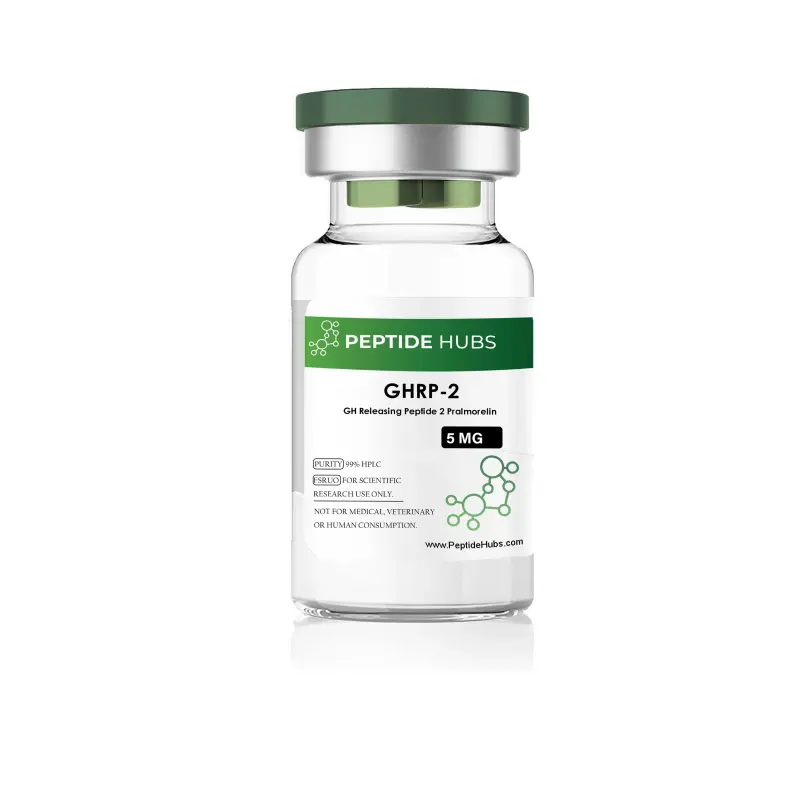
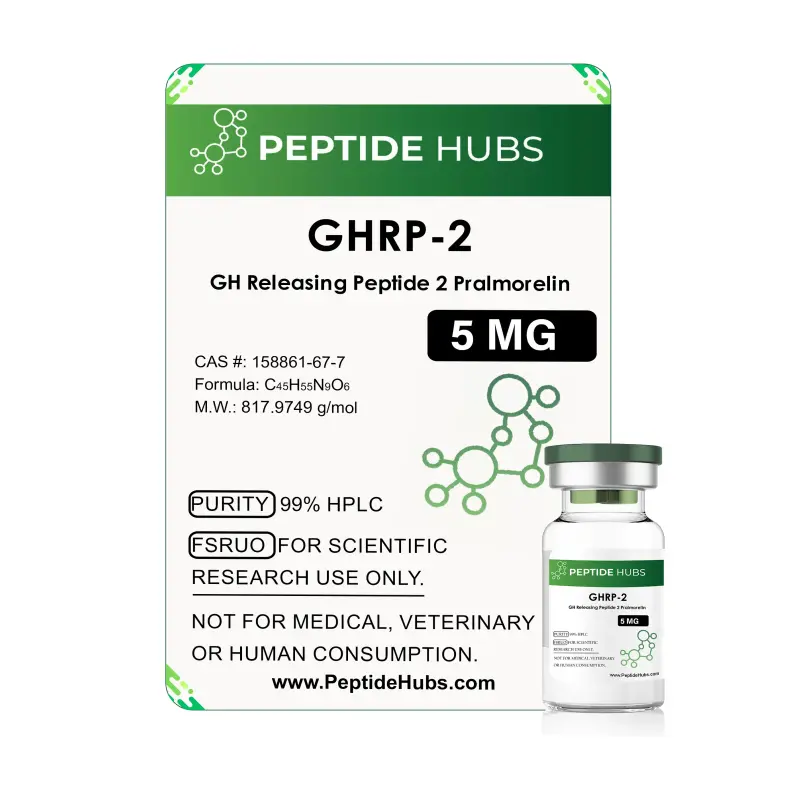
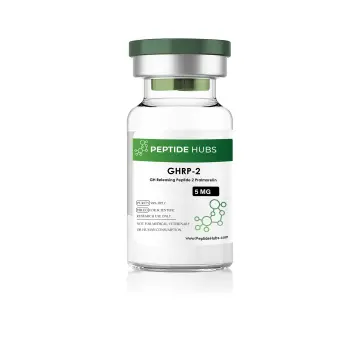
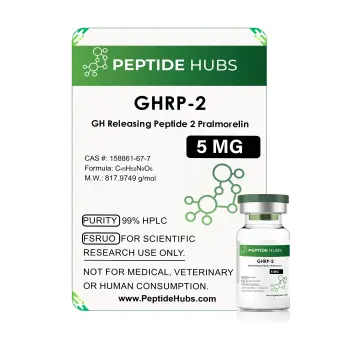
GHRP-2 5mg
- USA MADE 2-7 days delivery
- International 5-20 days delivery
THIS PRODUCT IS INTEDED AS A RESEARCH CHEMICAL ONLY.
This designation allows the use of research chemicals strictly in vitro for testing and laboratory experimentation only. All products information available on this website is for educational purposes only. Bodily introduction of any kind into humans or animals is strictly forbidden by law. This product should only be handled by licensed, qualified professional. This product is not a drug, food or cosmetic and may not be misbranded, misused or mislabled as a drug food or cosmetic.
1. What is GHRP-2?
GHRP-2, chemically known as pralmorelin, is a synthetic pentapeptide—a molecule comprising five amino acids—structurally analogous to met-enkephalin, an endogenous neurotransmitter. Unlike traditional neurotransmitters, GHRP-2 does not appear to function via conventional neurotransmitter pathways. Instead, research indicates that GHRP-2 engages with ghrelin receptors, specifically the growth hormone secretagogue receptors (GHS-Rs) located on pituitary cells and distributed throughout the nervous system.
The peptide is believed to activate GHS-Rs, which are naturally triggered by ghrelin—a hormone recognised for its role in regulating appetite and metabolic homeostasis. When GHRP-2 binds to GHS-Rs, preliminary evidence suggests that a conformational change may occur, initiating a cascade of intracellular signalling pathways. This process appears to involve G-protein mediation, potentially leading to the secretion of growth hormone (GH) from anterior pituitary somatotroph cells, and the upregulation of insulin-like growth factor-1 (IGF-1) and associated mediators.
GHRP-2 has received considerable attention in research settings due to its apparent multifaceted biological effects, extending beyond GH release to potentially influence immune function, muscle metabolism, cardiovascular health, and pain perception. Its mechanism of action remains an active area of scientific investigation, with ongoing studies exploring both fundamental receptor biology and potential translational applications.
2. GHRP-2 Structure
It's worth remembering that GHRP-2, though often spoken of loosely, is a simple chain of six amino acids—a small thing, but made with care. Its sequence, H-D-Ala-D-2-Nal-Ala-Trp-D-Phe-Lys-NH₂, follows an exact order, each part in its rightful place. Nothing about it is accidental. It is arranged with the same quiet discipline you might find at a well-set table, where every seat and every name card has its reason.
The molecular particulars are these:
- Molecular Formula: C₄₅H₅₅N₉O₆
- Molecular Weight: 817.9 g/mol
- CAS Number: 158861-67-7
The composition and arrangement of its constituent atoms—the D-alanine positioned at the N-terminus with the gravity of a senior gentleman, the D-2-naphthylalanine and D-phenylalanine interspersed with L-alanine, tryptophan, and lysine—creates a configuration of marked biological efficacy. One might say that nature, having established certain principles of amino acid interaction, has been improved upon through chemical reasoning and deliberate synthesis. Such is the modest ambition of modern pharmaceutical science.
3. GHRP-2 Effects
3.1 Protects and Enhances Muscle Structure
In the study of organic systems, one observes that GHRP-2 appears to exercise a most beneficent influence upon muscular tissue, much as a prudent manager of estates encourages the improvement and maintenance of property. The mechanisms by which this occurs are twofold: the peptide stimulates the synthesis of new protein whilst simultaneously discouraging the degradation of existing musculature.
Researchers employing yak models discovered that GHRP-2 may suppress certain markers associated with muscle breakdown—notably atrogin-1 and MuRF-1—proteins that bear the unfortunate distinction of promoting muscular wasting. In experimental conditions of thermal injury administered to murine subjects, GHRP-2 appeared to diminish the production of inflammatory markers (particularly interleukin-6) and muscle-wasting proteins, suggesting a protective mechanism during periods of physiological stress and catabolism.
One observes, with some satisfaction, that this protective action extends across varied experimental models, indicating a consistency of character most admirable in a therapeutic compound.
3.2 Stimulate Appetite
The activation of GHS-Rs throughout the nervous system by GHRP-2 appears, upon examination of the evidence, to initiate cellular mechanisms of considerable sophistication, promoting the synthesis of those neuropeptides which stimulate hunger—particularly Neuropeptide Y (NPY) and Agouti-related peptide (AgRP), molecules of integral importance to energy balance and appetite regulation. In parallel, the peptide appears to suppress melanocyte-stimulating hormone (α-MSH), that appetite-suppressing hormone, potentially shifting the metabolic equilibrium with some elegance toward increased hunger and elevated food consumption. Moreover, GHRP-2 may modulate that neural pathway governing food craving—the mesolimbic reward system—possibly through activation of GHSR-1a receptors. Research of a most systematic character has documented that subjects exposed to GHRP-2 consumed approximately 36% more food than control cohorts, with energy intake per kilogram of body weight rising to 136.0±13.0 kJ/kg compared to 101.3±10.5 kJ/kg in those receiving placebo.
3.3 May Protect the Heart
The heart, that most essential and poetic of organs, has claimed the attention of researchers investigating GHRP-2's potential cardioprotective properties. Studies conducted in fetal cardiac cell cultures and vascular models suggest that GHRP-2 and certain related compounds may mitigate programmed cellular death in cardiac tissue—a phenomenon of no small consequence to the continuation of life itself.
The peptide appears to interact with the CD36 receptor in a manner that may limit cellular absorption of oxidized low-density lipoprotein, that malignant substance implicated in the development of atherosclerotic lesions. In experimental models of atherosclerosis, GHRP-2 demonstrated a remarkable capacity to reduce aortic superoxide production by approximately 92%—a statistic of considerable import—whilst simultaneously decreasing the expression of genes associated with vascular inflammation, including 12/15-lipoxygenase, interferon-gamma, and macrophage migration inhibitory factors.
Such protective action, though demonstrated presently only in laboratory conditions, suggests possibilities of genuine scientific merit.
3.4 Improves the Immune System
The thymus gland, that custodian of immune competence responsible for the maturation and selection of T-lymphocytes, occupies a station of considerable importance in the body's defensive architecture. Yet, like many institutions of value, it declines with the passage of time, its function diminishing as the years accumulate—a melancholy circumstance that GHRP-2 may partially redress.
Research indicates that GHRP-2 may rejuvenate thymic activity, promoting the diversity and proliferation of T-cells. This mechanism may thereby enhance adaptive immune responses and the body's physiological capacity to mount resistance against complex infectious agents, though the fuller implications of this action await further investigation in controlled research environments.
3.5 Improves Sleep Quality
Even the most disciplined scholar recognizes the necessity of restorative sleep, that most democratic of human requirements. Preliminary research suggests that GHRP-2 may influence sleep architecture in a manner most favorable: the peptide appeared to extend the duration of slow-wave sleep (stages 3 and 4) by up to 50% in studied models, whilst potentially augmenting REM sleep duration by approximately 20%, simultaneously reducing deviations from normal sleep patterns.
The mechanisms underlying these effects—whether they operate through hypothalamic influence or other neurological pathways—remain subjects of continued investigation. Nonetheless, the prospect of a compound that may enhance the quality and restorative properties of sleep recommends itself to any sensible researcher.
3.6 May Affect Pain Perception
GHRP-2 has been hypothesised, by those of inquiring mind, to influence pain perception through mechanisms of dual and considerable interest. Initial theories, it must be confessed, proposed pain relief mediated by growth hormone-induced tissue repair—a notion of pleasing simplicity. However, emerging evidence of a more recent character suggests that GHRP-2 may exert analgesic effects prior to tissue regeneration, likely through selective interaction with opioid receptors of particular and discriminating character. This discovery presents a matter of some scientific refinement, warranting the closest attention of those engaged in rigorous investigation.
Unlike broad-spectrum opioid receptor agonists affecting all four known opioid receptor subtypes—which often produce effects of an undesirable and indiscriminate nature due to their disparate functions—GHRP-2 appears to function as a selective opioid receptor agonist of considerable merit and discretion. It may preferentially bind receptors implicated in pain modulation, reward system signalling, and sedation, thereby offering a more targeted and elegant mechanism of action for pain-related research applications of the most sophisticated character. In this respect, the peptide recommends itself to those of learning and scientific disposition, promising a refinement in research methodology heretofore not readily available.
Feature Bullets
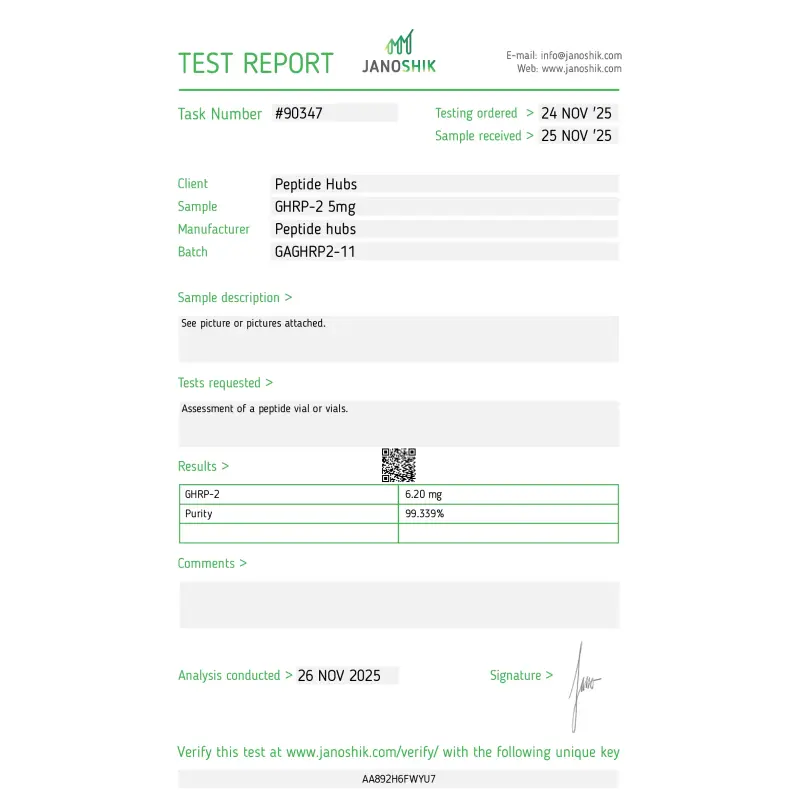
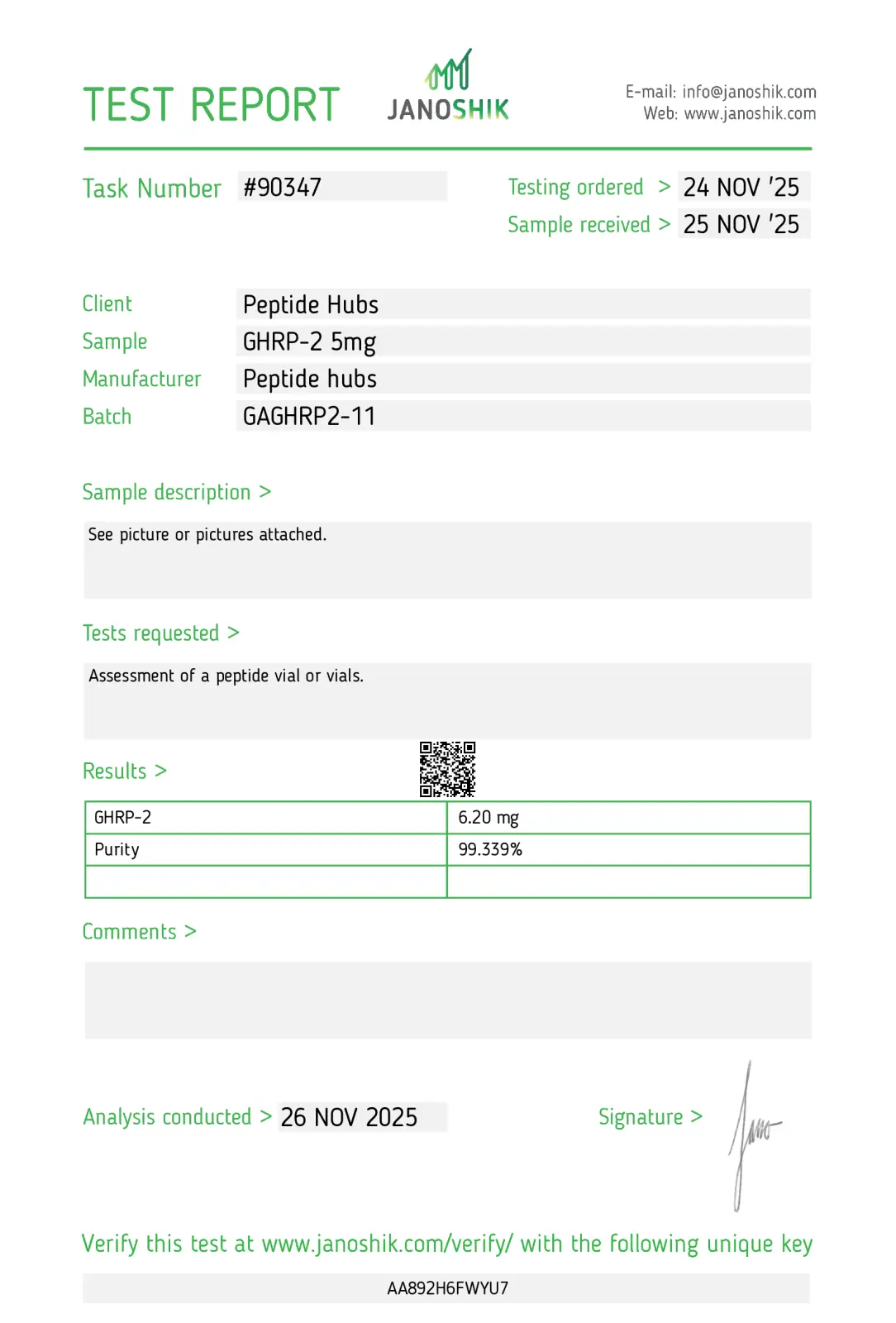
- 99% Purity Assurance: High-purity lyophilized GHRP-2, verified through rigorous RP-HPLC analysis with methodical precision
- Hexapeptide Composition: Six amino acids (D-Ala-D-2-Nal-Ala-Trp-D-Phe-Lys-NH₂) arranged with deliberate selectivity for receptor engagement
- GHS-R Agonist Properties: Designed expressly to investigate growth hormone secretagogue receptor activation and its downstream molecular consequences
- Stable Lyophilized Formulation: Extended shelf life under appropriate storage conditions, resisting the deterioration that time inflicts upon lesser preparations
- Research-Grade Excellence: Synthesized and lyophilized to pharmaceutical research standards of the highest order
- Versatile Scientific Application: Supports investigations spanning endocrinology, metabolism, muscle biology, and neuroimmunology with equal efficacy
- Standardized Precision: Each 5mg vial precisely quantified to enable reproducible experimental protocols of scientific rigor
Technical Specifications Table
|
Specification |
Details |
|
Product Designation |
GHRP-2 (Pralmorelin) |
|
Quantity per Vial |
5mg |
|
Physical Presentation |
Lyophilized powder |
|
Purity Standard |
99% (RP-HPLC verified) |
|
Molecular Formula |
C₄₅H₅₅N₉O₆ |
|
Molecular Weight |
817.9 g/mol |
|
Amino Acid Sequence |
H-D-Ala-D-2-Nal-Ala-Trp-D-Phe-Lys-NH₂ |
|
CAS Registry Number |
158861-67-7 |
|
Appearance |
White lyophilized powder |
|
Storage Temperature (Powder) |
Below –20°C (–80°C strongly preferred) |
|
Storage Temperature (Reconstituted) |
2–8°C (short-term use); –20°C or below (extended preservation) |
|
Stability Duration (Room Temperature) |
Approximately three weeks (lyophilized state) |
|
Expected Shelf Life |
One year from dispatch when maintained under proper conditions |
|
Formulation Character |
Lyophilized with no extraneous additives |
|
Recommended Reconstitution Concentration |
Minimum 100 μg/mL in sterile water |
Storage Instructions
GHRP-2 is supplied as a lyophilized (freeze-dried) white powder. Proper storage is essential to maintain product integrity and stability.
For Lyophilized Powder:
- Store in a desiccated state at temperatures below –20°C (preferably –80°C for extended storage)
- The peptide remains stable at room temperature for approximately 3 weeks; however, long-term preservation requires cold storage
- Maintain the vial in a tightly sealed container to prevent moisture absorption
- For long-term storage beyond one year, consider adding a carrier protein (0.1% HSA or BSA) to stabilize the peptide
- Avoid repeated freeze-thaw cycles, as these may compromise peptide integrity
After Reconstitution:
- Once dissolved in sterile water or appropriate aqueous solution, store reconstituted GHRP-2 at 2–8°C for short-term use (2–7 days)
- For extended storage of reconstituted solutions, store at –20°C or below
- Add a carrier protein to reconstituted solutions intended for long-term storage
- Minimize exposure to light and atmospheric oxygen

Related Products






Highly Purified Peptides: Trusted by Researchers Worldwide
Peptide Quality You Can't Find Elsewhere!!
| Peptide Hubs | Leading Competitor | |
|---|---|---|
| 200+ Peptide Variants |  |
 |
| USA-Manufactured Research Grade | |
|
| WHO/GMP & ISO 9001:2015 Certified | |
|
| Third-Party Tested for Purity | |
|
| Certificates of Analysis Provided | |
|
| Competitive Pricing Without Compromise | |
|
| Secure & Discreet Shipping | |
|
See Peptide Hubs in Action


Insights

Bronchogen Side Effects and Safety: A Research Overview

GHK-Cu Safety Profile: Side Effects and Current Research

PEG MGF Side Effects: Safety, Tolerability, and Research Findings
PT-141 Safety Insights: Side Effects and Clinical Evidence

99% Purity
Ensuring the highest standard with 99% purity.

Quality Ingredients
Crafted with purity and quality ingredients at the core.

Fast Shipping
Fast, reliable shipping straight to your door.

No TFA or Fillers
Nothing extra, just science: no TFA, no fillers.

Quality You Can Rely On — Guaranteed
At PeptideHubs, scientific integrity and product reliability are at the core of everything we do. Each compound is manufactured and tested under strict quality control protocols to ensure consistency, purity, and performance for research applications.
However, if for any reason our product does not meet your research expectations, we offer a 60-day money-back guarantee — providing a risk-free procurement experience for qualified researchers and institutions.
Your research deserves uncompromised quality — and we stand behind every order to ensure you receive.