
Hexarelin Peptide: Detailed Insights into Its Scientific Research
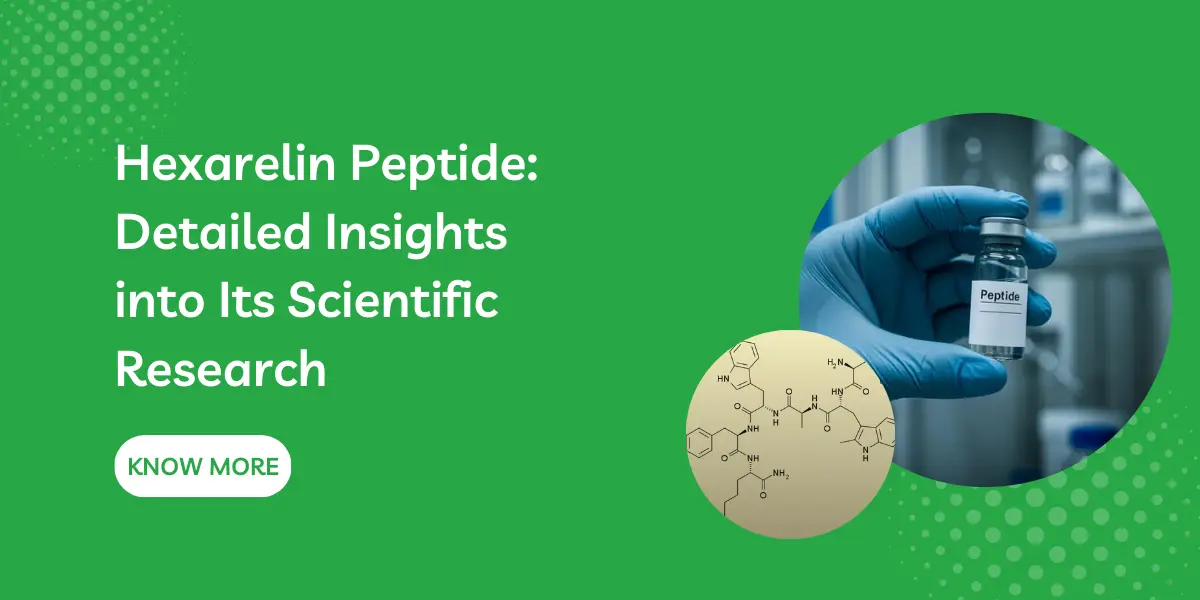
The exploration of growth hormone secretagogues (GHS) has undergone a dramatic transformation over the last several decades. What began as a search for a simple way to stimulate the pituitary gland has blossomed into a sophisticated field of study involving systemic regeneration, cardiovascular protection, and metabolic flexibility. At the forefront of this evolution is Hexarelin, a synthetic hexapeptide that stands out for its high potency and multifaceted biological profile.
As a prominent member of the Growth Hormone-Releasing Peptide (GHRP) family, Hexarelin (His-D-Trp-Ala-Trp-D-Phe-Lys-NH₂) is chemically similar to its cousin, GHRP-6, but with modifications that grant it greater stability and potency. For laboratory researchers in 2026, finding a high-quality Research Peptide that offers reproducible data is paramount, leading many to focus on Hexarelin for its unique ability to engage not only the ghrelin receptor but also specific cardiovascular receptors.
The Growth Hormone Axis: Mechanism of Action
Hexarelin's primary recognized function is the stimulation of the anterior pituitary gland to release endogenous growth hormone (GH). It achieves this by mimicking ghrelin and binding to the Growth Hormone Secretagogue Receptor (GHS-R1a). However, Hexarelin is often cited as the most potent stimulant in its class, frequently outperforming other analogs in the magnitude of GH pulse it generates.
In many comparative studies, researchers might observe a more selective, "gentle" GH release, whereas Hexarelin is utilized when a maximal response is required for the study. Unlike Ipamorelin, which is highly selective, Hexarelin may also result in a transient increase in prolactin and ACTH, providing a broader look at pituitary sensitivity. For labs requiring high-concentration reagents for titration studies, the Hexarelin 5mg vial has become a standard unit of measure in modern experimental protocols.
Cardiovascular Potential: Beyond Hormone Release
Perhaps the most exciting area of contemporary Hexarelin research lies in its cardioprotective properties. Unlike many other peptides in the GHRP family, Hexarelin has a high affinity for the CD36 receptor, which is expressed in the heart and vascular endothelium. This interaction allows Hexarelin to exert effects that are entirely independent of growth hormone levels.
Myocardial Function and Vascular Integrity
In research models of cardiac stress, Hexarelin has been suggested to impact cardiac remodeling. This involves:
- Fibroblast Regulation: Modulating the activity of fibroblasts to prevent excessive scarring or fibrosis of the heart tissue.
- Extracellular Matrix (ECM) Modulation: Helping maintain the structural "scaffold" of the heart, which is vital during recovery from ischemic events.
- Vascular Tone: Some investigations suggest the peptide might influence autonomic nervous system activity, potentially leading to improved heart rate variability and blood pressure regulation in laboratory models.
These findings suggest that Hexarelin is not just a Human Growth Hormone Peptide; it is a specialized tool for exploring the mechanics of cardiovascular homeostasis.
Metabolic Research and Lipid Modulation
In the current 2026 research climate, metabolic flexibility is a high-priority topic. Hexarelin has shown significant potential in influencing how organisms process energy. Research models suggest that the peptide influences lipid metabolism by modulating triglyceride levels and enhancing fatty acid oxidation.
Glucose Homeostasis
Beyond lipids, Hexarelin is being used to study the molecular pathways of insulin sensitivity. Data suggests that the peptide may facilitate glucose uptake in peripheral tissues, such as skeletal muscle. This makes it an invaluable agent for examining the development of metabolic diseases like dyslipidemia and insulin resistance. Researchers looking to procure these materials often browse specialized platforms offering Peptides for Sale to ensure they receive compounds with the requisite 99% purity levels for metabolic assays.
The Musculoskeletal System: Repair and Regeneration
Hexarelin's alleged impact on the musculoskeletal system has made it a focal point of regenerative science. Its influence is twofold: it acts via the systemic increase in GH/IGF-1 and via direct cellular signaling.
Muscle Cell Proliferation
Studies suggest that Hexarelin activates satellite cells the "stem cells" of the muscle. When these cells are activated, they proliferate and differentiate into new muscle fibers, aiding in the repair of tissue following injury or degenerative stress. This property positions Hexarelin as a primary candidate for investigating strategies to combat muscle wasting (sarcopenia).
Bone Metabolism
The skeletal system also appears to be a target. Researchers hypothesize that Hexarelin influences osteoblast activity (bone-forming cells) and mineralization. This suggests a potential role in studying bone remodeling and exploring ways to enhance bone density in models of osteoporosis or fracture healing.
Immunological and Inflammatory Interactions
Emerging data in 2026 indicates that Hexarelin may possess potent immunomodulatory properties. The peptide has been observed to influence the activity of immune cells, including macrophages and lymphocytes.
Cytokine Signaling
One of the more nuanced areas of research is Hexarelin's ability to alter the "inflammatory milieu." Investigations propose that the peptide may modulate the expression of pro-inflammatory cytokines. By altering these signaling pathways, Hexarelin can help researchers understand the molecular mechanisms that drive chronic inflammation and immune system dysregulation.
Neuroendocrine and Regulatory Insights
Hexarelin's interactions within the hypothalamus and pituitary are complex. While its main "job" is GH release, its ability to modulate other hormones like prolactin provides a window into the interconnected nature of the neuroendocrine system. In scientific contexts, these interactions are studied to map out the feedback loops that govern hormone production and to identify potential points of intervention for endocrine disorders.
Critical Considerations for Research
While the potential of Hexarelin is vast, the validity of scientific data relies heavily on the quality of the reagents used. In 2026, the industry has seen a push toward higher transparency in manufacturing.
|
Research Area |
Primary Mechanism of Hexarelin |
Potential Observation |
|---|---|---|
|
Endocrinology |
GHS-R1a Activation |
Maximal GH Secretion |
|
Cardiology |
CD36 Receptor Binding |
Cardioprotection / Reduced Fibrosis |
|
Metabolism |
Fatty Acid Oxidation |
Improved Lipid Profile |
|
Orthopedics |
Osteoblast Stimulation |
Increased Bone Mineral Density |
Sourcing and Stability
The peptide must be handled with care to maintain its structural integrity. Factors such as pH balance during reconstitution and protection from thermal degradation are critical. High-purity peptides are typically lyophilized (freeze-dried) to ensure stability during transit. When a lab decides to Buy Ipamorelin 5mg or Hexarelin, they must verify the supplier's analytical reports (HPLC and Mass Spectrometry) to ensure the absence of truncated sequences or contaminants that could induce an unwanted inflammatory response in their subjects.
Conclusion: The Multifaceted Future of Hexarelin
Hexarelin represents a compelling subject for scientific inquiry because it refuses to be "pigeonholed." It is a growth hormone stimulant, a cardioprotective agent, a metabolic regulator, and a musculoskeletal regenerative tool all in one.
As investigations continue throughout 2026, the focus is shifting from "does it work?" to "how exactly does it work at the sub-cellular level?" By exploring its interactions with the CD36 receptor and its influence on satellite cell activation, researchers are uncovering a deeper understanding of human physiology and the potential for peptide-based interventions.
Hexarelin remains a cornerstone of peptide research, offering a promising avenue for those looking to push the boundaries of regenerative medicine and endocrinology. Continued efforts in this field will be crucial for translating these laboratory findings into a comprehensive understanding of organismal health and disease.