
SS-31 Peptide: Advancing Mitochondrial Research Through Targeted Cellular Support
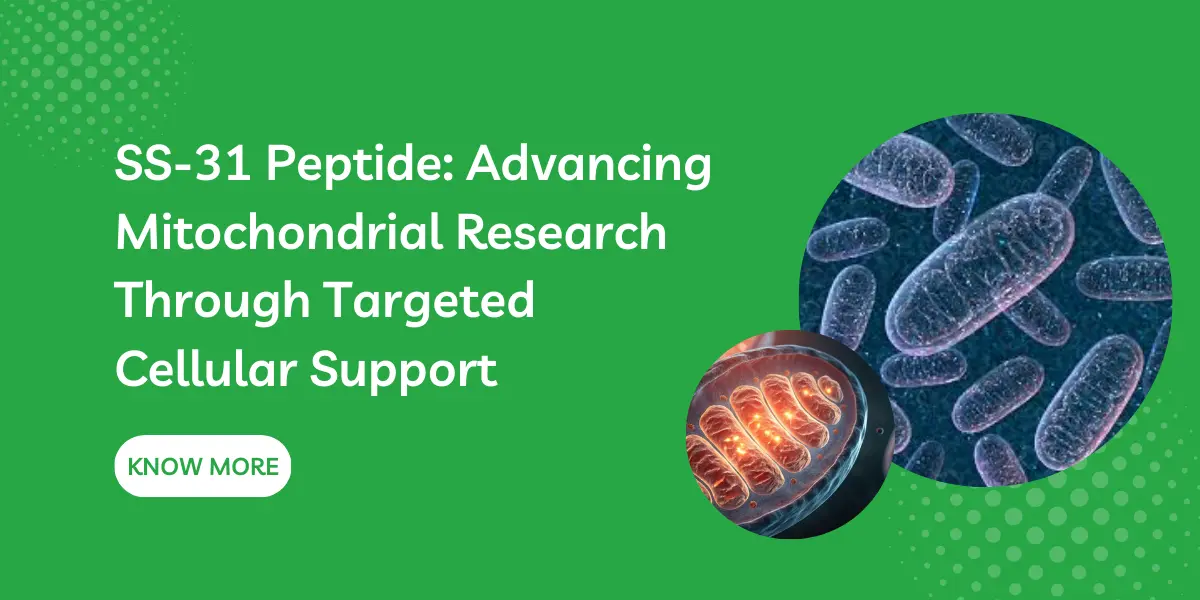
In the intricate world of cellular biology, mitochondria have long been celebrated as the "powerhouses" of the cell. These specialized organelles are responsible for generating the chemical energy adenosine triphosphate (ATP) that fuels nearly every biological process. However, their role extends far beyond energy production; they are central hubs for signaling, calcium homeostasis, and the regulation of programmed cell death (apoptosis).
When mitochondrial function falters, the ripple effects are felt across the entire organism, contributing to aging, metabolic decline, and various pathological states. This has led scientists to seek out specialized compounds that can penetrate the mitochondrial defenses to provide structural and functional support. Among these, the SS-31 peptide (also known as Elamipretide) has emerged as a groundbreaking tool. Unlike broader metabolic agents like GHRP-2 5mg or the fat-targeting Adipotide 10mg, SS-31 is uniquely designed to stabilize the very architecture of the mitochondrial inner membrane.
The Structural Blueprint: SS-31 and Cardiolipin
SS-31 is a synthetic tetrapeptide (D-Arg-2',6'-dimethyl-Tyr-Lys-Phe-NH2) with a highly specific mission. To understand its value, one must first understand cardiolipin, a unique phospholipid found almost exclusively in the inner mitochondrial membrane (IMM).
Cardiolipin is the "glue" that holds the mitochondrial respiratory chain together. It curves the membrane to create cristae the folds that increase surface area for energy production and anchors the proteins involved in the electron transport chain (ETC). Under conditions of oxidative stress, cardiolipin is often the first casualty, leading to a "leaky" membrane and a collapse of cellular energy production.
Biochemical Effects and Research Potential
The Biochemical Effects and Research Potential of SS-31 stem from its amphipathic nature and positive charge. Because the mitochondrial matrix is negatively charged, SS-31 is naturally drawn deep into the organelle. Once there, it binds specifically to cardiolipin. Research suggests that this bond acts like a molecular scaffold, preventing cardiolipin from undergoing peroxidation and ensuring that the structural integrity of the cristae remains intact. By stabilizing this lipid-protein interaction, SS-31 allows the mitochondria to maintain efficient respiration even under significant physiological stress.
Mitochondrial Bioenergetics and Oxidative Stress
The primary focus for researchers who obtain SS 31 Peptide for Sale is usually the optimization of the Electron Transport Chain (ETC). The ETC consists of four major protein complexes that pass electrons along to create a proton gradient. This process is highly sensitive to the surrounding lipid environment.
When cardiolipin is damaged, these complexes can physically drift apart or become less efficient, leading to a dangerous byproduct: reactive oxygen species (ROS). This creates a vicious cycle where mitochondrial damage leads to more ROS, which in turn causes more mitochondrial damage.
Breaking the Cycle
Investigations suggest that SS-31 may break this cycle by:
- Optimizing Electron Flux: By keeping the ETC complexes in close proximity, SS-31 reduces "electron leakage," which is a primary source of superoxide production.
- Enhancing ATP Synthesis: A more stable membrane means a more robust proton gradient, leading to higher ATP yields in research models of cellular exhaustion.
- Reducing ROS: By streamlining respiration, SS-31 effectively lowers the baseline oxidative stress within the cell, providing a cleaner environment for cellular work.
Neurodegenerative Research: Preserving the "High-Energy" Brain
The brain is one of the most metabolically demanding organs in the body, consuming roughly 20% of the body's total energy despite making up only 2% of its weight. This makes neurons exceptionally vulnerable to mitochondrial decay.
In neurodegenerative research, mitochondrial fragmentation is a hallmark sign of disease progression. When mitochondria break apart, they lose their ability to travel to the distal ends of neurons (synapses), leading to a loss of communication between brain cells. SS-31 has shown a remarkable ability to maintain mitochondrial cristae morphology, preventing this fragmentation and supporting neuronal survival in oxidative stress models.
Researchers studying cognitive longevity often look at SS-31 alongside other signaling molecules like the Kisspeptin Peptide, which, while primarily known for its role in the HPG axis, is increasingly being examined for its broader effects on neuronal signaling and metabolic health.
Cardiovascular and Metabolic Implications
The heart, much like the brain, is a "mitochondrial furnace." Cardiomyocytes require a constant, rhythmic supply of ATP to maintain contraction. Research indicates that SS-31 may provide significant insights into cardiac physiology by protecting the mitochondria during periods of ischemia (low oxygen) or reperfusion (the return of blood flow).
In metabolic settings, SS-31 is being used to explore how mitochondrial stability affects insulin sensitivity. Since the mitochondria are responsible for "burning" fatty acids and glucose, any inefficiency in their machinery can lead to metabolic "bottlenecks." By improving the efficiency of mitochondrial respiration, SS-31 offers a framework for investigating how we might reverse the cellular hallmarks of metabolic syndrome.
Cellular Longevity and the Science of Aging
One of the most compelling reasons investigators look for high-quality Peptides for Sale is to study the "Mitochondrial Theory of Aging." This theory suggests that the gradual accumulation of mitochondrial DNA damage and membrane decay is the primary driver of biological aging.
Mitophagy and Biogenesis
SS-31 appears to influence the "quality control" systems of the cell. Specifically, it may modulate:
- Mitophagy: The process of identifying and removing "broken" mitochondria so they don't poison the rest of the cell.
- Mitochondrial Biogenesis: The creation of new, healthy mitochondria to replace the old ones.
By preserving the integrity of existing mitochondria, SS-31 may delay the threshold at which a cell enters senescence (biological retirement), making it an invaluable Research Peptide for longevity science.
Comparative Advantages in Research Contexts
When designing a study, it is important to distinguish SS-31 from other metabolic tools. While a GHRP-2 study might focus on systemic growth hormone secretion, or Adipotide 10mg might look at programmed cell death in adipose tissue, SS-31 provides a "bottom-up" approach. It fixes the engine (the mitochondria) rather than just changing the fuel or the bodywork.
|
Feature |
SS-31 Peptide |
Standard Antioxidants |
|---|---|---|
|
Targeting |
Specific to Cardiolipin (IMM) |
General systemic distribution |
|
Mechanism |
Structural Stabilization |
Free-radical scavenging |
|
Accumulation |
High in Mitochondrial Matrix |
Variable/Low |
|
Effect on ATP |
Directly promotes synthesis |
Indirect/No effect |
Conclusion: A New Era of Targeted Research
The SS-31 peptide represents a shift in how we approach cellular health. Instead of attempting to "clean up" oxidative stress after it has already occurred, SS-31 seeks to prevent the damage at its source the inner mitochondrial membrane.
As we continue to peel back the layers of mitochondrial bioenergetics, the importance of structural phospholipids like cardiolipin becomes increasingly clear. SS-31 provides a window into this world, offering researchers a way to stabilize, observe, and eventually manipulate the very foundations of cellular energy. Whether the focus is on neuroprotection, cardiovascular resilience, or the fundamental biology of aging, this peptide stands as a cornerstone of modern mitochondrial science.
By ensuring the use of high-purity research materials and focusing on the intricate "Bio-Mechanical Effects" of these molecules, the scientific community is well on its way to unlocking the secrets of cellular vitality and long-term metabolic health.