
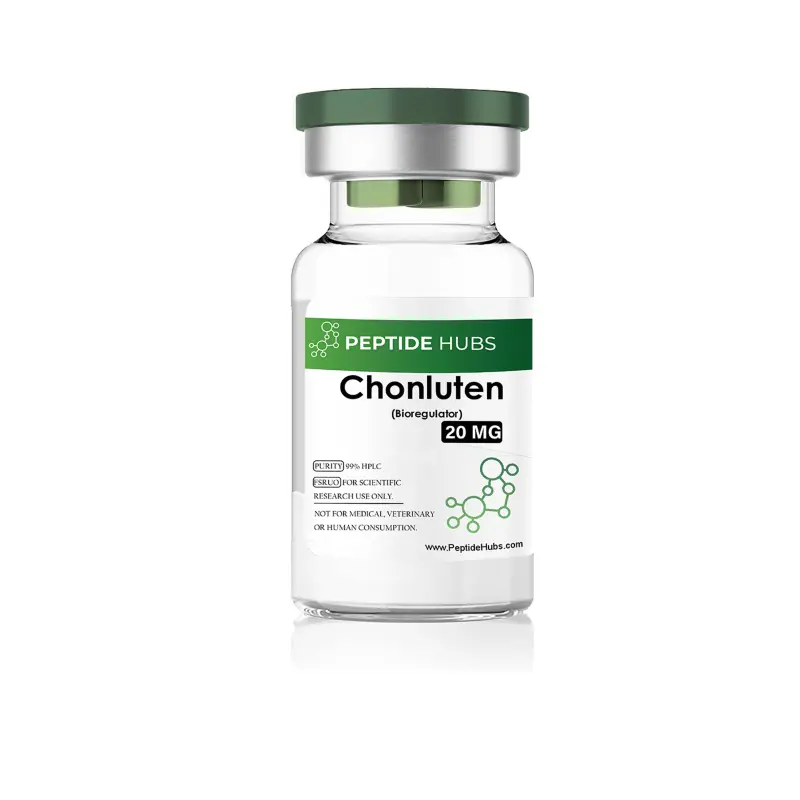
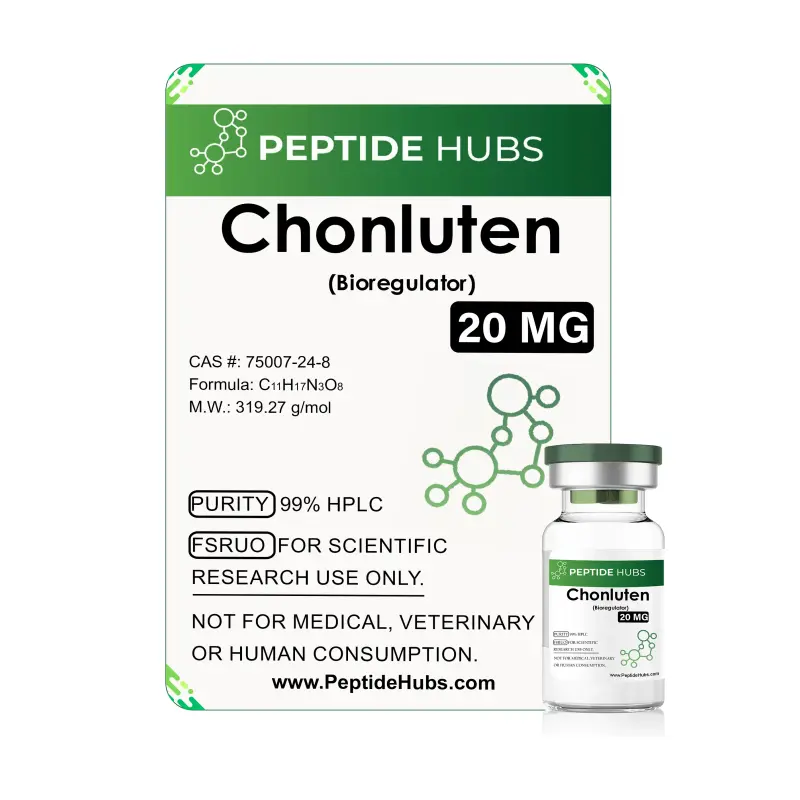
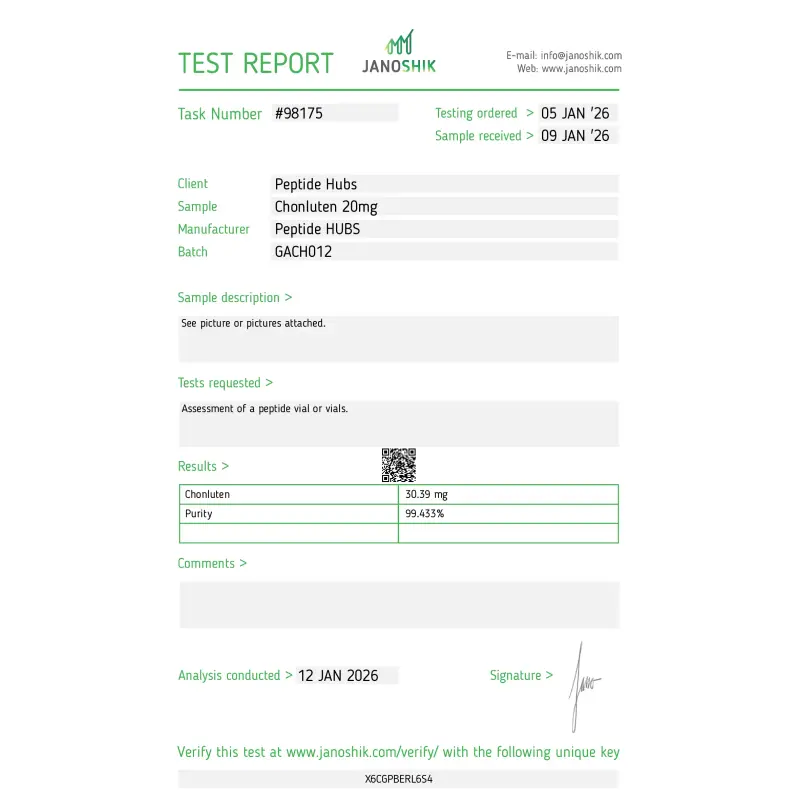
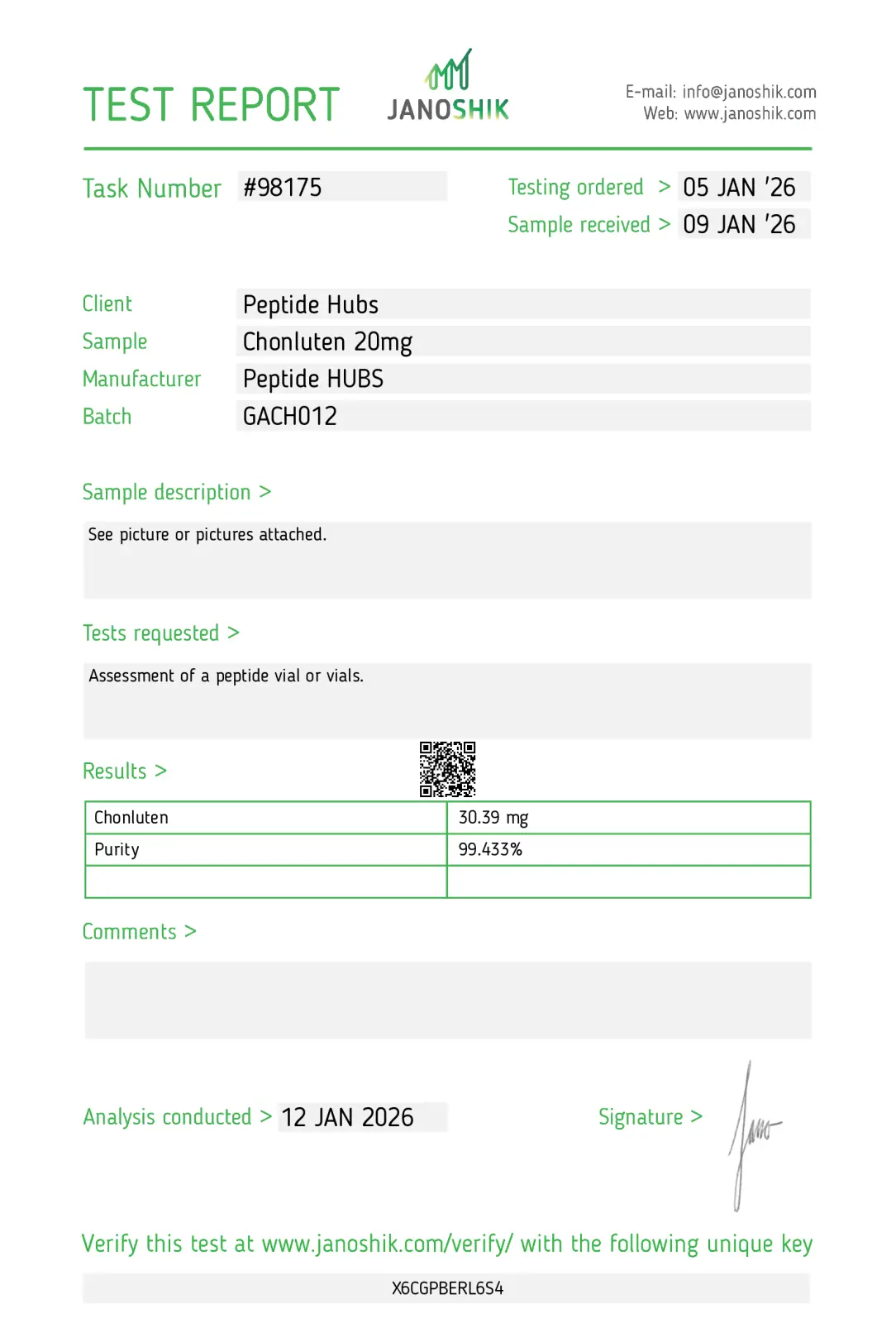
Chonluten 20mg
- USA MADE 2-7 days delivery
- International 5-20 days delivery
THIS PRODUCT IS INTEDED AS A RESEARCH CHEMICAL ONLY.
This designation allows the use of research chemicals strictly in vitro for testing and laboratory experimentation only. All products information available on this website is for educational purposes only. Bodily introduction of any kind into humans or animals is strictly forbidden by law. This product should only be handled by licensed, qualified professional. This product is not a drug, food or cosmetic and may not be misbranded, misused or mislabled as a drug food or cosmetic.
What is Chonluten?
Chonluten, designated as tripeptide T-34 or EDG tripeptide, is a short-chain peptide bioregulator composed of three amino acids: glutamic acid (Glu), aspartic acid (Asp), and glycine (Gly). This compound functions as a regulator of gene expression, with demonstrated potential in modulating inflammation and antioxidant pathways, particularly within respiratory and gastrointestinal tissues. Research indicates that Chonluten operates through selective gene regulatory mechanisms rather than direct pharmacological pathways, distinguishing it within the class of peptide bioregulators studied for their capacity to influence cellular function at the molecular level.
The peptide exhibits organ-specificity in its action, with primary research focus directed toward lung tissue and secondary activity documented in the gastrointestinal tract. Chonluten is supplied as a lyophilized (freeze-dried) powder at 99% purity, a formulation that preserves molecular stability while enabling laboratory reconstitution protocols. This product is intended exclusively for in-vitro research applications and laboratory investigation and is not formulated or approved for human or animal consumption.
Chonluten Structure
The molecular character of Chonluten may be stated with precision, as befits a substance whose composition has been thoroughly elucidated:
|
Property |
Value |
|
Molecular Formula |
C₁₁H₁₇N₃O₈ |
|
Molecular Weight |
319.27 g/mol |
|
CAS Number |
75007-24-8 |
|
PubChem CID |
194641 |
|
Chemical Structure |
(4S)-4-amino-5-[[(2S)-3-carboxy-1-(carboxymethylamino)-1-oxopropan-2-yl]amino]-5-oxopentanoic acid |
|
Alternative Designations |
T-34 tripeptide, EDG tripeptide, Glutamyl-aspartyl-glycine |
The tripeptide sequence—Glu-Asp-Gly—provides the structural foundation upon which Chonluten's bioregulatory functions depend. This precise arrangement enables the peptide to engage in interactions of considerable subtlety with cellular machinery, most notably through its capacity to penetrate cellular barriers and commune with the nucleus itself, with its attendant histones and DNA. Such intimate familiarity between molecule and genome speaks to a harmony of design that would not be out of place in the most perfectly arranged drawing room.
Tripeptides in Bioregulation
Those possessed of scientific learning have long recognized that short peptides—those modest chains of but two to seven amino acids—possess remarkable capacities for accomplishing feats that would seem improbable to the uninitiated. The discovery that such diminutive compounds might penetrate the customary boundaries that ordinarily contain cellular molecules, and thereby reach the cellular nucleus itself, has occasioned considerable interest and excitement among serious investigators of natural phenomena.
It is now well established that these modest peptides may exert influence upon the most fundamental processes of genetic life—DNA replication, transcription, and the careful repair of genetic material when it has suffered damage. Operating through mechanisms both direct and indirect, they demonstrate a sophistication of action that speaks to the complexity of Nature's design. Moreover, such peptides appear possessed of the remarkable capacity to influence DNA methylation—that most subtle of epigenetic processes whereby genes might be silenced or awakened without any alteration whatsoever to their fundamental nucleic acid sequence. In conditions of disease or the gradual decline that attends advancing age, such regulatory mechanisms assume a significance that cannot possibly be overstated, and their investigation promises benefits to human welfare of no small magnitude.
Chonluten and the Lungs
The respiratory system, being perpetually exposed to the variable humours and corrupting influences of the external atmosphere, stands in particular need of vigilant regulation and steadfast protection. It is therefore with considerable interest and justified hope that researchers have directed their attention toward Chonluten's potential influence upon the lungs, specifically its purported capacity to moderate the excessive inflammatory responses that characterise conditions such as chronic bronchitis and the asthmatic complaint.
The evidence, whilst preliminary in its nature and requiring further substantiation through continued inquiry, suggests that Chonluten may orchestrate with remarkable precision the expression of multiple genes devoted to respiratory homeostasis and defence. These include those encoding the protective heat shock protein 70, an agent of cellular salvation in times of distress; the antioxidant superoxide dismutase, which protects against the corrosive effects of reactive oxygen species; and the inflammatory mediators TNF-α and COX-2, whose excessive activity contributes to pathological inflammation.
Experimental investigations conducted in appropriate laboratory models have noted gratifying reductions in coughing frequency, asthmatic episodes, and excessive sputum production in certain systems of chronic bronchial inflammation, suggesting that the tripeptide may indeed exert a most elegant moderating influence upon overwrought and destructive inflammatory responses. Of particular note is the peptide's proposed capacity to diminish the trafficking of immune cells across blood vessel walls—a mechanism that, if substantiated through further rigorous inquiry, would represent a solution of the most ingenious character to the problem of systemic inflammatory excess.
Chonluten and COVID-19
Literature examining peptide bioregulators in the context of viral respiratory infection, specifically SARS-CoV-2, has noted Chonluten's dual characteristics: its documented anti-inflammatory action in lung tissue combined with its proposed capacity to improve physiological function under hypoxic (low-oxygen) conditions. Researchers have theorized that these combined properties—coupled with Chonluten's potential to restore bronchopulmonary system function—might position the tripeptide as a component within multi-intervention research models investigating viral-induced respiratory compromise. Mechanisms proposed include gene expression regulation relevant to oxidative stress reduction and immune response modulation. Investigation of Chonluten's role in coronavirus-related respiratory pathology remains an emerging area of research inquiry.
Chonluten and the Gastrointestinal Tract
The digestive system, being no less crucial to health than the respiratory apparatus, has naturally attracted investigative attention. Experimental studies in laboratory models of gastric ulceration suggest that the tripeptide may influence gene expression within gastrointestinal tissues in a manner not wholly dissimilar to its respiratory effects.
The evidence indicates that Chonluten may enhance antioxidant defences and suppress excessive inflammatory signalling within the gastrointestinal mucosa. Of particular interest is its capacity to reduce premature epithelial cell death through heat shock protein 70 influence. Studies suggest Chonluten may stimulate fibroblast proliferation, promoting the healing and regeneration of damaged structures.
Chonluten Summary
In summary, Chonluten operates as a bioregulator of gene expression, exercising its influence with evident preference for respiratory tissues whilst maintaining secondary activity within the gastrointestinal tract. Unlike the blunt instruments of conventional medicine, this tripeptide acts through the refined mechanisms of genetic and epigenetic regulation, modulating the expression of genes devoted to antioxidant protection, inflammatory restraint, and cellular stress response. The investigation of Chonluten remains, at present, largely exploratory in character, concerned with potential applications to chronic inflammatory lung disease and tissue regeneration. To speak of established clinical applications would be to exceed both the evidence and the bounds of scientific propriety. The compound is offered to serious researchers as a tool for legitimate inquiry, not as a remedy for human ailment.
Feature Bullets
- 99% Purity Lyophilized Powder: A formulation of laboratory quality, prepared with that exactitude which distinguishes the work of conscientious science
- Gene Expression Bioregulator: Operates through the refined mechanisms of epigenetic modulation rather than crude pharmacological force
- Organ-Specific Activity: Manifests decided preference for respiratory tissues with secondary gastrointestinal inclinations
- Characterized Molecular Profile: Possesses complete structural specification—CAS number 75007-24-8, molecular weight 319.27 g/mol—enabling reproducible inquiry
- Multi-Gene Regulatory Capacity: Exerts influence upon expression of HSP70, SOD, TNF-α, COX-2, c-Fos, and additional antioxidant system genes
- Stable Formulation: Maintains molecular integrity for thirty-six months when stored with proper discretion; compatible with standard laboratory protocols
- Research-Optimized Delivery: Supplied in freeze-dried form, permitting precise dosing and laboratory-controlled administration in experimental models
Technical Specifications
|
Specification |
Value |
|
Product Name |
Chonluten 20mg (Tripeptide T-34/EDG) |
|
Quantity per Unit |
20 mg |
|
Molecular Formula |
C₁₁H₁₇N₃O₈ |
|
Molecular Weight |
319.27 g/mol |
|
CAS Number |
75007-24-8 |
|
PubChem CID |
194641 |
|
Purity |
99% |
|
Form |
Lyophilized powder |
|
Container Type |
Sealed vial (glass or appropriate sterile vessel) |
|
Concentration (if reconstituted) |
Dependent upon solvent volume and reconstitution protocol employed by the investigator |
|
Appearance |
White to off-white powder |
|
Shelf Life |
36 months (at ≤6°C storage) |
|
Components |
Chonluten tripeptide; carrier and excipient system may include microcrystalline cellulose, sugar derivatives, lactose, potato starch, and polysorbate-80 (formulation varies by source) |
|
Storage Conditions |
≤6°C, sealed, protected from heat, light, and moisture |
Storage Instructions
In matters of proper maintenance, the investigator would do well to attend to the following particulars with the same scrupulous care one might devote to the preservation of a treasured manuscript:
Storage Temperature: The substance must be maintained at a temperature not exceeding 6°C; refrigeration is deemed advisable, though freezer storage remains entirely suitable
Container Integrity: The vial must remain sealed in its original packaging or within an appropriate sterile vessel, undisturbed by careless handling
Environmental Protection: The preparation must be sheltered from the direct rays of light, from excessive heat, and most particularly from the corrupting influence of moisture
Shelf Life: When stored according to these directions, the peptide retains its integrity for a period of thirty-six months—a testament to the stability of its formulation
Handling Protocol: Exposure to ambient temperature must be minimized; only such quantity as required for immediate use should be withdrawn and reconstituted
The neglect of these precautions will inevitably result in the degradation of the peptide and the loss of its efficacy. Should the investigator require storage of extended duration, a freezer maintained at –20°C or below represents the most prudent course. Once the powder has been reconstituted in an appropriate solvent, its stability becomes contingent upon the nature of that solvent and the conditions of its storage—guidance specific to such preparations must be consulted accordingly.

The 20mg vials provide a solid concentration for my studies on bronchial mucosa, and the quality is far superior to what I’ve encountered elsewhere in the market.
The documentation was clear and concise, making it easy to catalog the 20mg batch upon arrival. A very efficient experience.
Related Products




Highly Purified Peptides: Trusted by Researchers Worldwide
Peptide Quality You Can't Find Elsewhere!!
| Peptide Hubs | Leading Competitor | |
|---|---|---|
| 200+ Peptide Variants |  |
 |
| USA-Manufactured Research Grade | |
|
| WHO/GMP & ISO 9001:2015 Certified | |
|
| Third-Party Tested for Purity | |
|
| Certificates of Analysis Provided | |
|
| Competitive Pricing Without Compromise | |
|
| Secure & Discreet Shipping | |
|
See Peptide Hubs in Action


Insights

Tirzepatide & Thyroid Nodules: Exploring Safety Evidence and Risks

Can You Take NAD+ and Tirzepatide Together? Here’s What Science Says

Cagrilintide vs Retatrutide: Comparing Amylin and Triple Agonist Research

AOD-9604 vs Semaglutide: Key Differences in Weight-Loss Research

99% Purity
Ensuring the highest standard with 99% purity.

Quality Ingredients
Crafted with purity and quality ingredients at the core.

Fast Shipping
Fast, reliable shipping straight to your door.

No TFA or Fillers
Nothing extra, just science: no TFA, no fillers.

Quality You Can Rely On — Guaranteed
At PeptideHubs, scientific integrity and product reliability are at the core of everything we do. Each compound is manufactured and tested under strict quality control protocols to ensure consistency, purity, and performance for research applications.
However, if for any reason our product does not meet your research expectations, we offer a 60-day money-back guarantee — providing a risk-free procurement experience for qualified researchers and institutions.
Your research deserves uncompromised quality — and we stand behind every order to ensure you receive.