

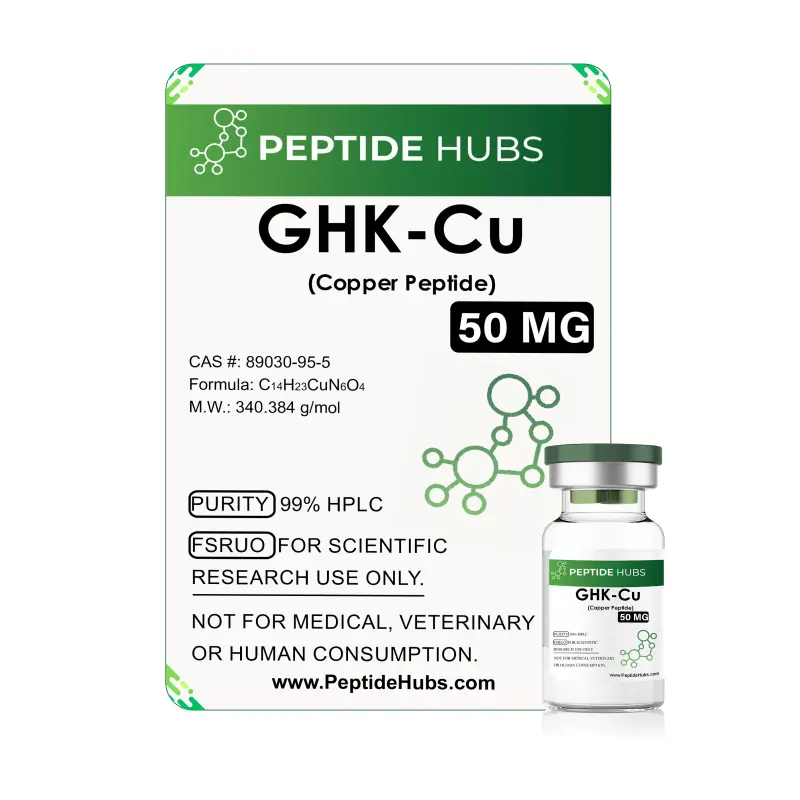
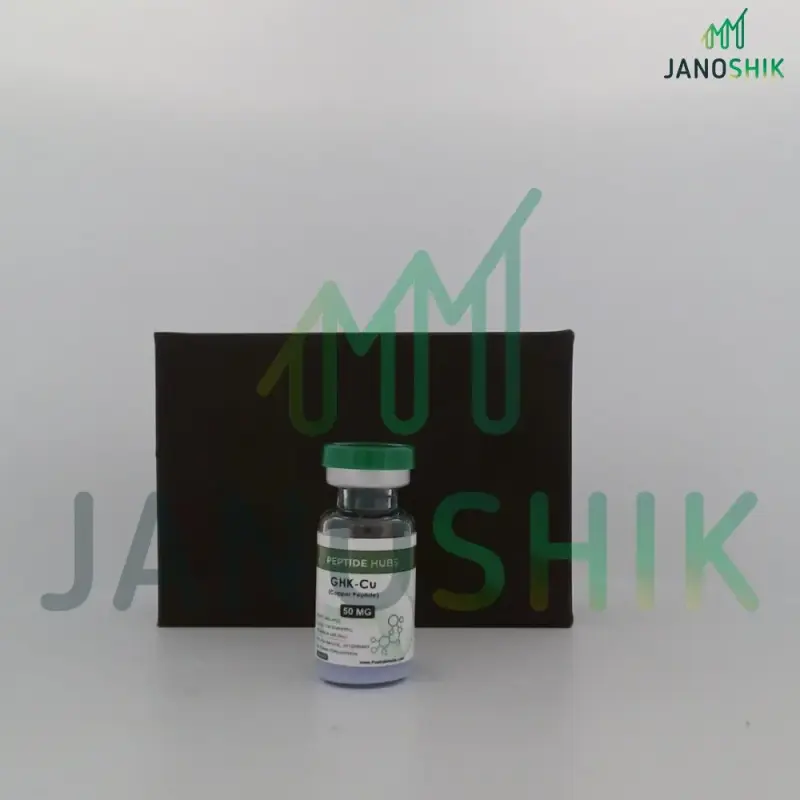
GHK-CU 50mg
- USA MADE 2-7 days delivery
- International 5-20 days delivery
THIS PRODUCT IS INTEDED AS A RESEARCH CHEMICAL ONLY.
This designation allows the use of research chemicals strictly in vitro for testing and laboratory experimentation only. All products information available on this website is for educational purposes only. Bodily introduction of any kind into humans or animals is strictly forbidden by law. This product should only be handled by licensed, qualified professional. This product is not a drug, food or cosmetic and may not be misbranded, misused or mislabled as a drug food or cosmetic.
GHK-Cu represents a naturally occurring peptide discovered within human blood plasma, urine, and saliva—substances most intimately connected to the constitution of the living body. Research investigations undertaken in animal models reveal that GHK-Cu possesses considerable capacity to enhance the healing of wounds, to improve the function of the immune system, and to promote the health and vitality of the skin through the stimulation of collagen production, the activation of fibroblasts, and the promotion of blood vessel growth—mechanisms of considerable biological significance. Evidence accumulated through systematic inquiry has demonstrated that this peptide functions as a feedback signal generated in consequence of tissue injury, thereby serving as a messenger of the body's own healing intelligence. Of particular merit is the observation that GHK-Cu suppresses the deleterious effects of free-radical damage and thus merits recognition as a potent antioxidant of considerable protective capacity.
1. What is GHK-Cu? An Overview
It may be observed that among the multitude of bioactive compounds discovered within the human constitution, few possess the particular elegance of GHK-Cu, the copper complex of the tripeptide known to natural philosophers as glycyl-L-histidyl-L-lysine. This substance, first isolated from human plasma in the year 1973 by researcher Loren Pickart, represents a naturally occurring union of three amino acids—glycine, histidine, and lysine—bound to a copper ion through coordinate bonds of considerable stability. The molecular architecture involves the histidine imidazole ring, the alpha-amino group of glycine, and the deprotonated amide nitrogen, a configuration characterized through X-ray crystallography and spectroscopic examination, which confers upon the complex both stability and biological activity in equal measure.
It has been established through systematic inquiry that GHK-Cu occurs naturally within human plasma at concentrations approximating 200 nanograms per millilitre at age twenty, declining to 80 nanograms per millilitre by age sixty—a diminution that coincides precisely with observable decreases in tissue regenerative capacity. Research investigations spanning several decades have examined GHK-Cu's roles in wound healing acceleration, collagen synthesis modulation, immune cell recruitment, angiogenesis stimulation, and regulation of gene expression across approximately four thousand human genes. The peptide's affinity for copper, expressed as a logarithmic stability constant of 16.44, enables efficient copper delivery whilst silencing the element's oxidative properties, a dual functionality of considerable scientific significance.
2. GHK-Cu Structure
The molecular architecture of GHK-Cu has been the subject of extensive characterization through methods both elegant and precise, including X-ray crystallography, electron paramagnetic resonance spectroscopy, X-ray absorption spectroscopy, and nuclear magnetic resonance—techniques that would have astonished the natural philosophers of earlier centuries. The copper ion, in its particular arrangement, adopts what is termed a square-planar coordination geometry, binding through specific nitrogen atoms in a manner that has been minutely described by scholars devoted to structural chemistry.
Of the three amino acids comprising this peptide, each contributes distinct properties to the whole. Glycine, possessed of the most minimal of side chains, facilitates structural flexibility whilst permitting ready access to the copper center; histidine, with its imidazole ring, serves as the primary site for metal coordination; and lysine, bearing a positively charged epsilon-amino group at physiological conditions, contributes both to cellular receptor interactions and to the stabilization of the complex. It is through such harmonious arrangement of constituent parts that the compound achieves its biological efficacy.
The molecular formula varies somewhat depending upon the particular salt form and state of hydration—a circumstance that has been reported in the scientific literature as either C₁₄H₂₂CuN₆O₄ or C₁₄H₂₄CuN₆O₄, with corresponding molecular weights ranging from 340.38 to 403.93 grams per mole. The copper complex typically exhibits a characteristic blue hue in solution, with absorption maxima between 610 and 630 nanometers—a visible manifestation of the electronic transitions occurring within the copper center. Such structural configurations enable GHK-Cu to function as both copper chaperone and signaling molecule in experimental systems, a duality of purpose most fitting to its complex nature.
TECHNICAL SPECIFICATIONS
|
Parameter |
Specification |
|
Sequence |
Gly-His-Lys (Glycyl-L-histidyl-L-lysine) |
|
Molecular Formula |
C₁₄H₂₄CuN₆O₄ (dependent upon salt form) |
|
Molecular Weight |
340.38 to 403.93 grams per mole |
|
CAS Number |
89030-95-5; 49557-75-7 |
|
Form |
Lyophilized powder |
|
Appearance |
White to blue solid |
|
Purity |
Greater than 98% |
|
Solubility |
Soluble in water and aqueous buffers |
|
Concentration |
50 milligrams per vial |
|
Storage Temperature |
At or below minus 18°C (lyophilized); 4°C (reconstituted) |
It must be noted that certain parameters may vary depending upon manufacturing batch, salt form, and state of hydration.
3. GHK-Cu Research: Observations from Experimental Inquiry
3.1 GHK-Cu and the Healing of Skin: Laboratory Observations
It has been demonstrated through research investigations employing dermal cell cultures and animal wound models that GHK-Cu exerts considerable influence upon the mechanisms of tissue repair. Studies utilizing isolated fibroblast cultures reveal that GHK-Cu, at concentrations measured in nanomoles (specifically, one to ten nanomolar), stimulates both the synthesis and the breakdown of several collagen types—namely, types I, III, IV, and VII—alongside glycosaminoglycans, proteoglycans, decorin, and chondroitin sulfate. This dual regulatory capacity appears to be mediated through the modulation of matrix metalloproteinases and their tissue inhibitors, TIMP-1 and TIMP-2, thereby suggesting involvement in the remodeling processes of the extracellular matrix.
Animal experimental models provide context of considerable value. Rabbit wound studies indicate that the application of GHK-Cu, whether alone or in combination with helium-neon laser treatment, correlates with enhanced wound contraction, improved formation of granulation tissue, and increased activity of antioxidant enzymes. Research employing diabetic rat models reports that collagen dressings incorporating GHK-Cu demonstrate increases in collagen synthesis of ninefold magnitude, elevated concentrations of glutathione and ascorbic acid, and improved epithelialization when compared to untreated controls.
Mouse burn injury models suggest an acceleration of wound healing by approximately thirty-three percent following the administration of GHK-Cu. The mechanisms proposed include the recruitment of fibroblasts, immune cells, and endothelial cells to sites of injury; the stimulation of angiogenesis through expression of vascular endothelial growth factor; and the enhancement of transforming growth factor-beta signaling pathways. Such observations, accumulated through patient experimental inquiry, contribute materially to our understanding of tissue repair mechanisms.
3.2 GHK-Cu and Bacterial Influence: Antimicrobial Observations
Laboratory investigations of a most particular nature have explored GHK-Cu's properties relating to the suppression of microbial growth when the peptide is conjugated with specific fatty acids. Research indicates that such combinations demonstrate activity against those bacterial and fungal species known to complicate the healing of wounds. The mechanisms underlying these antimicrobial effects remain subjects of ongoing investigation, with hypotheses including disruption of microbial membranes, metal-catalyzed oxidative damage to bacterial components, and interference with bacterial systems of copper homeostasis.
Clinical research involving diabetic patients afflicted with neuropathic ulcers provides outcome data worthy of attention. A randomized trial, conducted with placebo controls and administered according to rigorous protocols, reports that treatment groups receiving GHK-Cu gel formulations alongside standard wound care exhibited plantar ulcer closure rates of approximately 98.5 percent, compared to 60.8 percent in placebo-treated controls—representing an enhancement of roughly forty percent and a reduction in infection incidence of twenty-seven percent. Similar observations have emerged from studies examining ischemic wounds, wherein GHK-Cu application correlated with accelerated healing and decreased concentrations of inflammatory markers.
In consequence of these findings, one observes that the antimicrobial properties of GHK-Cu merit continued investigation, particularly as they relate to the persistent challenge of wound infection in vulnerable populations.
3.3 GHK-Cu, Cognition, and the Nervous System: Neuroprotective Inquiries
Research examining applications in the realm of neurology has undertaken investigations into GHK-Cu's potential protective properties in experimental models of neurodegeneration and acute brain injury most alarming in character. Studies employing cultured neurons and animal stroke models indicate that the administration of GHK-Cu correlates with reduced neuronal death, decreased cerebral edema, and improved scores upon neurological deficit assessments, the mechanisms proposed involving modulation of specific molecular pathways, inhibition of enzymes associated with cellular death, and suppression of inflammatory cytokine expression. Animal models of intracerebral hemorrhage treated with GHK-Cu demonstrate significant reductions in water content within the brain, decreased expression of markers associated with programmed cell death, and enhanced survival of neurons in affected regions when compared to control groups.
Research into the production of neurotrophic factors indicates that GHK-Cu stimulates the synthesis of nerve growth factor, brain-derived neurotrophic factor, and additional neurotrophins in experimental nerve regeneration models of considerable promise. Studies employing collagen tube constructs incorporating GHK-Cu report increased outgrowth of nerve fibres, elevated axon counts, and enhanced proliferation of Schwann cells compared to controls. The peptide's antioxidant properties, including activation of superoxide dismutase and neutralization of reactive oxygen species, may contribute materially to neuroprotective effects through the reduction of oxidative damage to delicate neural tissues. Such observations, accumulated through patient and rigorous experimentation, suggest that GHK-Cu presents opportunities worthy of continued investigation in the demanding domain of neuroprotection.
3.4 GHK-Cu and the Amelioration of Chemotherapy's Adverse Effects
Experimental investigations of a nature most rigorous have undertaken examination of GHK-Cu's potential to afford protection against the pulmonary toxicity induced by chemotherapeutic agents, specifically the fibrosis of considerable severity associated with bleomycin administration. Mouse models receiving bleomycin instillation followed by intraperitoneal administration of GHK-Cu demonstrate attenuated histological changes, reduced inflammatory infiltration, and decreased collagen deposition when compared to animals receiving bleomycin alone, observations of marked significance.
Studies employing various dosages of GHK-Cu in bleomycin-challenged mice report dose-dependent reductions in the concentrations of inflammatory cytokines within bronchoalveolar lavage fluid, alongside decreased activity of myeloperoxidase—that enzyme which serves as a marker of neutrophil-driven inflammation. The mechanisms proposed involve inhibition of specific signaling pathways, suppression of epithelial-to-mesenchymal transition, and modulation of the balance between matrix metalloproteinases and their tissue inhibitors.
Of considerable importance is the observation that GHK-Cu appears to influence pathways associated with oxidative stress and inflammatory response—findings of manifest promise for future investigation. One must consider, however, that these observations, whilst encouraging in experimental contexts, require further elucidation before their significance for human application can be properly assessed by competent medical authorities
3.5 GHK-Cu and the Reduction of Pain: Analgesic Observations
Rat studies examining pain-induced behaviour report that GHK-CU administration produces dose-dependent analgesic effects. Researchers attribute these effects to increased levels of L-lysine, a naturally occurring analgesic amino acid. In aggression studies employing electric shock-induced aggressive behaviour in rat pairs, GHK-CU administration reduced attack frequency by approximately five-fold compared to controls. Elevated plus maze experiments showed that rats treated with GHK-CU spent increased time in open arms, a behaviour indicating reduced anxiety levels.
These pain modulation and anti-anxiety effects suggest GHK-CU influences neural signaling pathways beyond its documented roles in tissue repair. The mechanisms appear independent of addictive opioid pathways or nonsteroidal anti-inflammatory drugs, presenting alternative research directions for pain management strategies.
PRODUCT FEATURES
- A Naturally Occurring Tripeptide Complex: The glycyl-L-histidyl-L-lysine copper complex, originally isolated from human plasma, represents a substance of natural derivation worthy of scientific investigation
- Copper Binding of High Affinity: Possessing a logarithmic stability constant of 16.44, the compound enables efficient copper chelation and cellular delivery in experimental systems
- Modulation of Collagen Pathways: Investigated extensively for its effects upon the synthesis of collagen types I, III, IV, and VII, alongside the regulation of matrix metalloproteinases
- Influence Upon Multiple Signaling Pathways: Examined in studies involving transforming growth factor-beta, nuclear factor kappa-B, and vascular endothelial growth factor signaling cascades
- Application to Gene Expression Research: Explored for its potential modulation of approximately four thousand human genes in genomic investigation studies
- Antioxidant Research Applications: Studied for its capacity to neutralize reactive oxygen species, activate superoxide dismutase, and mitigate oxidative stress
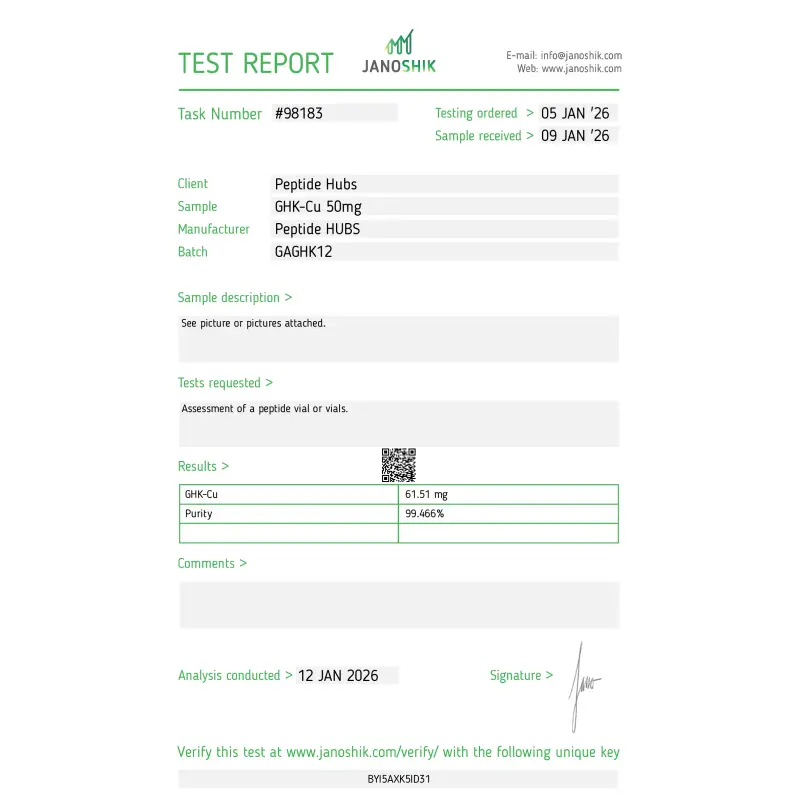
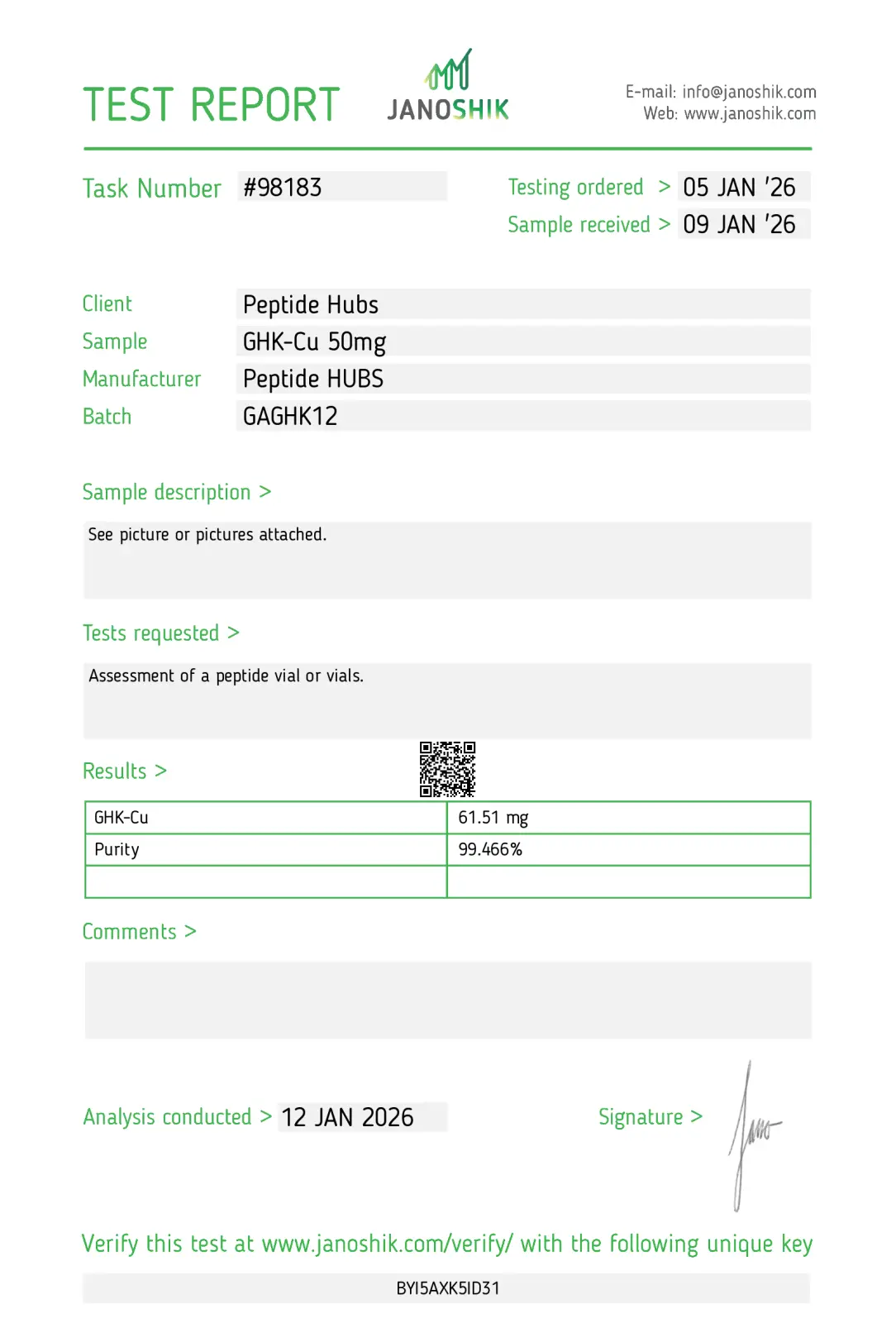
- Specifications Befitting Research: Supplied as lyophilized powder with purity exceeding ninety-nine percent as verified by high-performance liquid chromatography
Storage Instructions
The particular merit of proper storage cannot be overstated when one considers the preservation of lyophilized GHK-Cu peptide. Optimal stability is maintained under conditions that minimize exposure to moisture, light, and temperature fluctuations. For storage periods extending to 3 months, unopened vials may remain at ambient temperature, though refrigeration at 4°C provides additional assurance. Long-term preservation necessitates maintaining the lyophilized peptide desiccated at temperatures below −18°C to −20°C in tightly sealed containers protected from light exposure.
Upon receiving shipments, vials should equilibrate to room temperature within a desiccator before opening to prevent atmospheric moisture condensation on the hygroscopic powder. Rapid weighing procedures minimize moisture absorption during handling. Peptides containing cysteine, methionine, tryptophan, asparagine, glutamine, and tyrosine exhibit particular sensitivity to oxidation and hydrolysis, necessitating storage under anaerobic conditions when possible and use of desiccants within storage containers.
Reconstituted GHK-Cu solutions demonstrate significantly reduced stability compared to lyophilized forms. Aqueous solutions prepared in sterile water or physiological buffers at pH 5–7 maintain activity for approximately 2–21 days when refrigerated at 4°C. For extended storage, reconstituted solutions should be aliquoted into separate vials to avoid repeated freeze-thaw cycles and frozen below −18°C to −20°C, or preferably at −80°C for maximum preservation. Solutions stored at −20°C typically retain stability for 3–4 months, whilst −80°C storage may extend viability to approximately 1 year.

Highly recommended!
ingredient. The product arrived well-packaged with a verified purity certificate and
reconstituted without issues, dissolving completely. Shipping was discreet and fast.
Overall, the quality was solid, and the compound performed consistently in my trials.
Four stars for the excellent purity and transparency.
What constitutes the molecular structure of GHK-Cu peptide?
GHK-Cu consists of a tripeptide sequence—glycine, histidine, and lysine—complexed with a copper ion of the second oxidation state through coordinate bonds involving specific nitrogen atoms, forming a square-planar coordination geometry that has been characterized through X-ray crystallography and various spectroscopic methods of considerable sophistication.
In what manner does GHK-Cu differ from the non-complexed GHK tripeptide in applications of research
The copper complex exhibits enhanced stability, as evidenced by its binding constant; enables controlled delivery of copper to cells whilst preventing oxidative mischief; and demonstrates distinct biological activities in experimental systems compared to the free tripeptide, with copper coordination being considered essential for maximal activity in numerous investigated pathways.
What experimental models have been employed in the study of GHK-Cu?
Investigations have utilized diverse experimental systems, including isolated cultures of fibroblasts and keratinocytes, animal models of wound healing in mice, rats, and rabbits, models of neurodegenerative disease, models of chemotherapy-induced organ toxicity, and platforms for gene expression profiling—examining mechanisms across domains of tissue regeneration, oxidative stress, inflammation, and cellular signaling.
How should reconstituted solutions of GHK-Cu be prepared for use in the laboratory?
The lyophilized peptide should be permitted to reach ambient temperature within a desiccator before opening. Reconstitution in sterile water or appropriate aqueous buffers at pH between five and seven, and at concentrations suitable for intended assays, is recommended. Solubility in phosphate-buffered saline at pH 7.2 reaches approximately five milligrams per millilitre. Aqueous solutions demonstrate limited stability and should be employed within one to twenty-one days when refrigerated, or divided into portions and frozen for extended preservation.
What analytical methods serve to verify the identity and purity of GHK-Cu peptide?
High-performance liquid chromatography quantifies purity, which typically exceeds ninety-nine percent for material of research grade. Mass spectrometry confirms molecular weight and peptide sequence. Spectroscopic techniques, including ultraviolet-visible absorption spectroscopy (revealing characteristic absorption between 610 and 630 nanometers), electron paramagnetic resonance, and X-ray absorption spectroscopy characterize copper coordination. Nuclear magnetic resonance provides validation of structure.
What regulatory classifications apply to GHK-Cu peptide of research grade?
GHK-Cu peptide supplied for laboratory research is classified for in vitro experimental use exclusively. Procurement is restricted to qualified researchers, academic institutions, and licensed laboratories conducting investigations in basic science, in compliance with institutional protocols governing biosafety and research ethics.
Related Products




Highly Purified Peptides: Trusted by Researchers Worldwide
Peptide Quality You Can't Find Elsewhere!!
| Peptide Hubs | Leading Competitor | |
|---|---|---|
| 200+ Peptide Variants |  |
 |
| USA-Manufactured Research Grade | |
|
| WHO/GMP & ISO 9001:2015 Certified | |
|
| Third-Party Tested for Purity | |
|
| Certificates of Analysis Provided | |
|
| Competitive Pricing Without Compromise | |
|
| Secure & Discreet Shipping | |
|
See Peptide Hubs in Action


Insights

Sermorelin in Focus: Exploring Growth Hormone Signaling and Evidence

Semax Research Explained: Current Evidence and Research Gaps
Ipamorelin and Growth Hormone Pathways: What the Research Shows
Inside PT-141: Biological Mechanisms and Current Research

99% Purity
Ensuring the highest standard with 99% purity.

Quality Ingredients
Crafted with purity and quality ingredients at the core.

Fast Shipping
Fast, reliable shipping straight to your door.

No TFA or Fillers
Nothing extra, just science: no TFA, no fillers.

Quality You Can Rely On — Guaranteed
At PeptideHubs, scientific integrity and product reliability are at the core of everything we do. Each compound is manufactured and tested under strict quality control protocols to ensure consistency, purity, and performance for research applications.
However, if for any reason our product does not meet your research expectations, we offer a 60-day money-back guarantee — providing a risk-free procurement experience for qualified researchers and institutions.
Your research deserves uncompromised quality — and we stand behind every order to ensure you receive.