
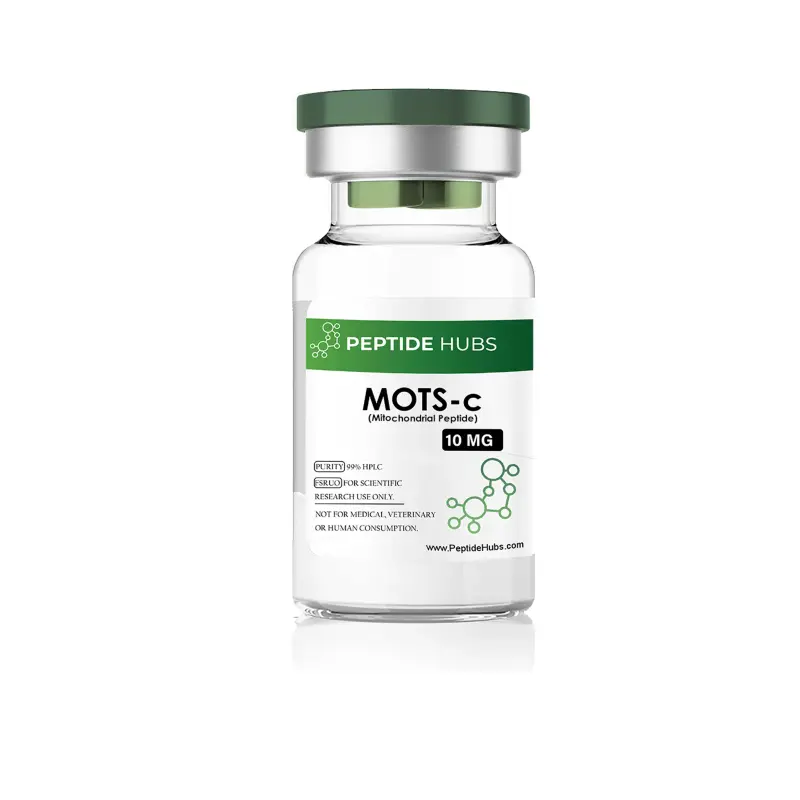
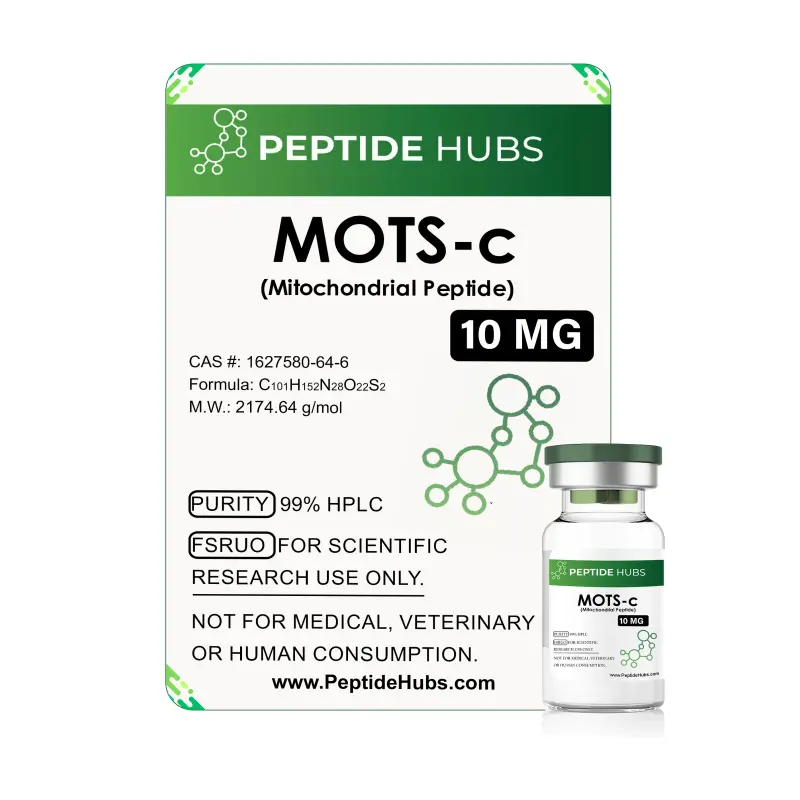

MOTS-c 10mg
- USA MADE 2-7 days delivery
- International 5-20 days delivery
THIS PRODUCT IS INTEDED AS A RESEARCH CHEMICAL ONLY.
This designation allows the use of research chemicals strictly in vitro for testing and laboratory experimentation only. All products information available on this website is for educational purposes only. Bodily introduction of any kind into humans or animals is strictly forbidden by law. This product should only be handled by licensed, qualified professional. This product is not a drug, food or cosmetic and may not be misbranded, misused or mislabled as a drug food or cosmetic.
MOTS-c, being a mitochondrial-derived peptide composed of sixteen amino acids, stands as a matter of considerable consequence to those engaged in the study of cellular metabolism. It is a truth acknowledged amongst those versed in biochemistry that this molecule, synthesized within the mitochondrial compartments, occupies itself with the regulation of cellular energy through pathways of the utmost delicacy and precision. The peptide conducts itself with notable propriety, translocating to the nucleus where it exerts influence over the expression of genes pertaining to mitochondrial biogenesis and metabolic restoration—a function of particular import during periods of metabolic distress. Natural philosophy has revealed that MOTS-c possesses the capacity to enhance exercise-induced metabolic adaptation, ameliorate the disposition toward corpulence, restore that most desirable faculty of insulin sensitivity, improve the mitochondrial constitution of both cardiac and skeletal muscle, and address those afflictions of metabolic disorder and age-associated decline which trouble the human constitution. The molecule conducts itself, in short, as an agent of considerable utility in the scientific investigation of metabolic regulation.
1. MOTS-c Overview
It is a truth universally acknowledged that a peptide in possession of mitochondrial origin must be in want of rigorous investigation. MOTS-c—that is to say, Mitochondrial ORF of the 12S rRNA Type-C—presents itself as a peptide of sixteen amino acids, most handsomely encoded within the mitochondrial 12S rRNA gene. This substance possesses the character of a metabolic signaling molecule, one which demonstrates considerable propriety in its deportment by translocating to the cell nucleus during periods of metabolic stress, thereby regulating nuclear gene expression with the precision one might expect of an accomplished governess maintaining household order.
The researchers who engage with MOTS-c find themselves well occupied in the investigation of pathways pertaining to metabolic sensing, mitochondrial biogenesis, redox equilibrium, and those most admirable adaptive cellular responses—all conducted, it should be noted, within controlled laboratory environments befitting such genteel inquiry.
MOTS-c claims the distinction of being classified as a mitochondrial hormone, or mitokine, a designation most flattering to its character. Its detection across multiple tissues and throughout the circulating plasma attests to both local and systemic signaling capacity—much as a well-connected family maintains correspondence across distant counties. Particularly noteworthy is the observation that endogenous MOTS-c expression declines precipitously with advancing age, rendering it an object of considerable interest to those researchers devoted to the study of age-related metabolic degeneration and the mechanisms through which longevity itself might be preserved.
2. MOTS-c Structure
The structure of MOTS-c, though modest in its sixteen-residue composition, displays a most commendable architectural elegance:
Amino Acid Sequence: Met-Arg-Trp-Gln-Glu-Met-Gly-Tyr-Ile-Phe-Tyr-Pro-Arg-Lys-Leu-Arg
One-Letter Code: MRWQEMGYIFYPRKLR
Molecular Formula: C₁₀₁H₁₅₂N₂₈O₂₂S₂
Molecular Weight: 2174.64 g/mol
One must observe, with some circumspection, that the peptide's constitution includes methionine and tryptophan residues—components of somewhat delicate sensibility, prone to oxidation when subjected to improper conditions. The conscientious investigator would therefore be well advised to employ degassing techniques and exercise appropriate handling practices, thereby preserving the peptide's integrity throughout the course of in-vitro examination.
3. MOTS-c Research
3.1 Muscle Metabolism
The investigation of MOTS-c's relationship with skeletal muscle tissues has yielded findings of considerable interest. The peptide directs its efforts toward the enhancement of glucose transporter expression through AMPK pathway activation—an action most remarkable for its independence from conventional insulin signaling, thus presenting an alternative course of glucose uptake when the ordinary pathways have, so to speak, taken their leave.
In models of advanced age, MOTS-c treatment has demonstrated the commendable capacity to restore muscle glucose uptake to levels observed in younger specimens, an achievement suggesting potential applications in the investigation of age-related insulin resistance and the metabolic decline that so often accompanies the later years of life. The peptide further exerts its influence upon muscle cell growth, mitochondrial density, and the systemic energy balance through modulation of catabolic pathways engaged with glucose utilization and fatty acid oxidation—a most productive sphere of activity for the laboratory naturalist.
3.2 Fat Metabolism
The studies conducted upon laboratory models reveal that MOTS-c exercises considerable influence over adipose tissue metabolism, promoting the activation of brown fat with the same beneficial determination one might wish upon a sluggish country estate. It simultaneously acts to reduce the accumulation of white adipose tissue—an outcome achieved through AMPK pathway activation and inhibition of de novo purine biosynthesis, leading to elevated AICAR levels most gratifying to observe.
This cascade of molecular events may enhance fatty acid beta-oxidation whilst simultaneously reducing lipogenesis, thereby promoting lipolysis and metabolic homeostasis. The mechanism appears to operate through the regulation of nuclear gene expression, thereby shifting the metabolic priorities maintained within cells with an economy of means that would have met with Mr. Bennet's approval. The enhanced energy dissipation and heat production through uncoupling protein activity are phenomena of particular note to the discerning investigator.
3.3 Insulin Sensitivity
MOTS-c has distinguished itself in preclinical models through its capacity to improve whole-body insulin sensitivity with most gratifying consistency. Hyperinsulinemic-euglycemic clamp studies have documented approximately thirty percent increases in exogenous glucose infusion rates following short-term treatment—a numerical accomplishment not to be dismissed. The peptide prevents the hyperinsulinemia induced by high-fat dietary regimens and preserves glucose homeostasis with admirable reliability.
The effects upon insulin signaling occur through AMPK-dependent mechanisms and may involve the regulation of nuclear gene expression, thereby offering researchers an instrument of considerable utility for the examination of mitochondrial-nuclear cross-talk in the development of metabolic dysfunction.
3.4 Osteoporosis
Laboratory evidence of considerable standing suggests that MOTS-c promotes osteogenic differentiation of bone marrow mesenchymal stem cells via the TGF-β/Smad signaling pathway—a mechanism of such elegance as to merit careful study. The peptide demonstrates the capacity to upregulate genes associated with osteogenesis (ALP, Bglap, Runx2) and enhances type I collagen synthesis by osteoblasts with commendable vigor.
In preclinical models, MOTS-c has proven instrumental in preventing the bone loss induced by ovariectomy, achieving this through the inhibition of osteoclast formation by means of AMPK activation and modulation of the RANKL pathway. Such findings position MOTS-c as a most worthwhile subject for investigation into hormonal influences upon bone metabolism—a domain of inquiry combining both scientific rigor and considerable practical import.
3.5 Longevity
The expression of MOTS-c exhibits patterns most decidedly age-dependent, with declining levels corresponding in remarkable fashion to age-related metabolic decline. It should be noted that genetic variation, particularly that designated the K14Q polymorphism, alters the peptide's structure and activity in ways that merit serious investigation. Reduced-function variants have been associated with increased type 2 diabetes risk in certain populations—a correlation of no small significance.
The structural modification termed glutamate-to-lysine substitution at position 14 may influence functional properties and the processes through which cells themselves age—matters of profound consequence to any researcher devoted to understanding the mechanisms of temporality itself. The peptide's potential interaction with NAD+-dependent pathways and sirtuins, coupled with its demonstrated role in maintaining cellular homeostasis, positions MOTS-c as a most relevant molecular target for investigations into longevity and what modern researchers term "healthspan"—that extension of vigorous years which all sensible persons must regard with favor.
3.6 Heart Health
MOTS-c demonstrates applications of considerable promise within the domain of cardiovascular research, operating through mechanisms encompassing endothelial function, the inhibition of vascular calcification, and myocardial remodeling—all matters of the utmost consequence to those who regard cardiac integrity as a prerequisite for general well-being.
In studies wherein exercise training was combined with the administration of exogenous MOTS-c, the peptide exhibited the most gratifying capacity to enhance myocardial structural and functional parameters—including stroke work, cardiac output, and ejection fraction. This achievement suggests that the peptide may protect endothelial cells through AMPK activation and the modulation of inflammatory pathways, reducing the expression of pro-inflammatory cytokines and adhesion molecules whilst simultaneously supporting nitric oxide-dependent vasodilation.
Furthermore, MOTS-c treatment has demonstrated considerable capacity to reduce vascular calcification and improve blood pressure profiles in preclinical models—findings of evident significance to any investigator engaged in the examination of cardiovascular homeostasis.
Feature Bullets
- A sixteen-amino-acid mitochondrial-derived peptide of distinguished origin, encoded by the mitochondrial 12S rRNA gene; substantiated by an extensive body of peer-reviewed research conducted by serious investigators
- Presented in lyophilized powder format, ensuring long-term stability most gratifying to any researcher of prudent habit, with straightforward storage requirements at refrigeration or freezer temperatures
- A formulation of high purity (in excess of ninety-nine percent), manufactured through validated peptide synthesis techniques ensuring consistent lot-to-lot quality and the reliable laboratory results upon which serious inquiry depends
- Most particularly suited to research investigating AMPK signaling mechanisms, mitochondrial biogenesis, and the maintenance of cellular energy homeostasis—pathways of considerable interest to the scientifically minded
- Reconstitutes with admirable facility in bacteriostatic water, presenting no unusual complications, and proves compatible with the standard laboratory protocols and standard operating procedures one customarily maintains
- Demonstrates stability of uncommon duration following reconstitution—upwards of thirty days at refrigerated temperatures—thereby permitting the execution of multi-week experimental timelines and the conduct of serial testing procedures
- Applicable across multiple domains of investigation, encompassing the study of metabolism, aging processes, cardiovascular physiology, bone biology, and the various manifestations of mitochondrial dysfunction in controlled models
Technical Specifications Table
|
Particular |
Specification |
|
Product Designation |
MOTS-c |
|
Alternative Nomenclature |
Mitochondrial ORF of 12S rRNA-c; Mitochondrial-derived peptide; Mitokine |
|
Molecular Formula |
C₁₀₁H₁₅₂N₂₈O₂₂S₂ |
|
Molecular Weight |
2174.64 g/mol |
|
Amino Acid Constitution |
Sixteen amino acids in total |
|
Physical Form |
Lyophilized powder |
|
Appearance |
White to off-white solid of uniform aspect |
|
Quantity per Vial |
Ten milligrams |
|
Purity Specification |
In excess of ninety-nine percent |
|
Concentration |
Ten milligrams (in lyophilized form; concentration following reconstitution shall vary according to diluent volume employed) |
|
Storage Temperature (Dry State) |
Between two and eight degrees Celsius; for extended preservation, minus twenty degrees Celsius or lower |
|
Storage Conditions (Following Reconstitution) |
Between two and eight degrees Celsius; stability maintained for a period no less than thirty days |
|
Recommended Reconstitution Medium |
Bacteriostatic water (ten milliliters representing the standard volume) |
What the Researcher Should Know
For rigorous investigation of mitochondrial signaling and metabolic adaptation, MOTS-c 10 mg offers a research substrate of established utility.
- Purity: Greater than 98 percent, confirmed by high-performance liquid chromatography
- Molecular Weight: 2,174.64 grams per mole, verified through mass spectrometry
- Classification: A mitochondrial-derived peptide capable of nuclear translocation
Disclaimer: For research and laboratory use only. Users must comply with all applicable regulations and institutional policies.

4. Storage Instructions
The proper maintenance of MOTS-c requires the conscientious application of certain principles, adherence to which shall preserve the peptide's efficacy for the duration of one's investigations.
Lyophilized Form (Prior to Reconstitution):
The vials ought to be maintained at temperatures between two and 2-8 °C Celsius—that is to say, under refrigerated conditions befitting the delicacy of the substance. Protection from light and moisture is not merely advisable but absolutely essential. For those investigators possessed of ambitions for extended storage beyond the ordinary span, maintenance at –20 °C or lower shall preserve the peptide in a most satisfactory state for several years hence.
Reconstitution:
Allow the vial and the chosen diluent to attain room temperature before proceeding to open the vial—a patience that shall be rewarded with superior results. Reconstitute with bacteriostatic water (10 milliliters being the standard volume for such purposes). Gently swirl the vial to dissolve the contents with deliberate restraint—vortexing is to be scrupulously avoided, as such vigorous agitation shall generate foam most detrimental to the peptide's integrity.
After Reconstitution:
The reconstituted solution requires storage at 2-8 °C, maintained in conditions of darkness away from the damaging influence of light exposure. The practice of employing aliquots is most strongly recommended, thereby minimizing the necessity for repeated handling and the risks attendant thereupon. One must assiduously avoid repeated temperature cycling—those freeze-thaw oscillations that compromise peptide integrity with the regularity of one's heart's own beating. Under such properly maintained conditions, the reconstituted solution shall remain stable for a period exceeding 30 days.

Exceptional quality and care.
To what purposes is MOTS-c directed within the context of laboratory research?
MOTS-c finds its proper employment in investigations devoted to the understanding of metabolic regulation, mitochondrial function, cellular energy homeostasis, the mechanisms through which AMPK signaling operates, and the age-related deterioration of metabolic capacity. The researcher employs this substance within cell culture environments, tissue explants, and animal models so as to illuminate the molecular mechanisms of consequence to metabolism, bone biology, cardiovascular physiology, and those inquiries we designate as longevity biology—all conducted within the bounds of controlled laboratory conditions most rigorous in their application.
What procedure ought one to follow in reconstituting MOTS-c so as to achieve optimal results?
Allow both the lyophilized vial and one's chosen bacteriostatic water to attain room temperature with patient deliberation. Employing aseptic technique, withdraw the required volume of bacteriostatic water by means of a sterile syringe (the typical reconstitution protocol calls for ten milliliters per ten milligram vial). Following disinfection of the vial's rubber septum with an alcohol swab conducted with suitable care, inject the water slowly down the interior wall of the vial whilst tilting the vessel at an angle of approximately forty-five degrees. Permit the contents to dissolve through gentle swirling; vortexing is to be rigorously eschewed, as such vigorous treatment creates foam most injurious to peptide integrity.
What duration of stability may one reasonably expect from MOTS-c following its reconstitution?
Provided that proper storage conditions are maintained—specifically, temperatures between two and eight degrees Celsius, protection from light exposure, and aseptic handling throughout—reconstituted MOTS-c shall retain its integrity for no less than thirty days. Extended stability studies of considerable thoroughness document the absence of significant degradation throughout this period. Should the investigator require preservation of greater duration, the practice of dividing the reconstituted solution into smaller aliquots and maintaining them at minus twenty degrees Celsius shall prove most efficacious in minimizing the deleterious effects of freeze-thaw cycling.
What constitutes the molecular mechanism by which MOTS-c exerts its influence?
MOTS-c demonstrates the capacity to translocate to cell nuclei during periods of metabolic stress, whereupon it activates the AMPK pathway through mechanisms of considerable intricacy. The process appears to involve inhibition of the folate-methionine cycle with the consequent elevation of AICAR levels. This cascade of molecular events promotes mitochondrial biogenesis with commendable vigor, enhances both glucose uptake and fatty acid oxidation, and regulates nuclear gene expression in ways that maintain metabolic homeostasis and support cellular responses to stress—all accomplished through mechanisms of elegant molecular choreography.
Does MOTS-c prove equally suited to both in-vitro cell culture investigations and in-vivo animal model studies?
Not specified in the provided references, a limitation one must acknowledge with transparent honesty. The serious investigator would be well advised to consult his or her institution's established research protocols and to seek guidance from those senior colleagues possessed of relevant experience. Standard practice, as it presently stands, encompasses in-vitro cell-based assays and rodent model investigations; any extension to alternative applications shall require the approval and review of one's institutional oversight body.
Are there substances or circumstances that present particular concern regarding contamination or the stability of MOTS-c?
The peptide's constitution includes methionine and tryptophan residues—components displaying a certain delicate sensibility toward oxidation. During the processes of reconstitution and storage, the peptide requires protection from light exposure and careful prevention of unnecessary air contact. The employment of diluents meeting the standards of sterility and freedom from pyrogenic contamination (bacteriostatic water being the substance most strongly recommended) proves essential to maintaining the peptide's integrity. Proper temperature control must be maintained throughout, as deviations thereof precipitate degradation most lamentable to observe. All batches undergo quality verification procedures before their release, thereby ensuring the identity and purity upon which serious research depends.
Related Products





Highly Purified Peptides: Trusted by Researchers Worldwide
Peptide Quality You Can't Find Elsewhere!!
| Peptide Hubs | Leading Competitor | |
|---|---|---|
| 200+ Peptide Variants |  |
 |
| USA-Manufactured Research Grade | |
|
| WHO/GMP & ISO 9001:2015 Certified | |
|
| Third-Party Tested for Purity | |
|
| Certificates of Analysis Provided | |
|
| Competitive Pricing Without Compromise | |
|
| Secure & Discreet Shipping | |
|
See Peptide Hubs in Action


Insights

Vesugen Peptide: Current Research on Aging and Vascular Biology

PE-22-28 Peptide: Exploring Its Mechanism and Scientific Potential

DSIP Peptide Research: Sleep Regulation, Evidence, and Safety

Cardiogen Peptide: Scientific Evidence and Potential Applications

99% Purity
Ensuring the highest standard with 99% purity.

Quality Ingredients
Crafted with purity and quality ingredients at the core.

Fast Shipping
Fast, reliable shipping straight to your door.

No TFA or Fillers
Nothing extra, just science: no TFA, no fillers.

Quality You Can Rely On — Guaranteed
At PeptideHubs, scientific integrity and product reliability are at the core of everything we do. Each compound is manufactured and tested under strict quality control protocols to ensure consistency, purity, and performance for research applications.
However, if for any reason our product does not meet your research expectations, we offer a 60-day money-back guarantee — providing a risk-free procurement experience for qualified researchers and institutions.
Your research deserves uncompromised quality — and we stand behind every order to ensure you receive.