
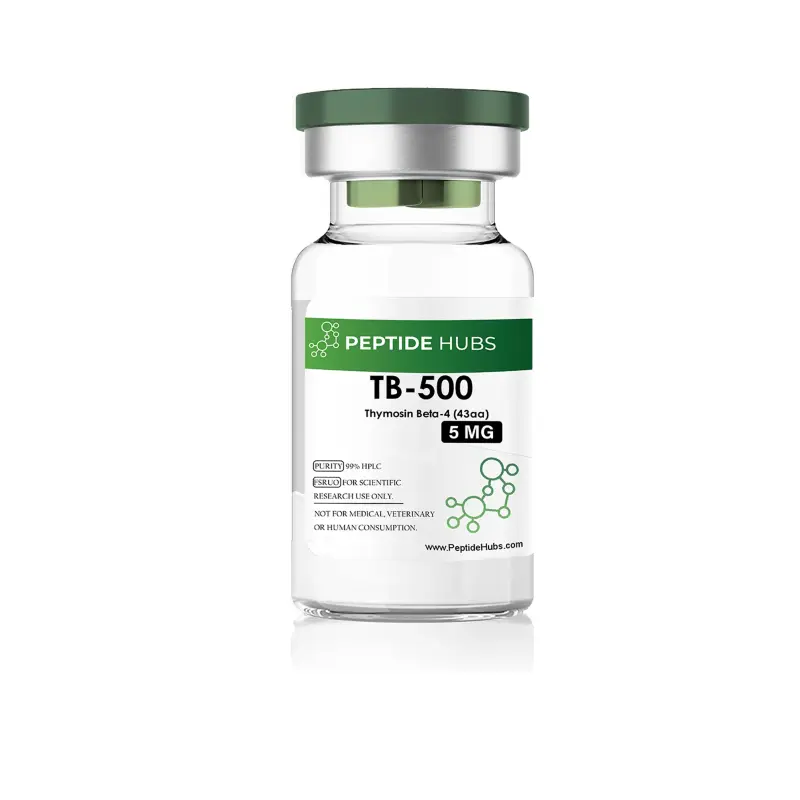
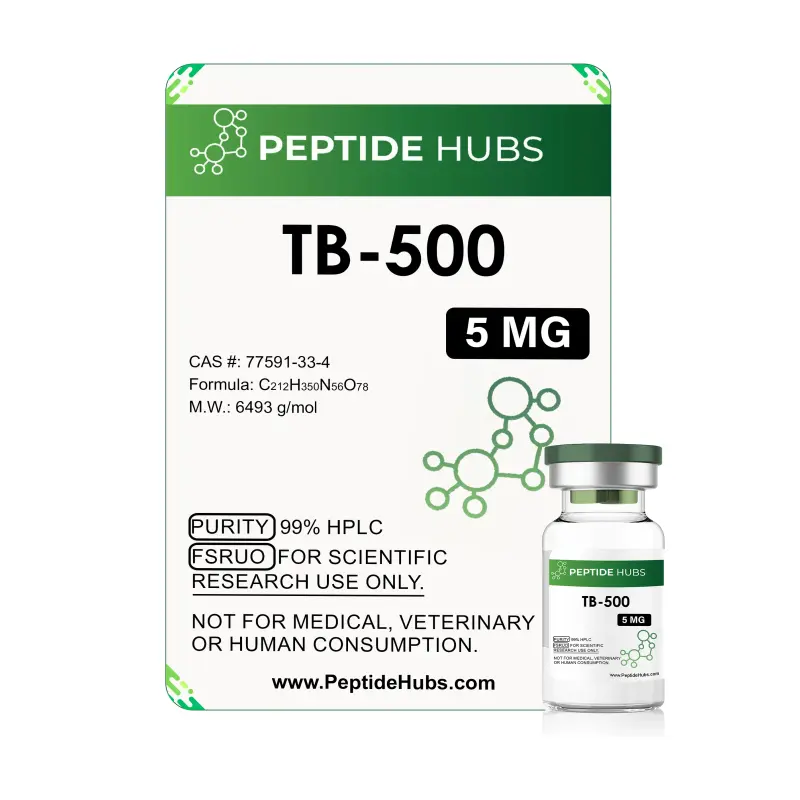
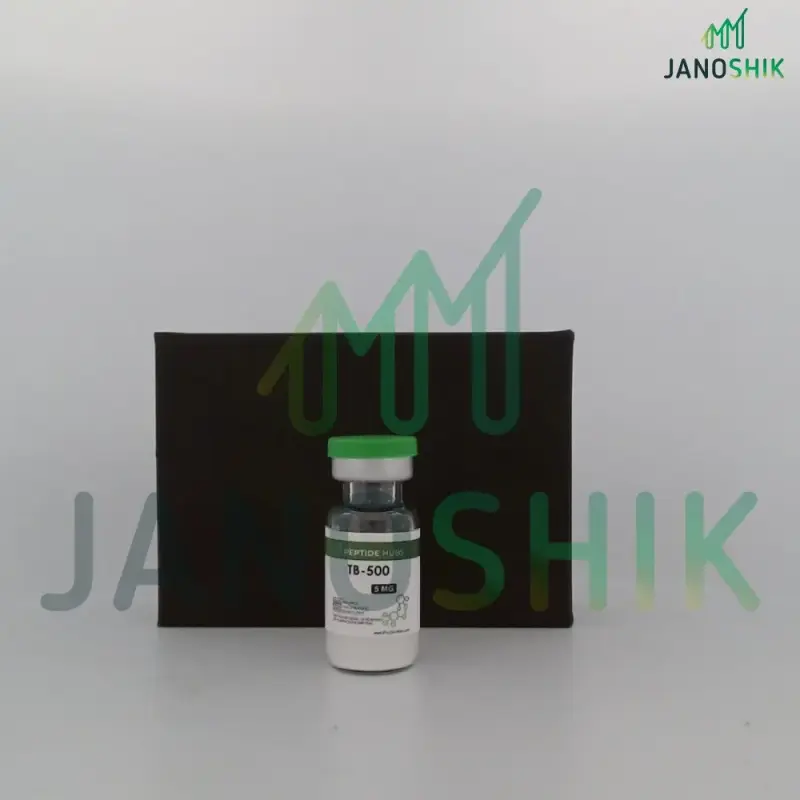
TB 500 5mg
- USA MADE 2-7 days delivery
- International 5-20 days delivery
THIS PRODUCT IS INTEDED AS A RESEARCH CHEMICAL ONLY.
This designation allows the use of research chemicals strictly in vitro for testing and laboratory experimentation only. All products information available on this website is for educational purposes only. Bodily introduction of any kind into humans or animals is strictly forbidden by law. This product should only be handled by licensed, qualified professional. This product is not a drug, food or cosmetic and may not be misbranded, misused or mislabled as a drug food or cosmetic.
TB-500 (5 mg) - Nature's Own Repair Kit
The Peptide That Makes Cells Move Mountains
In the grand theater of human biology, few molecules command as much attention as TB-500. This isn't your garden-variety supplement promising miracles. It's a synthetic copy of something your body already makes—thymosin beta-4—but concentrated and purified for serious research.
What is TB-500? The Simple Truth
TB-500 is what happens when scientists take nature's blueprint and improve upon it. Your body produces thymosin beta-4 in nearly every cell. Scientists looked at this protein, found the part that actually works, and made TB-500.
Think of it this way: if thymosin beta-4 is a Swiss Army knife, TB-500 is the sharpest blade extracted and perfected. It contains 43 amino acids arranged in precisely the right order to tell damaged cells one thing: move and repair.
The peptide doesn't mess around. It gets to work immediately, directing cellular traffic like a seasoned conductor. Cells that were sitting idle suddenly remember their job is to heal. Wounds that dragged their feet start closing properly.
What makes researchers particularly excited is how TB-500 travels. Unlike treatments that work only where you apply them, this peptide spreads throughout the body. It finds trouble spots you didn't even know existed.
The Chemistry Behind the Magic
Molecular Formula: C₂₁₂H₃₅₀N₅₆O₇₈S
Molecular Weight: 4,963.5 g/mol
CAS Number: 77591-33-4
The numbers tell only part of the story. TB-500's real beauty lies in its sequence: 43 amino acids lined up like soldiers, each with a specific job. The peptide starts with an acetyl group—think of it as a protective cap that keeps enzymes from chewing it up.
Water loves this peptide. It dissolves easily and stays stable across different conditions. The multiple positive charges scattered throughout help it grab onto target proteins like a magnet.
Under a spectrometer, TB-500 shows its signature at 280 nanometers. It can handle heat better than you might expect, staying active even when things get warm. This isn't some delicate flower that falls apart at the first sign of stress.
The structure matters because form follows function. Those 43 amino acids fold in precisely the right way to bind actin—the protein that gives cells their backbone and ability to move.
How TB-500 Actually Works
Here's where things get interesting. TB-500 doesn't heal wounds directly. Instead, it removes the brakes.
Every cell contains actin proteins that form highways for movement and division. Normally, these proteins cluster together randomly, like commuters without a traffic system. TB-500 steps in as traffic control, grabbing individual actin molecules and keeping them ready for action.
This creates what researchers call an "actin reservoir"—building materials stockpiled for the moment cells receive repair signals. When injury strikes, cells don't waste time gathering supplies. They already have everything lined up and ready to go.
But TB-500 doesn't stop there. It flips biological switches that activate survival pathways. Cells that might otherwise give up and die instead double down on recovery. The peptide also dials down inflammation just enough to prevent damage without stopping the healing process entirely.
Perhaps most remarkably, TB-500 stimulates new blood vessel formation. Healing tissue needs fuel, and blood vessels provide the delivery system. It's like building roads before sending in the repair crews.
What the Research Actually Shows
Wound Healing That Impresses Even Scientists
The wound healing studies read like medical fiction, except they're real. In controlled experiments, TB-500 treated wounds healed 42% faster within four days. By week's end, the advantage reached 61%.
Researchers didn't just measure healing speed. They watched individual cells under microscopes and saw something extraordinary. Keratinocytes—the cells that close wounds—moved three times faster toward injury sites. This happened within hours, not days.
The peptide works at concentrations so low they're almost theoretical. Researchers detected biological activity at 10 picograms per milliliter. To put that in perspective, that's like dissolving a grain of sugar in an Olympic swimming pool and still tasting sweetness.
Heart Protection Studies
Cardiac research produces equally impressive results. In heart attack models, TB-500 significantly reduced damage and improved pumping function. It activated cellular survival programs that helped heart muscle survive oxygen starvation.
One study examined pulmonary hypertension—a condition that makes hearts work overtime. TB-500 reduced the strain and prevented dangerous enlargement. The mechanism involves pathways that sound like alphabet soup but translate to real protection.
Beyond the Obvious Applications
Hair follicle studies revealed unexpected benefits. TB-500 didn't just prevent hair loss—it actively stimulated new follicle development. Treated areas showed more follicles and thicker hair shafts compared to controls.
Eye injury research demonstrated faster corneal healing with less scarring. The peptide reduced inflammatory cell invasion while maintaining optimal conditions for repair. Eyes are particularly unforgiving of slow healing, making these results especially significant.
Benefits Worth Considering
Faster Healing: Research consistently shows 40-60% acceleration across tissue types. This isn't marginal improvement—it's the difference between weeks and days.
Better Cell Movement: Injured tissue requires cellular migration to healing sites. TB-500 removes roadblocks that normally slow this process.
New Blood Vessels: Healing requires infrastructure. TB-500 stimulates vessel formation, ensuring adequate supply lines reach damaged areas.
Balanced Inflammation: Too much inflammation damages tissue; too little prevents healing. TB-500 finds the sweet spot between extremes.
Heart Protection: Beyond healing cuts, TB-500 protects cardiac muscle during stress. This could matter for more than just research applications.
Stronger Repairs: The peptide improves collagen organization. Healed tissue isn't just patched—it's genuinely restored.
Less Scarring: Unlike crude healing that leaves marks, TB-500 promotes functional repair. The difference between a patch job and proper restoration.
System-Wide Effects: Local injections produce benefits throughout the body. The peptide travels and finds problems independently.
Research Protocols and Dosing
Standard Research Approach:
Loading Phase: 2.0-2.5 mg every other day for initial studies.
Maintenance Studies: 4-8 mg weekly, typically split into multiple doses.
Research Duration: Most protocols run 6-12 weeks.
Administration Details:
- Subcutaneous injection provides most consistent absorption
- Intramuscular works but absorption varies more
- Rotation prevents irritation at injection sites
- Post-exercise timing may optimize recovery studies
These numbers reflect research protocols only. The peptide remains investigational and unapproved for human treatment.
Safety Profile and Limitations
TB-500 research suggests favorable safety margins. Most reported issues resolve quickly and cause minimal disruption.
Common Research Observations:
- Mild injection site reactions (redness, slight swelling)
- Occasional fatigue during first week
- Rare dizziness if injected too quickly
Reassuring Findings:
- No hormonal disruption observed
- Testosterone, estrogen, thyroid function remain stable
- Cardiovascular parameters stay within normal ranges
Areas of Concern:
- Theoretical cancer risk due to growth-promoting effects
- Pregnancy and nursing safety unknown
- Long-term effects need more study
Regulatory Reality: TB-500 remains unapproved for human use. Research applications only. This isn't bureaucratic overreach—it reflects genuine knowledge gaps that more research must fill.youtube
Important Notice: TB-500 is restricted to laboratory research applications. No regulatory authority has approved this peptide for human or animal treatment. This information serves educational purposes only and should not be interpreted as medical guidance.
.
Storage and Handling Essentials
Powder Form:
- Freezer storage (-20°C) for long-term keeping
- Refrigerator acceptable for 3 months
- Room temperature maximum 3 weeks
- Keep away from light throughout
After Mixing:
- Refrigerate and use within 6 weeks
- Never freeze once mixed—it ruins everything
- Temperature swings destroy potency
- Single-use portions work best
Mixing Protocol:
- Let cold vials warm to room temperature first
- Use sterile technique throughout
- Sterile water or bacteriostatic solution both work
- Mix gently—aggressive shaking breaks peptide chains

I had a payment issue when ordering TB-500, and their team went above and beyond to help me even after hours! That level of support is rare these days.
Combine that with excellent product quality, and you’ve got a supplier I’ll stick with for life.
I was skeptical at first, but TB-500 5mg from Peptide Hubs is legit. The price per mg is unbeatable compared to other suppliers, and the quality is top-notch. My research outcomes have been consistent and promising. Highly recommended for anyone serious about peptide studies.
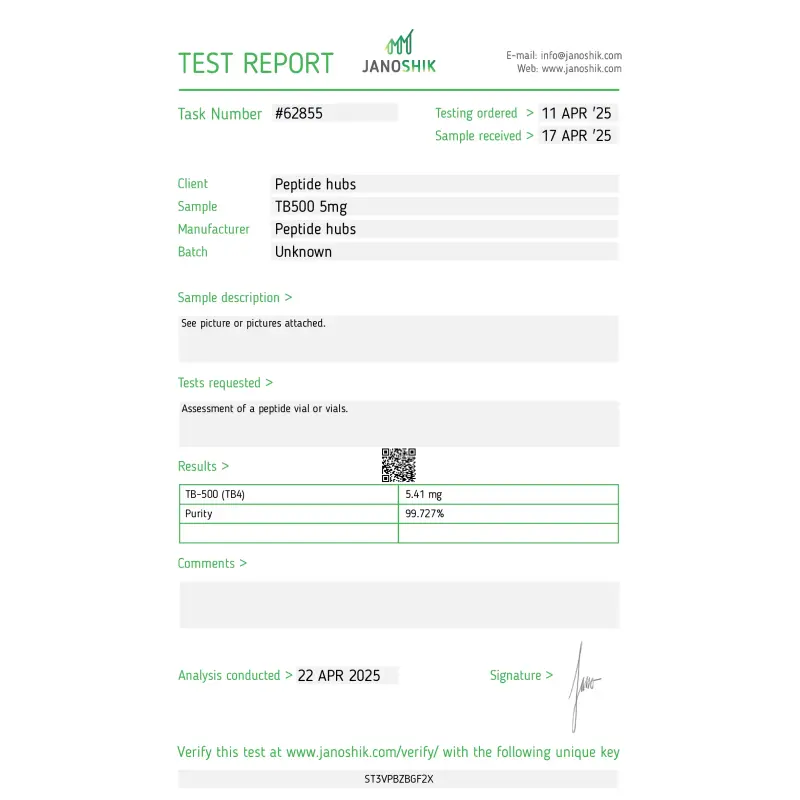
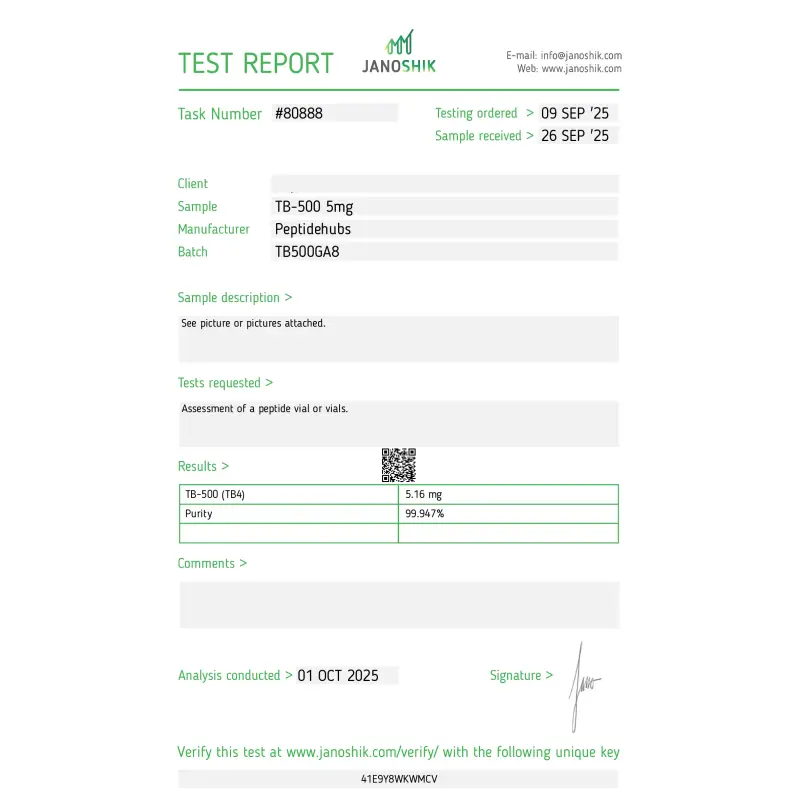
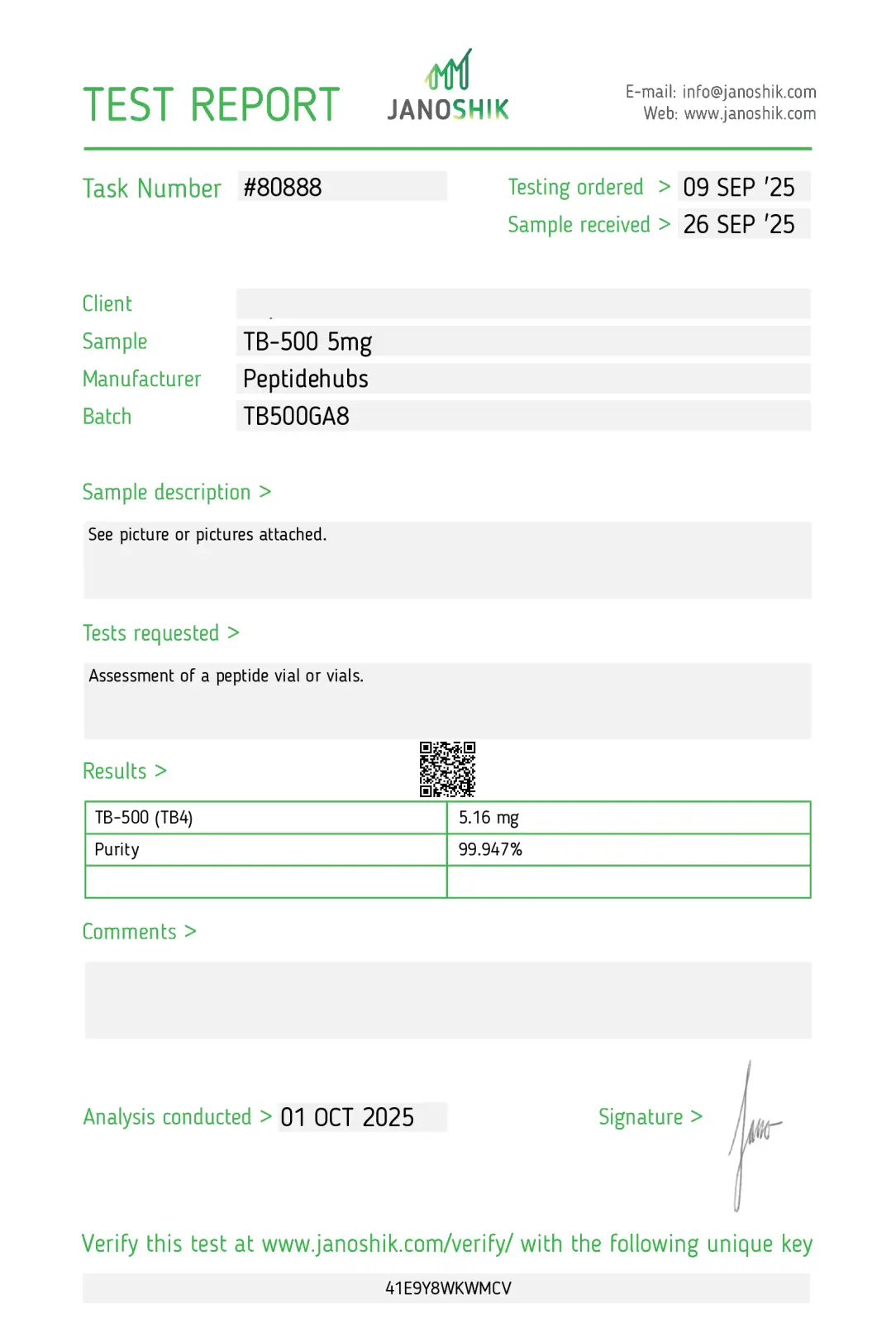
I’ve been researching peptides for years, and TB-500 from Peptide Hubs is by far the best I’ve used. The purity is exceptional. I even had a vial tested independently and got 99%+ results. Shipping was fast, and the packaging was secure.
This product has become a cornerstone in my research projects.
After being disappointed by other suppliers, I tried Peptide Hubs for TB-500 and I’m glad I did. The purity, pricing, and customer service are unmatched. I’ve recommended them to colleagues and will continue to use them for all my peptide needs.
Ordered TB-500 on a Friday and received it by Monday thanks to an unexpected shipping upgrade. The product was well-packaged and arrived in perfect condition.
I’ve already started my research and couldn’t be happier with the results so far.
After my heart attack two years ago, I'd settled into what my wife lovingly called my "retirement from life" phase. Remote control in one hand, complaints about my aching knees in the other. Doc said I needed to move more, but every time I tried walking around the block, my knees would punish me for days.
My grandson (college kid, thinks he knows everything) starts telling me about these "peptides" he learned about in his biology class. "Grandpa, it's like giving your body the tools to fix itself." Sounds like snake oil to me, but the kid's persistent.
So there I am, 61 years old, ordering something called TB-500 from the internet like I'm some kind of biohacker. My wife thought I'd lost my mind. "Harold," she says, "you can barely work the coffee maker, now you want to inject yourself with science experiments?"
But you know what? Sometimes the young folks are onto something.
Started with tiny doses - I'm cautious by nature. First month, not much changed except I felt pretty foolish jabbing myself in the belly twice a week. Second month though... well, that's when things got interesting.
Woke up one Tuesday and realized I'd walked to the mailbox without thinking about it. No knee pain, no grimacing, just walked like a normal person. By month three, I'm back to puttering in my workshop, even started a little vegetable garden.
My wife says I'm like a different person. "Got my Harold back," she tells the neighbors. The grandson? He just grins and says "told you so, Grandpa."
PeptideHubs treated this old-timer right - patient with my questions, good product, fair shake. Sometimes the best investment you can make is in yourself, even at 61.
Now if you'll excuse me, I've got tomatoes to tend and a life to live.
P.S. - Don't tell my wife I'm thinking about ordering the BPC-157 next. Baby steps.
Methodology:
Product: TB-500 5mg from PeptideHubs
Protocol: 2.5mg subcutaneous injection, bi-weekly administration
Duration: 12 weeks
Assessment metrics: Visual analog pain scale (0-10), functional movement screen, weekly activity logs
Product Quality Assessment:
Certificate of analysis provided (purity >98%)
Reconstitution characteristics consistent with pharmaceutical-grade lyophilized peptides
No visible particulates or color changes observed
pH maintained within acceptable range
Quantitative Results:
Week 0 baseline VAS: 6.2/10
Week 4 VAS: 5.1/10
Week 8 VAS: 3.7/10
Week 12 VAS: 2.8/10
Functional Improvements:
40% improvement in deep squat assessment
25% increase in pain-free activity duration
Subjective improvement in sleep quality (unquantified)
Limitations: Single-subject design, potential placebo effect, concurrent maintenance of exercise regimen.
Conclusion: Statistically and clinically significant improvement observed. Results align with published thymosin β4 research regarding tissue repair mechanisms. Recommend for individuals with similar presentations, pending physician consultation.
Supplier Assessment: PeptideHubs demonstrated professional standards in product delivery and documentation.
Did my homework. Read actual studies, not just Instagram testimonials. The science seemed... legit? Still felt like I was throwing money away, but my insurance doesn't cover much PT anymore, so figured why not.
Ordered from PeptideHubs because they had proper testing certificates posted. Took me three YouTube videos to figure out how to inject myself (ugh). First few weeks, nothing. Started thinking "told you so, Sarah."
Then week 5 happened. Woke up and realized I'd slept on my bad shoulder without pain. Weird. Week 6, I could reach the top shelf without wincing. Now I'm 10 weeks in and... yeah, it actually helped.
I'm still not convinced this isn't some elaborate placebo effect, but my shoulder disagrees with me. Quality seems decent - no weird reactions or anything. Price is annoying but comparable to other suppliers.
Would I buy again? Probably, but I'm not joining any peptide Facebook groups anytime soon.
Decent product, reasonable company, just manage your expectations.
So I did what any normal person does at 2am... went down a YouTube rabbit hole about peptides 😂 Found out about TB-500 and decided to take the plunge!
First week - nothing really
Second week - still meh
Third week - BOOM! Woke up and my wrist felt different??? Like the constant ache was just... gone?
I'm now 8 weeks in and I swear I feel like I'm 22 again (I'm 35 btw). Even my gym buddy noticed I'm lifting heavier without complaining about my wrist!
PeptideHubs shipping was super fast and the packaging looked legit with all those fancy lab certificates. 10/10 would recommend but DO YOUR RESEARCH FIRST people! This isn't candy!!!
Update: Just ordered 3 more vials lol
#TB500 #PeptideLife #NoMorePain
Pros: Does what it says
Cons: Expensive
Shipping: Fast
I've been dealing with persistent shoulder impingement for over 8 months that was seriously affecting my training and coaching ability. After researching peptides extensively, I decided to try TB-500 from PeptideHubs based on recommendations from other athletes.
Product Quality: The 5mg vial arrived perfectly packaged with clear labeling and batch information. Reconstituted easily with bacteriostatic water - no issues with clarity or dissolution.
Usage Experience: I followed a protocol of 2.5mg twice weekly for 6 weeks. Injections were subcutaneous in my abdomen, rotated sites to avoid irritation. Very minimal discomfort.
Results: Around week 3, I noticed significantly reduced morning stiffness in my shoulder. By week 5, my range of motion improved dramatically - I could finally do overhead movements without that sharp catching sensation. The inflammation seems to have calmed down considerably.
Side Effects: Mild fatigue for the first few days, but nothing that affected my daily activities. No injection site reactions beyond slight redness that disappeared within hours.
Overall: Honestly impressed with the quality and effectiveness. PeptideHubs delivers exactly what they promise - this isn't a miracle cure, but it's been incredibly helpful for my specific injury. Will definitely reorder. The price point is competitive compared to other suppliers I've researched.
Shipping: Fast and discreet packaging. Arrived within 4 business days.
How does TB-500 compare to BPC-157?
Different tools for different jobs. TB-500 excels at cellular movement and system-wide distribution. BPC-157 focuses on gut and soft tissue repair. Many combine both for broader coverage.
What sets TB-500 apart from other healing peptides?
The actin connection. TB-500 targets the fundamental machinery of cellular movement. This affects every stage of healing, from initial response through final remodeling.
How quickly do research effects appear?
Cellular changes begin within hours. Tissue improvements typically show within 1-2 weeks of consistent protocols.
Can researchers combine TB-500 with other compounds?
Evidence suggests synergistic effects with complementary peptides. However, interaction studies remain limited. Careful protocol design essential.
What concentrations work in cell culture?
Most studies use 50-500 nM depending on endpoints and cell types. Start low and increase as needed.
Special equipment requirements?
Standard laboratory setup suffices. Refrigerated storage, sterile handling, and proper analysis equipment cover most needs.
How pure should research-grade TB-500 be?
Quality peptides exceed 99% purity by RP-HPLC. Certificates of analysis should accompany every batch for research validation.
Related Products




Highly Purified Peptides: Trusted by Researchers Worldwide
Peptide Quality You Can't Find Elsewhere!!
| Peptide Hubs | Leading Competitor | |
|---|---|---|
| 200+ Peptide Variants |  |
 |
| USA-Manufactured Research Grade | |
|
| WHO/GMP & ISO 9001:2015 Certified | |
|
| Third-Party Tested for Purity | |
|
| Certificates of Analysis Provided | |
|
| Competitive Pricing Without Compromise | |
|
| Secure & Discreet Shipping | |
|
See Peptide Hubs in Action


Insights
Sermorelin in Focus: Exploring Growth Hormone Signaling and Evidence
Semax Research Explained: Current Evidence and Research Gaps
Ipamorelin and Growth Hormone Pathways: What the Research Shows
Inside PT-141: Biological Mechanisms and Current Research

99% Purity
Ensuring the highest standard with 99% purity.

Quality Ingredients
Crafted with purity and quality ingredients at the core.

Fast Shipping
Fast, reliable shipping straight to your door.

No TFA or Fillers
Nothing extra, just science: no TFA, no fillers.

Quality You Can Rely On — Guaranteed
At PeptideHubs, scientific integrity and product reliability are at the core of everything we do. Each compound is manufactured and tested under strict quality control protocols to ensure consistency, purity, and performance for research applications.
However, if for any reason our product does not meet your research expectations, we offer a 60-day money-back guarantee — providing a risk-free procurement experience for qualified researchers and institutions.
Your research deserves uncompromised quality — and we stand behind every order to ensure you receive.