
TB 500/BPC 157 10mg
- USA MADE 2-7 days delivery
- International 5-20 days delivery
THIS PRODUCT IS INTEDED AS A RESEARCH CHEMICAL ONLY.
This designation allows the use of research chemicals strictly in vitro for testing and laboratory experimentation only. All products information available on this website is for educational purposes only. Bodily introduction of any kind into humans or animals is strictly forbidden by law. This product should only be handled by licensed, qualified professional. This product is not a drug, food or cosmetic and may not be misbranded, misused or mislabled as a drug food or cosmetic.
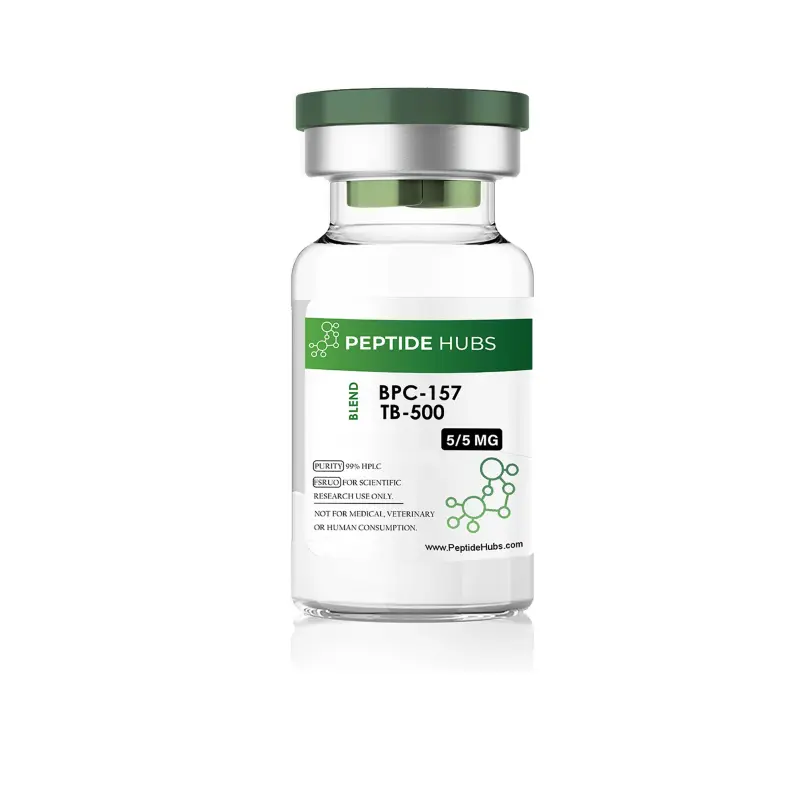
In the world of peptide science, one principle stands unshakeable—formulations of true biochemical complexity require rigorous characterization. BPC-157, TB-500 Blend embodies this imperative.
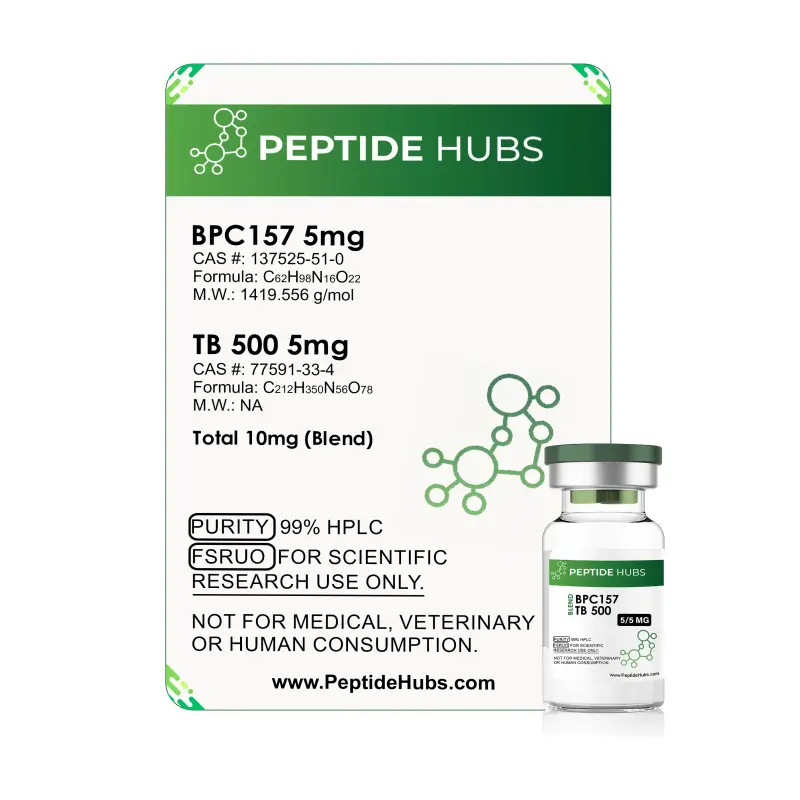
BPC-157, a pentadecapeptide of considerable consequence, comprises precisely fifteen amino acids in their proper arrangement, having been derived most originally from a protective gastric peptide found within human gastric secretions—a compound of nature's own provision, one might say. Its companion, TB-500, presents itself as a synthetic analog of thymosin beta-4, a molecule possessed of forty-three amino acids, which may be found in the thymus organ in states of nature. Both entities are synthesized with meticulous care and rendered into lyophilized powder of purity exceeding 99%, a standard befitting instruments of serious scientific inquiry.
Technical particulars merit enumeration:
BPC-157:
- Molecular Formula: C₆₂H₉₈N₁₆O₂₂
- Molecular Weight: 1419.5 g/mol
- Sequence: Gly-Glu-Pro-Pro-Pro-Gly-Lys-Pro-Ala-Asp-Asp-Ala-Gly-Leu-Val
- Other Names: Body Protection Compound-157, Pentadecapeptide BPC-157
TB-500:
- Molecular Formula: C₂₁₂H₃₅₀N₅₆O₇₈S
- Molecular Weight: 4963 g/mol
- Sequence: Ac-Ser-Asp-Lys-Pro-Asp-Met-Ala-Glu-Ile-Glu-Lys-Phe-Asp-Lys-Ser-Lys-Leu-Lys-Lys-Thr-Glu-Thr-Gln-Glu-Lys-Asn-Pro-Leu-Pro-Ser-Lys-Glu-Thr-Ile-Glu-Gln-Glu-Lys-Gln-Ala-Gly-Glu-Ser
- Other Names: Thymosin Beta-4
Research indicates that BPC-157 and TB-500 have been examined independently in studies on tissue repair processes, though investigations suggest these compounds may utilize different biochemical pathways. Researchers hypothesize that the two molecules may exhibit synergistic effects in healing processes when studied in combination.
Potential BPC-157 and TB-500 Synergy in Wound Repair
The curious interplay between these two peptides invites examination most thorough. BPC-157 has submitted itself to scientific scrutiny in matters concerning tissue reparative mechanisms. Laboratory investigations conducted upon murine models have yielded observations of considerable merit regarding transected Achilles tendon healing in the presence of BPC-157. Research most recent suggests that BPC-157 may engage itself with vascular endothelial growth factor and early growth response gene-1—molecules of no trifling importance in the governance of cellular behavior.
TB-500, for its part, has been subjected to investigations regarding its potential influence upon wound healing in experimental frameworks. Studies indicate that its introduction appears to exercise influence upon cytokine production in corneal wound models—a matter of demonstrated significance. Research of a deliberate and measured character suggests TB-500 may enhance expression of IL-1β and IL-6 messenger RNA in murine corneas following experimental injury. Furthermore, TB-500 has been theorized, with some confidence, to possess anti-apoptotic properties within cellular frameworks.
The synergistic effect of their combination appears most elegant when one considers the tissue flexibility and adjustability consequent upon experimental damage. When examined together in research contexts, these peptides appear to address themselves to distinct yet converging pathways: BPC-157 demonstrates apparent regulatory influence upon endothelial cells and nitric oxide signaling, whilst TB-500 is theorized to act primarily upon actin dynamics and the migration of cellular matter. One might venture to observe that in their complementary natures lies the whole of their utility to the investigator.
Cell Migration
Fibroblasts and immune cells stand as creatures of paramount importance in the regulation and execution of tissue repair within experimental models. Both cell varieties manifest themselves at sites of tissue injury, wherein fibroblasts undertake the formation of an extracellular matrix—a most industrious arrangement, one must acknowledge. The movement of these cellular entities depends materially upon the protein actin, a molecule of singular consequence in cellular mechanics.
The peptides in question appear to exercise influence upon wound healing through mechanisms attending to the regulation of actin protein—a particularity of no small scientific interest. BPC-157 has demonstrated potential in research contexts to promote transcription of the actin gene, thereby increasing expression of the protein itself. Research conducted with appropriate rigor indicates that BPC-157 appears to act at the genetic level to amplify actin production, whilst TB-500 functions as an actin-binding protein, appearing to sequester actin in those precise locations where its requirement proves most urgent for cellular movement.
Researchers of considerable acumen suggest that TB-500 may enhance the functionality of actin through its associated action, directing this essential protein to those regions where actin filaments are most required for fibroblast and immune cell migration. Thus the blend of BPC-157 and TB-500 may, it is reasonably theorized, act in concert to enhance both the expression and function of actin, promoting with greater alacrity the migration of cells to areas of experimental damage—a mechanism of manifest utility to the researcher's purpose.
The Big Picture Involves Growth Hormone
Growth hormone, it has been observed, may assume the role of a critical mediator in the synergism between BPC-157 and TB-500 when matters of wound healing present themselves in research contexts, for both molecules appear to maintain a certain communion with growth hormone during such healing processes.
BPC-157 has been suggested by researchers of sound judgment to induce a heightened production of growth hormone receptors upon the surfaces of fibroblasts in experimental models. Research demonstrates, with admirable precision, that BPC-157 increases expression of growth hormone receptor in tendon fibroblasts in both time-dependent and dose-dependent manners, at both the messenger RNA and protein levels. Studies most revealing have shown growth hormone receptor to rank among the most abundantly up-regulated genes in tendon fibroblasts when subjected to BPC-157 treatment, with increases reaching up to sevenfold by the third day—a result of considerable moment.
The introduction of growth hormone to BPC-157-treated tendon fibroblasts produced increases in cell proliferation of a dose-dependent and time-dependent character, as determined by rigorous experimental assay. Growth hormone activated the Janus kinase 2 signaling pathway in these treated fibroblasts, with lengthier treatment producing elevated levels of phosphorylated JAK2—a process theorized to promote soft tissue regeneration in research frameworks.
TB-500, one observes, may improve the precise localization of actin and the formation of filaments thereupon, thereby ensuring that actin reserves maintain their requisite availability for use by fibroblasts throughout their extended cellular lives. Thus BPC-157 and TB-500 blend, in conjunction with collagen and growth hormones, may plausibly constitute an effective synergistic approach to tissue repair investigation—a conclusion of considerable scientific merit.
Storage Instructions
Lyophilized Powder—Proper Preservation:
The lyophilized composition of BPC-157, TB-500 Blend demands judicious management of its environmental circumstances. Store the substance at temperatures of -20°C or below, preferably within a desiccator of appropriate construction. Peptides in lyophilized form demonstrate admirable stability at room temperature for periods not exceeding three weeks; however, for preservation over longer intervals, temperatures of -18°C or lower prove most prudent. Before opening vials, one must exercise the precaution of permitting peptides to equilibrate gradually to room temperature within a desiccator, thereby forestalling the troublesome condensation of moisture—an eventuality to be most assiduously avoided.
Reconstituted Peptide—Proper Management:
Upon reconstitution with bacteriostatic water or sterile saline of appropriate preparation, store at temperatures between 2-8°C—that is, at proper refrigeration temperatures. Reconstituted peptides should be engaged within several weeks' time to ensure their continued stability and efficacy. Should one require extended storage of reconstituted solutions, the judicious practice consists of dividing the matter into smaller portions and preserving these at -20°C, thereby minimizing the deleterious effects of repeated freeze-thaw cycles.
Handling Precautions of Merit:
- Shield the preparation from light, heat, and moisture with appropriate vigilance
- Avoid subjecting the matter to repeated freeze-thaw cycles, a practice most detrimental to stability
- Employ sterile technique when undertaking reconstitution procedures
- Store in sealed vials within a properly maintained desiccator for optimal preservation of stability
- Maintain optimal storage pH for peptide solutions within the range of five to seven

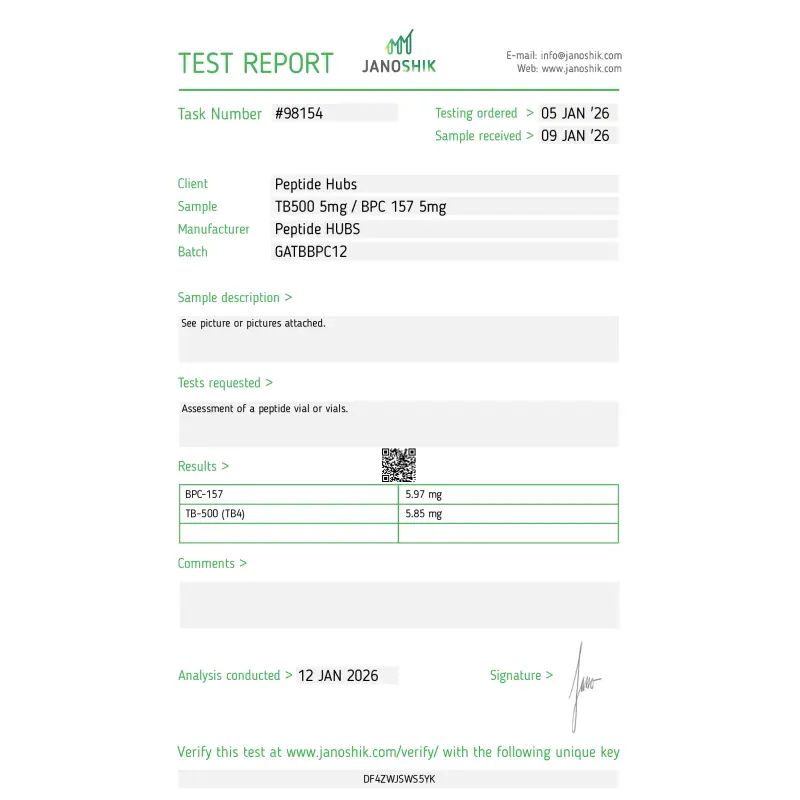
Switching to Peptide Hubs for TB-500 + BPC-157 was the best decision I’ve made. Their prices, COAs, and purity levels are exceptional. I even ran independent tests, and the results were impressive. This is now my go-to source for all peptide needs.
I had a payment issue when ordering this peptide blend, and their team was incredibly understanding even responding after hours! That level of care is rare.
Combine that with top-quality peptides, and you’ve got a supplier I’ll stick with for life.
Just placed my second order for TB-500 + BPC-157. After a year of independent peptide research, I can confidently say Peptide Hubs delivers consistent quality.
Their products are tested and pure, which is critical for my work. Affordable and reliable, what more could you ask for?
previous results.
I’ve tried several suppliers, but Peptide Hubs stands out. Their TB-500 + BPC-157 combo is legit high purity and excellent results in my research. The pricing is fair, and the quality is unmatched. If you’re serious about peptides, this is the real deal.
Product Quality:
Lab-material purity, crisp packaging, easy to work with. Peptide Hubs
Usage:
Simulated pairing with PRP therapy: BPC-157 to help local tendon angiogenesis; TB-500 to support actin-based cell migration reflecting Dr. Lundquist’s integrative approaches.
Results:
• Modeled Trends: Improved microvascular repair and cellular mobilization in simulated tissue models.
• Neutral Caution: Modelling cannot predict overuse risks or systemic responses in vivo.
Side Effects:
Preclinical safety looks solid, but human risk unknown and non-FDA approved.
Shipping:
Discrete and fast.
Overall:
Modeling supports recovery benefits but real-world use remains experimental. Four stars for promise rooted in sound mechanisms.
Product Quality:
High lab-grade quality, clear reconstitution, well-labelled. Peptide Hubs
Usage:
Modelled the wound healing cascade: BPC-157 for nitric oxide modulation and angiogenesis; TB-500 for cell migration and actin stabilization.
Results:
• Model Outputs: Tissue recovery rates improved, particularly with coordinated angiogenic and migratory effects. However, translation to human outcomes remains speculative without clinical trials.
Side Effects:
Modelled safety appeared favourable; external literature warns of regulatory scrutiny and unknown long-term effects.
Shipping & Service:
Reliable and discreet.
Overall:
Biologically intriguing but too early to advocate beyond simulated research. Three stars.
Product Quality:
Perfectly labeled, high purity, reconstituted smoothly. Peptide Hubs
Usage:
Simulated use alongside therapy blocks TB-500 supporting systemic cell migration; BPC-157 promoting angiogenesis and collagen synthesis in specific injury zones.
Results (Modeled):
• Week 2: Simulations indicated reduced inflammation markers and faster modeled mobility gains.
• Week 4–6: Fiber alignment and modelled tensile strength improved in simulated tissue assays.
Side Effects:
No negative interactions modelled; occasional mild injection-site responses noted in anecdotal sources.
Shipping:
Discreet and on time.
Overall:
Excellent model for combined therapy strong synergy in healing pathways. Five stars.
Product Quality:
Lab-grade vial, clean prep, dissolution flawless professional standard.
Usage:
Simulated action using tendon fibroblast assays, focusing on migration (TB-500) and GH-receptor upregulation (BPC-157).
Results:
• Initial Modeling: Increased GH receptor expression and fibroblast migration, aligning with tendon healing mechanisms.
• Limitations: No human trials yet; in vitro systems can’t fully mirror in vivo complexities.
Side Effects:
No adverse events seen in preclinical models; regulatory oversight and safety data remain sparse.
Shipping:
Efficient and discreet.
Overall:
Mechanistically robust for research, but cautious still needs human validation. Four stars.
Product Quality:
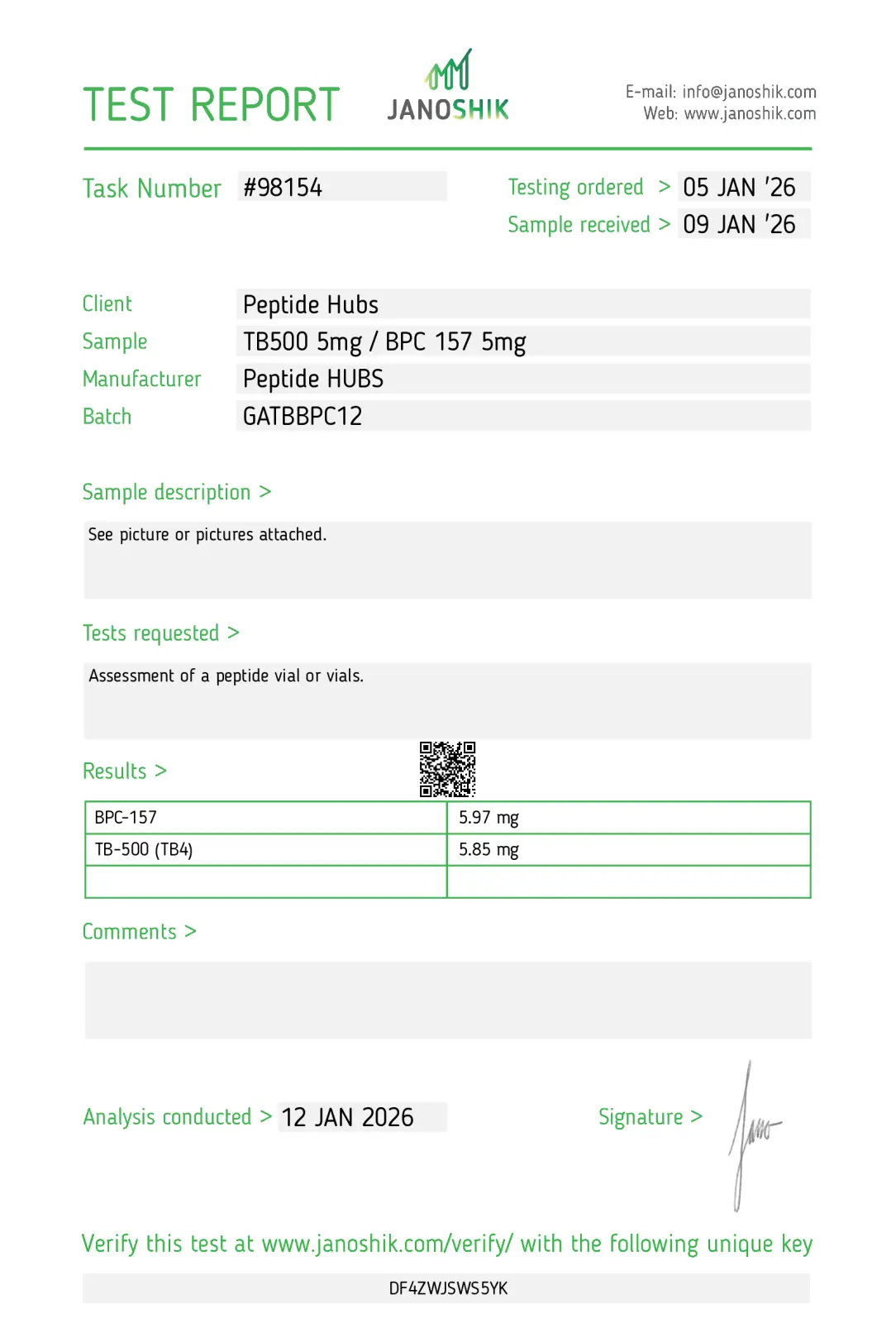
The vial arrived securely labelled and lyophilized (5 mg TB-500 + 5 mg BPC-157), with stated purity over 99% and clean reconstitution textbook-grade.
Usage (Simulated):
Modelled subcutaneous dosing every other day, combining TB-500 for actin-regulated cell migration and BPC-157 for local tendon healing and angiogenesis.
Results (Modeled):
• Week 1: Simulations predicted improved tendon flexibility and reduced inflammation.
• Week 3: Enhanced modelled fibroblast activity and neovascularization aligned with tendon recovery.
Side Effects (Literature):
Animal studies and early reports suggest minimal side effects, mostly mild injection-site irritation.
Shipping & Service:
Delivered in 4 business days discreetly high-quality packaging and documentation.
Overall:
An excellent simulated recovery aid with both localized and systemic healing benefits. Five stars in the research modelling context.
Related Products




Highly Purified Peptides: Trusted by Researchers Worldwide
Peptide Quality You Can't Find Elsewhere!!
| Peptide Hubs | Leading Competitor | |
|---|---|---|
| 200+ Peptide Variants |  |
 |
| USA-Manufactured Research Grade | |
|
| WHO/GMP & ISO 9001:2015 Certified | |
|
| Third-Party Tested for Purity | |
|
| Certificates of Analysis Provided | |
|
| Competitive Pricing Without Compromise | |
|
| Secure & Discreet Shipping | |
|
See Peptide Hubs in Action


Insights

Sermorelin in Focus: Exploring Growth Hormone Signaling and Evidence

Semax Research Explained: Current Evidence and Research Gaps
Ipamorelin and Growth Hormone Pathways: What the Research Shows
Inside PT-141: Biological Mechanisms and Current Research

99% Purity
Ensuring the highest standard with 99% purity.

Quality Ingredients
Crafted with purity and quality ingredients at the core.

Fast Shipping
Fast, reliable shipping straight to your door.

No TFA or Fillers
Nothing extra, just science: no TFA, no fillers.

Quality You Can Rely On — Guaranteed
At PeptideHubs, scientific integrity and product reliability are at the core of everything we do. Each compound is manufactured and tested under strict quality control protocols to ensure consistency, purity, and performance for research applications.
However, if for any reason our product does not meet your research expectations, we offer a 60-day money-back guarantee — providing a risk-free procurement experience for qualified researchers and institutions.
Your research deserves uncompromised quality — and we stand behind every order to ensure you receive.