
Peptide Hubs Articles

Among these, Pinealon stands out as a synthetic tripeptide composed of glutamic acid, aspartic acid, and arginine (Glu-Asp-Arg) that has intrigued the scientific community for its potential role as a bioregulator and geroprotective agent.

Unlike traditional topical skincare that sits on the epidermis, peptide therapy focuses on systemic signaling instructing cells to produce collagen, modulate inflammation, and repair damaged tissues from the inside out.

Composed of a short chain of five amino acids, Ipamorelin is categorized as a Growth Hormone-Releasing Peptide (GHRP) and a Ghrelin receptor agonist. Unlike earlier generations of growth-stimulating compounds, Ipamorelin is noted for its high selectivity, making it a "clean" subject for laboratory investigation.
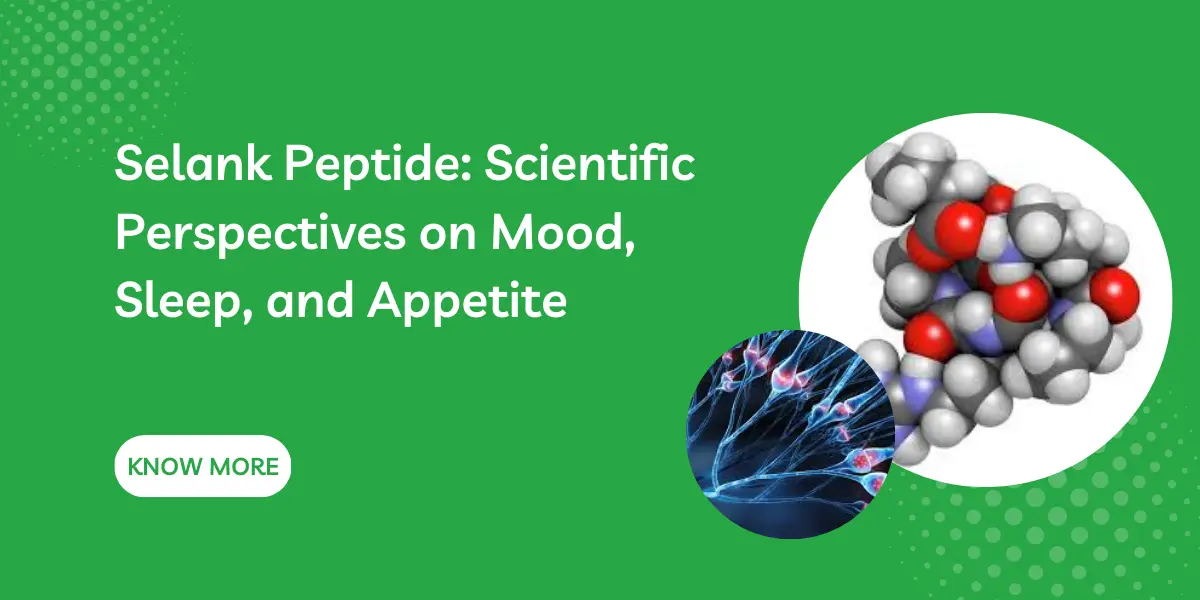
A synthetic heptapeptide, Selank is a derivative of the naturally occurring tetrapeptide Tuftsin, which plays a critical role in the immune system. By adding three additional amino acids to the Tuftsin sequence, researchers created a more stable and potent analog that appears to have profound implications for the central nervous system.

Within this booming sector, one molecule has emerged as a cornerstone of regenerative medicine: GHK-Cu.

As we move through different stages of life, many of us notice shifts that feel beyond our control: sleep becomes fragmented, metabolic rates dip, and our cognitive "sharpness" seems to lose its edge. These aren't just inconveniences; they are systemic signals of cellular aging.

At the forefront of this movement is Semax, a synthetic peptide that has gained a cult-following for its reported ability to enhance focus, memory, and emotional resilience.

While the market is flooded with sedative-hypnotics, many carry the risk of dependency or "hangover" effects. This has led researchers and biohackers alike to explore a more targeted biological approach: DSIP (Delta Sleep-Inducing Peptide).

At the center of this burgeoning field of mitochondrial research is MOTS-c, a mitochondrial-derived peptide (MDP) that is redefining how we look at metabolic health, exercise physiology, and the aging process.

Among the more specialized compounds currently under the microscope is PNC-27, a "membrane-active" peptide that has sparked significant interest in oncology and cellular biology research.

One of the most compelling recent breakthroughs is the identification of MOTS-c, a 16-amino acid peptide that challenges our traditional understanding of genetic inheritance and cellular signaling.

At the center of this evolution is the Growth Hormone (GH) axis, a complex, tightly regulated system that dictates everything from metabolic rate and lipid distribution to tissue repair and cellular longevity.