
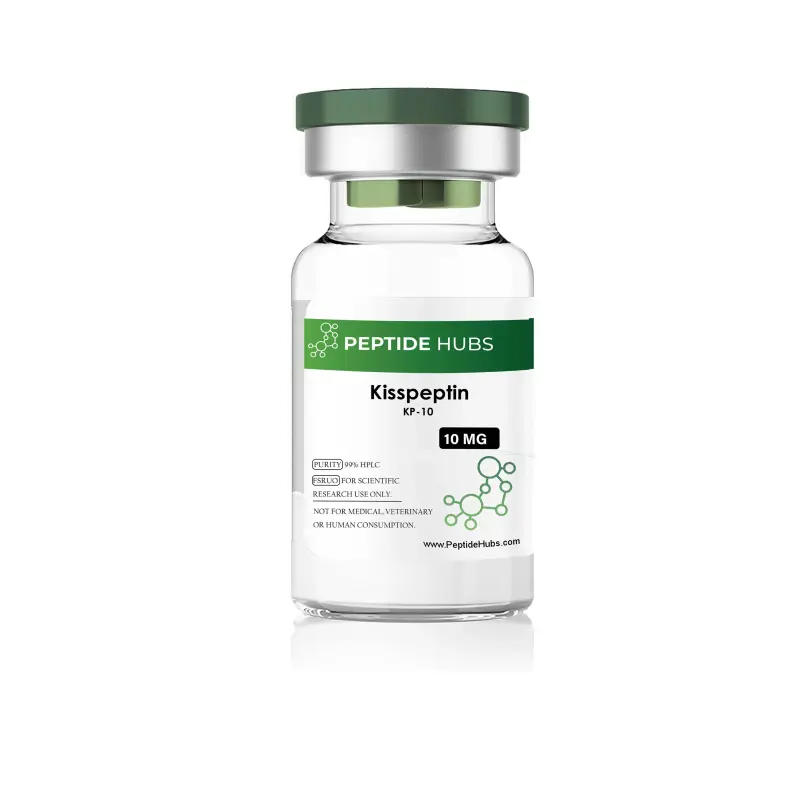
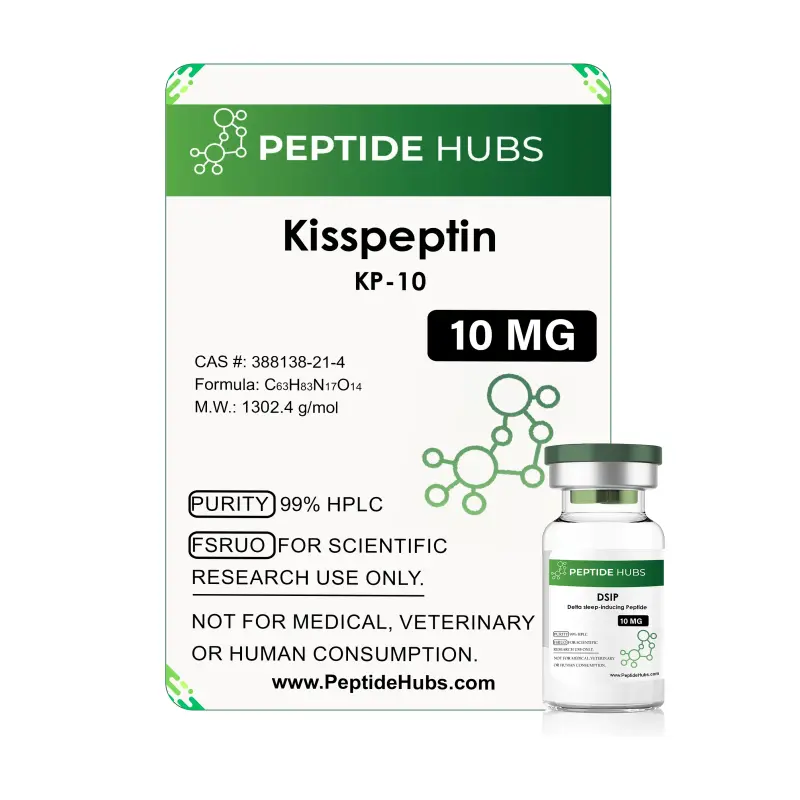
Kisspeptin 10mg
- USA MADE 2-7 days delivery
- International 5-20 days delivery
THIS PRODUCT IS INTEDED AS A RESEARCH CHEMICAL ONLY.
This designation allows the use of research chemicals strictly in vitro for testing and laboratory experimentation only. All products information available on this website is for educational purposes only. Bodily introduction of any kind into humans or animals is strictly forbidden by law. This product should only be handled by licensed, qualified professional. This product is not a drug, food or cosmetic and may not be misbranded, misused or mislabled as a drug food or cosmetic.
1. What is Kisspeptin-10?
Kisspeptin (also known as metastin) is a naturally occurring peptide derived from the KISS1 gene, a critical regulator of reproductive physiology and systemic homeostasis. Kisspeptin-10, specifically, is a bioactive 10-amino acid fragment representing the C-terminal sequence (residues 45–54) of the full-length Kisspeptin-54. This truncated form exhibits significant biological activity despite its reduced size, making it a valuable compound for research examining the hypothalamic-pituitary-gonadal (HPG) axis and related metabolic and neurological pathways.
The peptide operates as a ligand for the G-protein-coupled receptor GPR54 (also designated KISS1R), positioning it as a key mediator in reproductive hormone signaling. Beyond reproduction, emerging research has expanded interest in Kisspeptin-10 to encompass energy balance regulation, cardiovascular and renal function, oncological mechanisms, cognitive function, mood modulation, and neuroprotection—making it a versatile compound for mechanistic and translational investigation.
2. Kisspeptin-10 Structure
Sequence: YNWNSFGLRF
Molecular Formula: C₆₃H₈₃N₁₇O₁₄
Molecular Weight: 1302.4 g/mol
PubChem CID: 25240297
Other Known Titles: Kisspeptin 45–54, KISS-1, Protein KISS-1, Metastin, Kp-10 peptide
The nine-amino-acid core sequence—composed, in orderly succession, of Tyrosine, Asparagine, Tryptophan, Asparagine, Serine, Phenylalanine, Glycine, Leucine, Arginine, and Phenylalanine—represents the minimal bioactive epitope requisite for receptor binding and the initiation of the cellular signalling cascade. That a molecule of such modest dimensions should command such profound biological influence attests to the refined discrimination exercised by Nature in the fashioning of her instruments. The equivalence of binding affinity and receptor activation capacity between Kisspeptin-10 and its lengthier variants, as demonstrated across both in vitro assays of considerable rigour and in vivo investigations of undeniable elegance, furnishes ample testimony to the sufficiency of this diminutive yet potent formulation.
3. Kisspeptin-10 Research
3.1 Boosting Gonadotropin-Releasing Hormone
In the estimation of those possessed of considerable learning, Kisspeptin-10 stands forth as a potent activator of that most essential hypothalamic-pituitary-gonadal axis—a regulatory system of singular importance in governing reproductive function. The peptide exercises its influence by stimulating those GnRH neurons situated within the hypothalamus, which thereupon release gonadotropin-releasing hormone to the anterior pituitary gland, there to accomplish its appointed task. This carefully orchestrated cascade occasions the release of follicle-stimulating hormone and luteinizing hormone, those principal gonadotropins whose governance over sexual maturation, gamete production, and sex steroid synthesis cannot be overstated.
The empirical findings of those devoted to such matters demonstrate that Kisspeptin-10, when administered in modest bolus quantities, evokes a most rapid release of luteinizing hormone at doses as low as 0.008 nmol/kg—a circumstance of considerable note. Maximal responses emerge in the vicinity of 0.8 nmol/kg, suggesting a dose-dependent relationship of admirable precision. Continuous infusion protocols reveal, with gratifying regularity, that Kisspeptin-10 increases both the frequency and amplitude of LH pulses, thus appearing to modulate the pulsatile release of reproductive hormones in a manner that may only be termed exquisite. At sufficiently elevated doses, one observes a most curious reversal: Kisspeptin-10 administration produces continuous LH elevation rather than the customary pulsatile release—a phenomenon that highlights, with some emphasis, the dose-dependent nature of the peptide's effects.
3.2 Increasing Testosterone
The capacity of Kisspeptin-10 to elevate testosterone exhibits a marked sexual dimorphism—a distinction as pronounced, perhaps, as the differences which distinguish a gentleman's concerns from a lady's preoccupations. In the male research specimen, intravenous administration of Kisspeptin-10 occasions rapid and considerable increases in serum testosterone, with certain studies reporting nearly three-fold elevations within a mere ninety minutes of exposure. This elevation transpires through the mechanism of enhanced luteinizing hormone signaling, which thereupon stimulates those Leydig cells residing in testicular tissue, thereby prompting them to synthesize and secrete testosterone with renewed vigor.
Continuous infusion of Kisspeptin-10 maintains these elevated testosterone concentrations in the male state, whilst discontinuation results in a return to baseline values—a reversibility that speaks to the peptide's physiological appropriateness and selectivity. The female research specimen, by contrast, demonstrates a most intriguing restraint: minimal to negligible alterations in testosterone levels follow Kisspeptin-10 exposure during most of the menstrual cycle. Elevated follicle-stimulating hormone and luteinizing hormone do emerge during the preovulatory phase, however—a circumstance reflecting the distinct reproductive roles assigned by nature to each sex. This sexual dimorphism, one observes, mirrors the complexity of reproductive physiology itself and underscores the considerable subtlety with which Kisspeptin-10 regulates gonadotropin secretion. For those researchers whose interests incline toward investigation of the hypothalamic-pituitary-gonadal axis, the dose-dependent precision of Kisspeptin-10's testosterone-elevating properties affords a most refined and serviceable investigative instrument.
3.3 Energy Balance
One must acknowledge, with some candor, that Kisspeptin-10 demonstrates a bidirectional regulatory capacity within those circuits governing energy homeostasis—functioning simultaneously as both a detector of metabolic circumstance and an active modulator of appetite and energy expenditure. The empirical record reveals that mice engineered to lack the Kisspeptin receptor display increased adiposity, diminished energy expenditure, and impaired glucose tolerance, thereby indicating that endogenous Kisspeptin signaling promotes the utilization of energy with some vigor and purpose.
When one turns to the matter of appetite regulation, the findings prove equally worthy of consideration. Kisspeptin-10 exposure suppresses food intake, meal frequency, and meal size in rodent specimens, operating principally through effects upon those hypothalamic nuclei which govern hunger and the satisfaction thereof. The peptide appears to exercise influence over genes encoding neuropeptide Y—that orexigenic neuropeptide—and brain-derived neurotrophic factor, a protein of considerable consequence for neuronal survival and synaptic adaptation. Further investigation reveals that Kisspeptin-10 modulates neurotransmitter concentrations within the hypothalamus with admirable selectivity, reducing dopamine and serotonin levels whilst maintaining norepinephrine stability—a neurochemical profile altogether consistent with appetite suppression.
The scope of Kisspeptin-10's metabolic influence extends yet further: the peptide enhances lipolysis in adipose tissue cultures, increases leptin and insulin secretion, and reduces lipogenesis—collectively demonstrating a capacity for promoting energy mobilization and reducing lipid accumulation. These cumulative effects position Kisspeptin-10 as a regulatory factor of considerable merit in energy metabolism and provide researchers with a tool of some refinement for investigating metabolic disorders.
3.4 Cancer Research
The KISS1 gene, it bears noting, earned its reputation as a metastasis suppressor through observations of considerable scientific moment. When introduced into highly metastatic melanoma cell lines, this gene suppressed pulmonary metastases by as much as five-and-ninety per centum—a result as striking as it was unexpected. Kisspeptin-10, functioning as the minimal active fragment, replicates this suppressive effect across a most diverse array of malignancies, including those affecting the breast, pancreas, prostate, bladder, gastrointestinal tract, ovaries, and thyroid tissue.
The mechanism by which Kisspeptin-10 achieves this suppressive effect involves inhibition of epithelial-mesenchymal transition—that cellular transformation most essential for cancer cell migration and invasion. Kisspeptin-10 administration reduces cancer cell adhesion capacity, diminishes migratory potential, and suppresses the Warburg effect, that heightened glycolytic metabolism characteristic of aggressive tumors. In those models examining breast cancer, Kisspeptin-10 induces apoptosis with some regularity, inhibits intratumoral angiogenesis, and prolongs survival in tumor-bearing specimens—effects that cannot fail to interest those devoted to cancer research.
A circumstance of particular note emerged from research conducted in the year 2020: melatonin and Kisspeptin-10 levels exhibit inverse regulation by light exposure, with daylight promoting high Kisspeptin-10 levels and low melatonin—conditions correlating with reduced melanoma tumor growth. This light-dependent regulation suggests potential connections between circadian biology and Kisspeptin's anti-metastatic capacity, thereby opening new avenues for scholarly inquiry.
3.5 Study Memory Enhancement
The localization of Kisspeptin-10 within those brain regions governing memory—including the hippocampus, septum, and entorhinal cortex—furnishes anatomical support for cognitive investigation of considerable promise. Recent scholarship identifies Kisspeptin-10 as a potential modulator of learning and spatial navigation, thereby expanding the scope of inquiry beyond reproductive considerations. Studies conducted upon ethanol-intoxicated animals, when administered Kisspeptin analogs, demonstrated reversal of learning and navigational impairment—a discovery suggesting that the peptide may enhance neural encoding of information.
Additional support for cognitive merit derives from examination of Kisspeptin's effects upon mitochondrial function within the hippocampus. Kisspeptin-10 administration activates autophagy and mitophagy pathways through AMPK signaling mechanisms, thereby enhancing mitochondrial ATP production, complex I activity, and mitochondrial biogenesis—processes directly linked to cognitive resilience and memory retention. The peptide's capacity to influence hippocampal plasticity through calcium-dependent mechanisms offers mechanistic insight into potential cognitive applications. Though research in this domain remains preliminary and invites further consideration, the anatomical distribution and biochemical effects of Kisspeptin-10 warrant continued investigation of its role in learning and memory consolidation.
3.6 Impact on Mood
Neuroimaging studies of considerable sophistication, conducted upon healthy male subjects administered Kisspeptin-10, reveal enhanced activity in those limbic structures deemed essential to emotional regulation—particularly the amygdala, hippocampus, and globus pallidus, regions implicated in emotional regulation, reward processing, and the bonds of affection and companionship. This enhanced limbic activation corresponds with psychometric improvements in mood, increased reward-seeking behavior, elevated drive and motivation, and a most notable reduction in sexual aversion.
One observes with some interest that Kisspeptin-10 administration attenuates negative mood whilst amplifying responses to positive emotional and bonding stimuli—effects that suggest a role for this peptide in the intricate regulation of emotional states. The mechanism appears multifaceted in character, involving modulation of hypothalamic GABA concentrations, serotonergic signaling, and dopaminergic tone. Research conducted upon zebrafish specimens demonstrates that Kisspeptin-10 modulates fear responses through serotonergic pathways, thereby suggesting that the mood-modulating mechanisms of this peptide have been conserved across vertebrate species. These findings implicate Kisspeptin-10 in the integration of reproductive signaling with emotional and motivational states—a functional integration reflecting the evolutionary interconnectedness of reproduction and behavior, much as one might observe the intertwining of practical considerations with matters of the heart in human affairs.
3.7 Kidney and Heart
Kisspeptin-10 and its receptor exhibit widespread expression throughout renal tissues and myocardial tissue—a distribution suggesting physiological significance in both organs of considerable importance. In the kidney, Kisspeptin-10 signaling governs glomerular development during that formative period of ontogeny; mice engineered to lack the Kiss1 receptor display impaired glomerular maturation and thereby demonstrate the peptide's necessary role in proper renal development.
Altered Kisspeptin-10 and receptor expression occurs in chronic renal disease with some regularity, thereby suggesting pathophysiological involvement in renal dysfunction. The peptide appears to regulate renal vascular tone and glomerular hemodynamics through effects upon endothelial function—mechanisms worthy of further scholarly consideration. In the cardiovascular system, Kisspeptin-10 modulates vasoconstriction in select vascular beds, controls cardiac output under specific physiological circumstances, and influences vascular response to injury. These vascular actions likely relate to Kisspeptin-10's broader role in angiogenesis and endothelial development.
Whilst the precise mechanisms governing organ-specific Kisspeptin-10 function remain incompletely characterized—a lacuna that invites the attention of diligent researchers—current evidence supports roles in maintaining vascular and renal homeostasis. These functions align admirably with the peptide's putative anti-metastatic capacity, thereby suggesting an overarching physiological theme.
3.8 Neuroprotection
Kisspeptin-10 exhibits neuroprotective properties of considerable merit against those neurotoxic proteins implicated in neurodegenerative disease, particularly alpha-synuclein—that pathological hallmark of Parkinson's disease and dementia with Lewy bodies. In those cholinergic neurons engineered to overexpress wild-type or mutant alpha-synuclein, modest concentrations of Kisspeptin-10 (ranging from 0.01 to 1 μM) substantially suppressed alpha-synuclein-induced apoptosis and mitochondrial depolarization with gratifying consistency.
Computational modeling of considerable sophistication reveals that Kisspeptin-10 engages in direct interaction with the C-terminal binding pockets of alpha-synuclein, with docking energies favoring stable complex formation throughout the simulated trials. Molecular dynamics simulations confirm complex stability over intervals of fifty nanoseconds—a duration sufficient to suggest physiological relevance. Remarkably, this neuroprotective effect persists in the presence of GPR54 antagonists, thereby indicating a receptor-independent mechanism of action—a discovery of no small consequence.
Additionally, Kisspeptin-10 reduced alpha-synuclein and choline acetyltransferase immunoreactivity in cholinergic neurons, thereby suggesting modulation of protein aggregation or expression states. These findings position Kisspeptin-10 as a potential scaffold for developing therapeutics targeting alpha-synuclein pathology—an area of inquiry that promises considerable benefit to those affected by neurodegenerative conditions.
3.9 Kisspeptin-10 Summary
Kisspeptin-10 represents a peptide of remarkable versatility and considerable interest to the research community, serving as a bridge of elegant construction spanning reproductive endocrinology, metabolic homeostasis, oncology, neurobiology, and cardiovascular physiology. Its principal mechanism—activation of hypothalamic GnRH neurons through GPR54 receptor engagement—drives the reproductive axis; yet peripheral GPR54 expression and GPR54-independent signalling mechanisms extend Kisspeptin-10's functional influence across multiple organ systems, much as a woman of wit and accomplishment exerts influence extending far beyond the drawing room.
The peptide's dual character—as both metastasis suppressor in cancer research and as regulator of energy-reproduction integration—underscores its potential relevance for future therapeutic exploration. Ongoing investigation continues to refine understanding of Kisspeptin-10's mechanisms in cognition, mood regulation, and neuroprotection—domains emerging from convergent evidence in both fundamental and translational research. The considerable complexity of Kisspeptin biology—encompassing both inhibitory and stimulatory effects, operating contextually and contingently—necessitates that experimental design proceed with due deliberation and that biomarker-driven investigation guide progression toward any therapeutic realization, ensuring thereby that unintended consequences remain minimized.
Feature Bullets
- Selective GPR54 Engagement: Most potent and selective activation of KISS1 receptor signaling, achieved at concentrations of low nanomolar magnitude
- Refined GnRH Modulation: Rapidly stimulates those hypothalamic GnRH neurons governing pulsatile gonadotropin secretion with considerable precision
- Neuroendocrine Refinement: Dose-dependent effects of admirable subtlety enable thorough investigation of reproductive axis dynamics and regulatory feedback mechanisms
- Neuroprotective Merit: Receptor-independent engagement with pathological alpha-synuclein, substantially reducing neurotoxicity in cholinergic cellular models
- Metabolic Regulation of Consequence: Bidirectional modulation of energy balance, appetite suppression, and adipocyte metabolic activity
- Multitissue Distribution: Functional expression throughout hypothalamus, hippocampus, adipose tissue, renal tissue, and cardiac tissue
- Cancer Research Applications: Suppresses epithelial-mesenchymal transition and metastatic progression across diverse malignant cell types with notable consistency
Technical Specifications Table
|
Specification |
Value |
|
Product Name |
Kisspeptin-10 |
|
Molecular Weight |
1302.4 g/mol |
|
Molecular Formula |
C₆₃H₈₃N₁₇O₁₄ |
|
Sequence |
YNWNSFGLRF (10 amino acids) |
|
Size/Quantity |
10 mg |
|
Form |
Lyophilized powder |
|
Purity |
99% |
|
Storage Temperature |
≤ –20°C (long-term); 2–8°C (short-term in use) |
|
PubChem CID |
25240297 |
|
Other Designations |
Kisspeptin 45–54, KISS-1, Metastin, Kp-10 peptide |
Storage Instructions
Store Kisspeptin-10 in its lyophilized form at temperatures of 2–8°C (in refrigeration) or below –20°C (in frozen state) to maintain stability and preserve the integrity of the preparation. One must take particular care to avoid repeated cycles of freezing and thawing, which may compromise the molecular structure and efficacy of the peptide. The preparation should be maintained in the original desiccated container, preserved in cool surroundings protected from direct illumination.
Once the lyophilized powder has been reconstituted into solution, the stability of Kisspeptin-10 becomes considerably reduced; such solutions ought to be maintained at 2–8°C and employed within a period of one to two weeks to minimize degradation and preserve bioactivity. The lyophilized powder must not be exposed to moisture or direct light, but rather kept desiccated and sealed in its protective vessel. For those whose studies require storage extending beyond twenty-four months, preservation at –80°C (in ultra-low freezer conditions) is most earnestly recommended.

Related Products






Highly Purified Peptides: Trusted by Researchers Worldwide
Peptide Quality You Can't Find Elsewhere!!
| Peptide Hubs | Leading Competitor | |
|---|---|---|
| 200+ Peptide Variants |  |
 |
| USA-Manufactured Research Grade | |
|
| WHO/GMP & ISO 9001:2015 Certified | |
|
| Third-Party Tested for Purity | |
|
| Certificates of Analysis Provided | |
|
| Competitive Pricing Without Compromise | |
|
| Secure & Discreet Shipping | |
|
See Peptide Hubs in Action


Insights

Tirzepatide & Thyroid Nodules: Exploring Safety Evidence and Risks

Can You Take NAD+ and Tirzepatide Together? Here’s What Science Says

Cagrilintide vs Retatrutide: Comparing Amylin and Triple Agonist Research

AOD-9604 vs Semaglutide: Key Differences in Weight-Loss Research

99% Purity
Ensuring the highest standard with 99% purity.

Quality Ingredients
Crafted with purity and quality ingredients at the core.

Fast Shipping
Fast, reliable shipping straight to your door.

No TFA or Fillers
Nothing extra, just science: no TFA, no fillers.

Quality You Can Rely On — Guaranteed
At PeptideHubs, scientific integrity and product reliability are at the core of everything we do. Each compound is manufactured and tested under strict quality control protocols to ensure consistency, purity, and performance for research applications.
However, if for any reason our product does not meet your research expectations, we offer a 60-day money-back guarantee — providing a risk-free procurement experience for qualified researchers and institutions.
Your research deserves uncompromised quality — and we stand behind every order to ensure you receive.